

OPINION | Why Uhuru owes Kenyans answers over claim Raila won 2022 election

Retired President Uhuru Kenyatta with the late ODM leader Raila Odinga. PHOTO/UGC.
By PATRICK MAYOYO
Retired President Uhuru Kenyatta’s declaration that the late ODM leader Raila Odinga actually won the 2022 presidential election is not a statement that Kenya can simply swallow and move on from.
It demands questions. Four years after the election, Uhuru now says he remains convinced that Raila won. Speaking at a Jubilee Party National Executive Council meeting in Nairobi on 22 September 2026, he said his party had done everything possible to help Raila become president and that, in his view, Raila had won the vote.
Uhuru also questioned how Azimio could win substantial numbers of parliamentary and county seats yet lose the presidency. But here is the uncomfortable question: if Raila won, how did William Ruto end up being declared president?
The official record is not ambiguous. The IEBC declared Ruto the winner with 7,176,141 votes, or 50.49 per cent, against Raila’s 6,942,930 votes, or 48.85 per cent. The Supreme Court subsequently upheld the result. IEBC
That does not prevent anybody from questioning the election. Elections are not made legitimate merely because an electoral commission says so. But extraordinary claims require evidence. And Uhuru, of all people, has some explaining to do.
The first question is about power. Uhuru was not an ordinary spectator in 2022. He was the sitting president and had spent a decade at the centre of Kenya’s political and administrative establishment.
He had openly backed Raila’s presidential bid after their so-called handshake and was politically invested in the Azimio project. That makes his present claim particularly striking.
If he knew, while still in office, that Raila had won but that the result was being subverted, what did he do about it? Did he order an investigation? Did he demand that the relevant security agencies establish whether electoral fraud had occurred?
Did he deploy the investigative and prosecutorial machinery of the state to establish who had allegedly interfered with the vote? Or did he simply watch the alleged theft happen and wait four years before telling Kenyans that he knew the truth?
Those are not unfair questions. They go to the heart of his credibility. And there is an even more awkward problem. The Tuju-Chebukati allegations.
In the aftermath of the 2022 election, Raphael Tuju, then Executive Director of the Azimio Secretariat and a former Cabinet Secretary in Uhuru’s administration, acknowledged having meetings with then-IEBC chairman Wafula Chebukati and commissioners Abdi Guliye and Boya Molu.
Tuju said Chebukati had initiated a confidential meeting in Karen and challenged him to explain what they discussed. He also acknowledged being at Bomas during the tallying process and said he had gone there over concerns about the handling of the presidential results.
The late IEBC chairman Wafula Chebukati. PHOTO/UGC.
Chebukati gave a radically different account. In affidavits filed during the 2022 presidential petition, and later in testimony before the tribunal investigating IEBC commissioner Irene Masit, Chebukati alleged that Tuju and others attempted to persuade the commission to moderate the results in Raila’s favour or force a run-off. He further alleged that compensation was offered. Tuju denied the allegations.
These are competing allegations, not established findings of fact. But they raise a devastatingly simple question for the political establishment of the time.
If there was a genuine attempt to bribe or improperly influence the electoral commission, why was it not subjected to a full criminal investigation?
If Uhuru’s government possessed credible evidence that Chebukati was soliciting a bribe, or that anyone else was attempting to corrupt the electoral process, why was the matter not pursued through the investigative and anti-corruption institutions? And if the allegation was false, why was the evidence not conclusively put to rest?
Kenya cannot have it both ways. You cannot spend years telling citizens that the electoral system was compromised and then refuse to account for what those in power did when the alleged compromise was supposedly taking place.
There is another contradiction that opposition politicians should examine carefully. Uhuru now speaks as though he was merely Raila’s political supporter watching events unfold from the sidelines. But he was the incumbent president.
That does not mean he controlled the IEBC. The Constitution deliberately establishes the commission as an independent institution. Nor does it establish that Uhuru could simply command the electoral commission to produce a particular result.
But it does mean that he occupied an extraordinary position of constitutional and political authority. If he possessed information showing that the presidential result was being unlawfully manipulated, the obvious question is what lawful steps were taken by his administration to investigate it.
That question becomes even sharper because the Azimio camp itself was not without access to senior political, administrative and security figures.
So when Uhuru says today, I know Raila won, Kenyans are entitled to ask: What did you know then? When did you know it? Who else knew it? What evidence did you possess? And what did you do with that evidence?
Those questions are more useful than political nostalgia. Kenya has already lived through a presidential election being overturned by the Supreme Court.
In 2017, the Supreme Court annulled the initial presidential election and ordered a fresh election. The court’s decision turned on constitutional and legal irregularities in the conduct of the election.
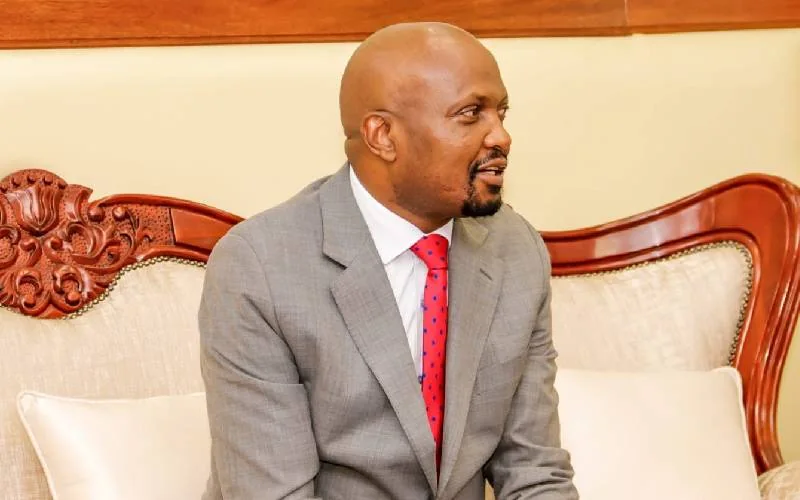
Former Trade Cabinet Secretary Moses Kuria has claimed they conspired to deny the late ODM leader Raila Odinga the presidency in 2013 and 2017. PHOTO/UGC.
That history matters because it establishes an important principle: presidential elections are not beyond judicial scrutiny. But it also establishes another principle. Claims that an election was stolen must be tested against evidence and through the institutions established by law.
The 2017 decision is therefore not a licence to declare any election stolen after the fact. It is a reminder that when serious evidence exists, it must be placed before the appropriate constitutional institutions.
There is an unavoidable historical irony here. Uhuru and Ruto were political partners in the 2013 and 2017 elections. Their alliance was forged while both faced crimes against humanity charges at the International Criminal Court (ICC) at The Hague relating to the 2007–08 post-election violence; those cases were ultimately terminated without convictions.
They subsequently fell out spectacularly. Ruto became Uhuru’s political nemesis, while Uhuru eventually backed Raila in 2022. That history matters because today’s political narratives are being constructed from yesterday’s alliances.
Moses Kuria has now injected another layer into that history. Kuria recently gave his own assessment of Kenya’s multi-party-era presidential elections, saying Raila won in 2007 and 2013, while saying Ruto won in 2022.
He also previously made controversial claims about the methods used by politicians to secure Uhuru’s electoral victories. Those statements are Kuria’s allegations and political assessments, not established judicial findings.
Kenya has accumulated far too many political claims that are subsequently treated as historical fact simply because somebody important said them.
A former president saying something does not make it true or false. A former Cabinet secretary saying something does not make it true or false and a former IEBC chairman saying something does not automatically make it true either. Evidence does.
The opposition should therefore ask a different question. The question is not simply whether Uhuru is right or Ruto is right. The more important question is whether Kenya’s political class is once again asking citizens to choose which powerful man’s version of history they should believe.
That is a dangerous road. Uhuru says Raila won. The IEBC declared Ruto the winner. The Supreme Court upheld the result. Chebukati made allegations about attempts to influence the commission. Tuju denied those allegations while acknowledging meetings with IEBC officials.
Four years later, Uhuru has revived the claim that Raila actually won. Each piece of that story requires evidence, scrutiny and, where necessary, accountability.
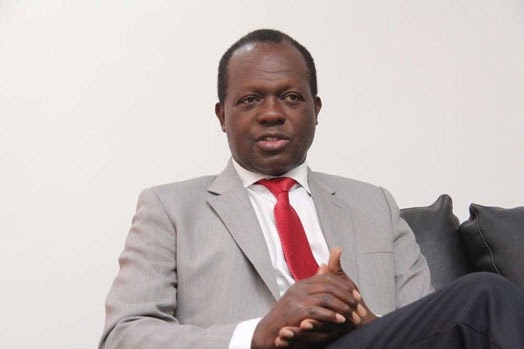
Raphael Tuju, then Executive Director of the Azimio Secretariat. PHOTO/UGC.
Opposition leaders should beware of political romance. This is where opposition leaders need to be extremely careful. They should not confuse an enemy of their current enemy with a permanent political ally.
Kenyan politics is littered with yesterday’s enemies becoming today’s allies and today’s allies becoming tomorrow’s enemies. Uhuru and Ruto are perhaps the clearest example.
They once campaigned together. They governed together. They defended their political alliance together. Then they became bitter political opponents. Now the two sides trade accusations over the very administration they once jointly controlled.
That history should teach the opposition one lesson: never outsource political judgement to a retired president, a sitting president, a former minister or any other political heavyweight.
If Uhuru says Raila won, let him produce the evidence. If Ruto says he won legitimately, let the record and the institutions sustain that claim. If there was interference, identify who interfered, how they interfered and what evidence proves it.
If there was an attempted bribe, investigate it. If there was no attempted bribe, establish that too. And if there was an unlawful alteration of results, Kenya deserves to know who did it, when, how and why. Anything less is political dram!
And it has to be noted that there is danger looming ahead of the 2027 polls. The danger is not merely that Kenyans will argue endlessly about 2022. The danger is that the 2022 election will become another weapon in the 2027 political arsenal.
Kenya has already paid a heavy price for elections conducted in an atmosphere of suspicion, institutional distrust and political manipulation. The country does not need another election built around rumours, whispered deals, secret meetings and competing versions of what happened behind closed doors.
It needs verifiable facts. So, Uhuru, if you genuinely know that Raila won the 2022 presidential election, the country deserves more than “mimi najua (I know).”
Show Kenyans what you know. Show them the evidence. Explain what happened. Explain what you did when you were still president. Explain what your government knew. Explain what your officials knew.
And explain why, if the election was stolen under your watch, the machinery of government did not stop it. That is not a partisan question. It is the question any former president who reopens a disputed election owes the country.
And opposition leaders should remember something else: a politician’s present declaration does not erase his past position, his past alliances or his responsibilities at the time events actually occurred.
Kenya should demand the full record; not another political pronouncement.
The writer is an editor at EYEWITNESS MEDIA GROUP.
Crédito: Link de origem