
OPINION: The Egyptian “Nouveau Pauvre”

Every Egyptian family has a Tant Safinaz.
You know the one. She corrects your Arabic, then answers you in French. She summers somewhere specific in “elsa7el el tayeb” and says her name like a password. She has firm opinions about which families are “good” families, delivered with the serenity of a woman who has never once looked at a price tag. By every visible signal, she is old money.
And she is driven around Cairo in a 1990 E-class Mercedes (also known in Egypt as a temsa7a) that has been dying, gracefully, for thirty-five years.
The car is not vintage. It is not a statement. It is simply the last good car anyone in the family bought, back when the family still bought good cars. It has a driver, naturally. Amm Sayed. A man who has been “with the family forever.” Amm Sayed is the son of the previous driver. He inherited the wheel the way she inherited the car. He is paid a wage that made sense in 1998 and has been gently, lovingly, guilt-tripped into never quite asking for more, because he is “part of the family,” which is the most expensive cheap thing a person can be in Egypt.That is the whole country, parked in one car.
You can spot the type long before you ever see the car. They all travelled when they were young. London, Beirut, back when the pound could still buy a summer abroad. She can still name the exact street in Knightsbridge, the restaurant in Hamra, the little shop that has almost certainly closed by now. But notice she has not really gone in years. The passport is a museum, not a habit.
And the name-dropping. Constant, reflexive, load-bearing. Not brands, families. Yours, hers, and whether the two ever married into each other. She drops old London the way other people hand out a business card, the street, the club, the season she used to take. And when the present gets uncomfortable, she reaches backwards. Back in the day. What her father would have said. What her grandfather would have done. The nouveau pauvre lives in a permanent past tense, because the past is the only era in which the family was unambiguously rich.
I want to talk about a class of people we have all met, all know, and almost never name correctly. I used the term in the Zamalek piece on my Substack, but the credit is not mine. I first heard it from Fabio Donato, my partner in Mahara and the man behind GiGi Burger Bar, who said it to me once in passing, nouveau pauvre, so casually and so precisely that I have not been able to unsee it since. He used it to describe the people who bought early in Almaza and own a (now worth) 50 million EGP home, yet can’t afford to have a weekly dinner at Almaza’s own Sachi or Pier88. The new poor. Except they do not feel poor, would be genuinely insulted that you said it, and their net worth on paper might carry more than eight (Egyptian) digits.
They are asset rich and cash poor. Title heavy and liquidity light. Rich in everything except money.
And the strange, almost unbelievable thing about this country is that we do not produce this person by accident. We manufacture them. On purpose. Generation after generation, with the reliability of a factory line.
Let me walk you down the assembly line.
Act I: The first robbery was loud
The old aristocracy, the pashas and the beys with the French, the summer houses and the thousands of feddans, did not slowly fade. They were switched off.
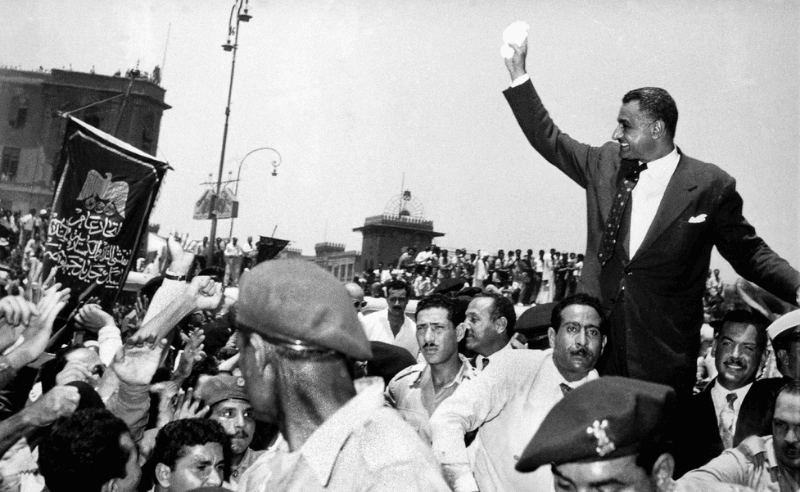 In 1952 the new state capped how much land a person could own and began handing the rest to the peasants who worked it. In 1961 it went much further. It nationalized the banks, the factories and the companies, and sequestered the property of the richest families in the country. By 1969 a person could own fifty feddans and not a blade more.
You can argue, and people still do, ferociously, over whether this was justice or theft, whether it lifted millions or gutted the productive class. That is a different article and a much louder dinner. What is not arguable is the mechanical result. A whole class woke up over one decade with the same names, the same manners, the same accents, the same clubs, and a fraction of the money.
They kept the title. The state took the estate.
That is the first Egyptian nouveau pauvre, minted by decree. However, they did not stop performing. They could not. The performance was the one asset the state could not nationalize. So they polished it harder than ever and passed it down like an heirloom. Because that is exactly what it had become.
Act II: The second robbery was slow
If Nasser took the wealth in one loud decade, the next robbery took fifty quiet years, and the weapon was a rental contract.
For most of the last century, Egypt froze rents by law. If someone rented your apartment in 1962, they, and their children, and sometimes their children’s children, could keep it at roughly the 1962 price, more or less forever. It was meant to protect families, and it did. It also means that today, right now, there are people who own gorgeous buildings in Zamalek and Mohandessin and Garden City and collect, for an entire apartment, something like six pounds a month. Not a typo. Roughly the price of nothing.
So picture it. You “own” three floors in a beautiful old building on a street everyone envies. On paper, a property magnate. In practice you cannot evict, cannot raise the rent, cannot afford the maintenance, and cannot really sell, because who is buying a building full of tenants paying six pounds. You are, once again, extremely rich and completely broke. Asset heavy, cash starved, this time by law.
The state is finally unwinding the whole old-rent system now, after the courts finally called it unconstitutional. About fifty years too late for the families it quietly bankrupted while they kept smiling at the club.
Act III: The third robbery you never even see
The first two robberies at least had a villain you could name. The third has no face at all. It is just the pound.
Every so often, and lately more often, the Egyptian pound falls off a cliff.
Run the tape. In the nineties, one US dollar cost you about three Egyptian pounds. By the 2000s, six. After the 2016 float, eighteen. By 2022 and 2023, thirty. Today it is past 50EGP. A pound that was once worth about a third of a dollar is now worth roughly two cents. In a single lifetime the currency quietly surrendered more than ninety percent of its value against the dollar, in a run of overnight drops, the cruelest of them in March 2024, when it shed almost two thirds in a matter of weeks while inflation brushed the high thirties. And every time it happens, the same thing happens to the same people. Anyone who did the “responsible” thing, saved in pounds, kept cash, lived on a pension or a fixed income, wakes up to find their money has quietly evaporated in their sleep. Not stolen. Just erased.
The Tant’s savings from selling a strip of land in 2009 are, in real terms, now worth a decent dinner. Her pension is theoretical. The only thing that held its value was, of course, the thing she cannot easily turn into cash. The apartment. The land. The stuff.
Which is why every Egyptian with any money left develops the identical instinct. Put it in bricks. Bricks do not devalue. So we all pile into property, a perfectly rational response to an irrational currency, and in doing so we manufacture, at national scale, a population whose wealth is completely real and completely frozen. You cannot eat a square meter.
Act IV: The last robbery is family
And if the state, the law and the currency somehow leave you something, relax. The family will finish the job.
Egyptian inheritance splits an asset among many heirs. One villa, seven children. Some abroad, some broke, some not speaking since a wedding in 2013. They cannot agree to sell, cannot agree to maintain, cannot agree on anything except the resentment. So the villa sits. And rots. And becomes a thing they all technically own and not one of them can actually use.
A monument to a grandfather who made real money, surrounded by grandchildren who inherited only the argument over it.
Multiply that by every good family in every good neighbourhood, and you finally understand why so much of old Cairo is breathtaking and crumbling at the same time. It is not neglect. It is arithmetic.
Act V: So why does this keep happening?
Step back far enough, and the pattern is almost elegant.
Egypt has never, in living memory, allowed wealth to compound quietly and liquidly across generations. Something always comes for the cash. If it is not the state nationalising it, it is the law freezing it, or the currency erasing it, or the family shredding it. Four different mechanisms, one identical output. The liquid part of a fortune gets stripped away, and only the illiquid shell survives. The building. The land. The name. The manners. The driver.
And because the shell is all that survives, the shell becomes the inheritance. We do not pass down money in this country. We pass down the appearance of money, which is a far heavier and far more expensive thing to carry.
That is the real definition of the nouveau pauvre. Not someone who lost their money. Someone who inherited everything about wealth except the wealth.
Act VI: We are not the only ones
If you want to know where this leads, you do not have to guess. Other countries have run the experiment further down the line.
Look at Cuba. A revolution took the assets, and sixty years later the grandchildren of the old bourgeoisie are still driving 1950s American cars around Havana, kept alive by pure will and no spare parts, because nothing new ever arrived to replace them. A whole society frozen at the exact moment the money stopped. If that image feels a little familiar, glance again at Tant’s Mercedes. We are closer to Havana than we would ever admit at the club.
Look at Lebanon. In 2019, the banks simply stopped handing people their own dollars. Overnight, an entire class of Beirutis became millionaires who could not withdraw two hundred dollars. Asset-rich and cash-poor, not across generations, but in a single week. Rich on the screen. Broke at the machine.
Look at Argentina. A country that spent a hundred years being almost rich and never quite letting anyone stay that way. They even have a phrase for our Tant. The nuevos pobres. The new poor. The impeccably dressed family in the good apartment in the good neighbourhood, selling the silver one quiet piece at a time so that nobody at church finds out.
And look at the old aristocracies of Europe. Land rich and cash poor for a century, rattling around enormous houses they cannot afford to heat, slowly selling the paintings, marrying whoever still has money, or handing the whole estate to the state and charging tourists to walk through it.
So there are three futures for the Egyptian nouveau pauvre. Freeze in place, like Havana. Decline with dignity, like Buenos Aires. Or cash out the name, like London. The trouble is that our current path seems to be heading toward all three at once.
The uncomfortable ending
I keep coming back to Amm Sayed. The driver who is the son of the driver.
Because that arrangement, the inherited loyalty, the wage frozen by affection, the man kept “part of the family” precisely so nobody has to pay him like he isn’t, is the entire system in miniature.
It works only as long as everyone agrees to keep playing their part. The Tant performs rich. Amm Sayed performs devoted. The 1990 Mercedes performs both at once.
But the performance is running out of actors.
The next generation is not going to keep the Merc breathing. They are going to sell the trapped apartment the second the old-rent law finally lets them, take the cash, and buy something liquid. Or a visa. And Amm Sayed’s son is not inheriting the steering wheel, the guilt and the 1998 salary. He has seen the internet. He is going to go drive for UBER that pays him by the hour and never once calls him family.
The Tant Safi’s world will not end in some grand tragedy. It will just quietly stop being maintained, the way everything in Egypt eventually stops being maintained. And somewhere across town tonight, a brand new fortune is being made by someone who is certain they have finally cracked it. Someone who truly believes their money will be different. That it will last. Compound. Pass cleanly to their children.
It won’t. This country will find a way, it always finds a way, to take the cash and leave them the performance.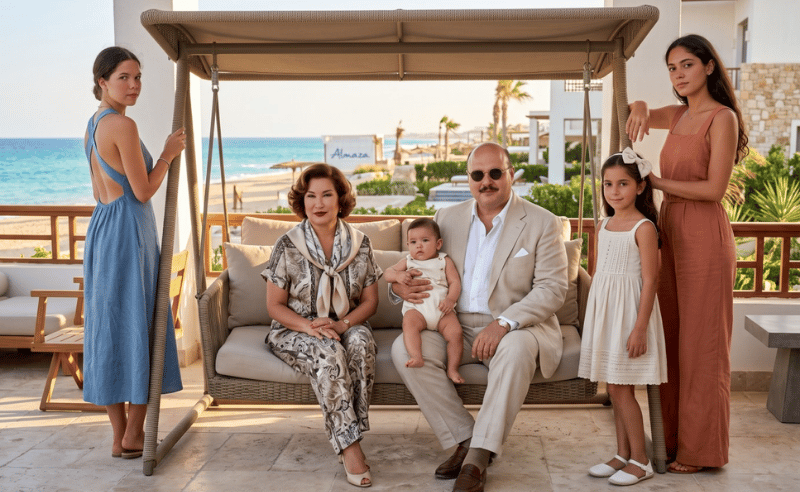 Which is, in the end, the only Egyptian inheritance that never loses its value. The ability to look rich long after the money is gone.
Credit: Source link