
Opinion: South Sudan’s Elections Must End the Transition and Usher in Democratic Government
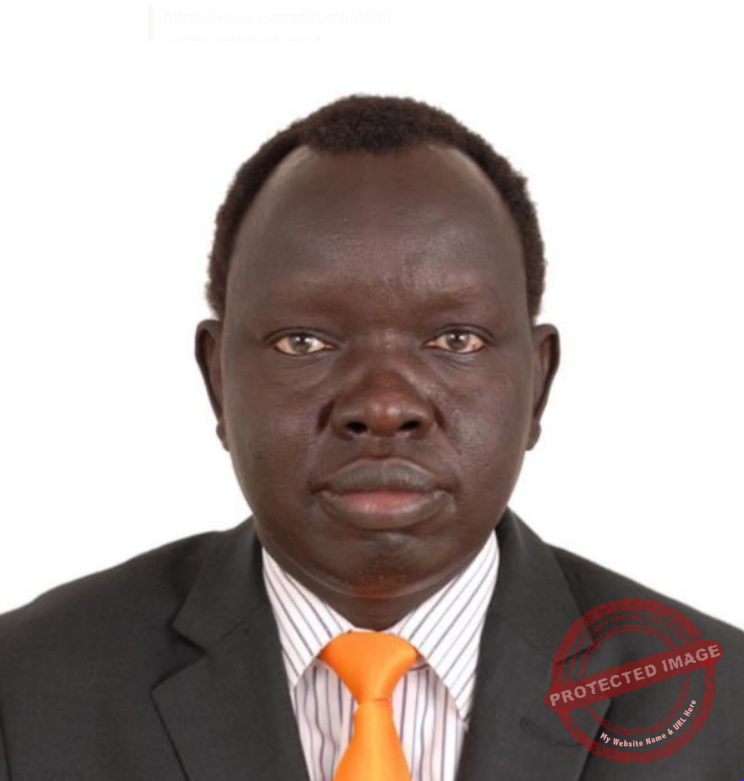

Tong Deng Anei – Courtesy
General elections are the foundation of democratic governance, allowing citizens to peacefully choose their leaders, renew legitimacy, and shape the future of their nation. For South Sudan, elections represent an opportunity to move beyond cycles of conflict, political uncertainty, and transitional arrangements. Understanding why elections matter requires revisiting the country’s history of war, peace agreements, and recurring political crises since independence.
South Sudan gained independence in July 2011 amid enormous hope among its citizens and widespread goodwill from the international community. Yet only two years later, political disagreements within the ruling Sudan People’s Liberation Movement (SPLM) descended into armed conflict. What began as a contest for political leadership quickly evolved into a national crisis, exposing the fragility of state institutions, the militarization of politics, and the absence of effective mechanisms for resolving political disputes peacefully.
The consequences extended far beyond South Sudan’s borders. Millions of people were displaced internally, while others sought refuge in neighboring countries. The conflict therefore became not only a national tragedy but also a regional humanitarian challenge.
Concerned about the growing instability, regional leaders-initiated mediation efforts culminated in the signing of the Agreement on the Resolution of the Conflict in the Republic of South Sudan (ARCSS) in 2015 and the formation of the Transitional Government of National Unity (TGoNU) in April 2016. However, the renewed fighting in Juba in July 2016 demonstrated that political agreements alone cannot sustain peace when security arrangements remain incomplete and trust between the parties is lacking.
Following the collapse of the 2015 agreement, the Intergovernmental Authority on Development (IGAD) reconvened the parties through the High-Level Revitalization Forum, which ultimately led to the signing of the Revitalized Agreement on the Resolution of the Conflict in the Republic of South Sudan (R-ARCSS) on 12 September 2018. Unlike its predecessor, the revitalized agreement was intended to provide a clear roadmap towards peaceful democratic elections. Instead, the transitional period has been extended several times, and elections originally anticipated in 2024 have now been rescheduled for December 2026.
Some of these extensions may have been justified, given that key institutions, including security arrangements remained incomplete. Nevertheless, a transition inevitably loses credibility if it becomes open-ended. Transitional agreements derive their legitimacy from the expectation that they will eventually return political authority to citizens through constitutional and democratic processes. When transitional institutions repeatedly extend their mandates, it is understandable that citizens begin to question whether the transition is still moving the country towards democracy or simply preserving the existing political arrangement.
Against this backdrop, the announcement by the National Elections Commission (NEC) that general elections are scheduled for 22 December 2026 is both significant and encouraging. If successfully implemented, it will provide South Sudanese citizens with their first opportunity since independence to elect national and subnational leaders through a nationwide democratic process. It also offers the prospect of establishing representative institutions with a direct electoral mandate from the people.
Announcing an election date, however, is only the first step. The more important question is whether the country will be sufficiently prepared to conduct elections that are peaceful, inclusive, credible, and broadly accepted by both participants and the public.
The credibility of an election is determined not only by the act of voting itself but also by the integrity of the entire electoral process. This includes effective voter registration, civic education, a political environment that allows peaceful participation of all contestants, transparent electoral administration, equitable access to information, and security arrangements that inspire confidence among voters. Equally important are mechanisms that facilitate the participation of historically underrepresented groups and ensure that electoral disputes are resolved through established constitutional and legal processes.
The Government therefore has an important responsibility to ensure that the National Elections Commission is provided with the financial resources required to carry out its mandate effectively, while preserving the Commission’s independence as provided for under the law. In turn, the NEC should continue to communicate a clear and comprehensive electoral roadmap, outlining key milestones such as voter registration, candidate nominations, civic and voter education, campaigning, polling, results management, and dispute resolution. Greater transparency throughout these processes would strengthen public confidence, improve stakeholder preparedness, and facilitate better coordination among the many institutions supporting the electoral process.
The transition from the current governance arrangements to an elected government will also require careful implementation of the legal provisions governing the electoral process. The National Elections Act provides the framework for dissolving the transitional institutions within the prescribed period before elections. As preparations advance, clear communication on how these provisions will be implemented, including arrangements for continuity of government and public administration, would provide greater certainty to political actors, public institutions, and citizens, while reinforcing confidence in the transition.
Political parties also have an important responsibility. The SPLM, as the leading party in government, should demonstrate confidence in democratic competition not only by supporting the electoral process but also by fostering a political environment in which all parties are able to campaign peacefully and engage voters freely. Likewise, opposition parties should commit themselves to peaceful political participation and resolve disagreements through constitutional and legal means.
Equally, concerns about electoral preparedness should not automatically be interpreted as opposition to elections. Some political actors may indeed prefer the continuation of transitional arrangements because they serve their political interests. Others, however, may be expressing legitimate concerns about security, institutional readiness, or the practical requirements for conducting credible elections. These perspectives deserve careful consideration and should be addressed through constructive dialogue, evidence-based decision-making, and continued institutional preparation.
Ultimately, the purpose of elections extends beyond identifying winners and losers. Elections provide citizens with the opportunity to confer democratic legitimacy on those who govern them and to hold public leaders accountable through peaceful constitutional means. In that sense, elections represent an important step in moving South Sudan beyond governance founded primarily on negotiated transitional arrangements towards governance grounded in the will of its citizens.
As South Sudan prepares for the December 2026 elections, the priority should be to ensure that the electoral process is both timely and well prepared. The transition has played an important role in advancing the implementation of the peace agreement, but it should continue to move steadily towards its intended constitutional destination. A nationally owned electoral process—characterized by security, inclusivity, transparency, and respect for the rule of law—offers the strongest opportunity to build public confidence and reinforce the legitimacy of the country’s democratic institutions.
The historic question, therefore, is not simply whether South Sudan will hold elections on 22 December 2026. Rather, it is whether those elections will mark the end of transitional politics and the beginning of a genuinely democratic system of government.
That, ultimately, is the standard against which the Government, the National Elections Commission, political parties, and all national institutions should be measured.
The Author: Tong Deng Anei is a former State Minister of Health for the government of Northern Bahr el Ghazal State, South Sudan. He is a Food Security specialist. Anei previously worked for United States Agency for International Development, United Nations and government helping to provide policy direction and implement humanitarian assistance programs. Reach him at anei.tong@gmail.com