

OPINION – China’s response to regional organizations: Contrasts between SCO and PIF
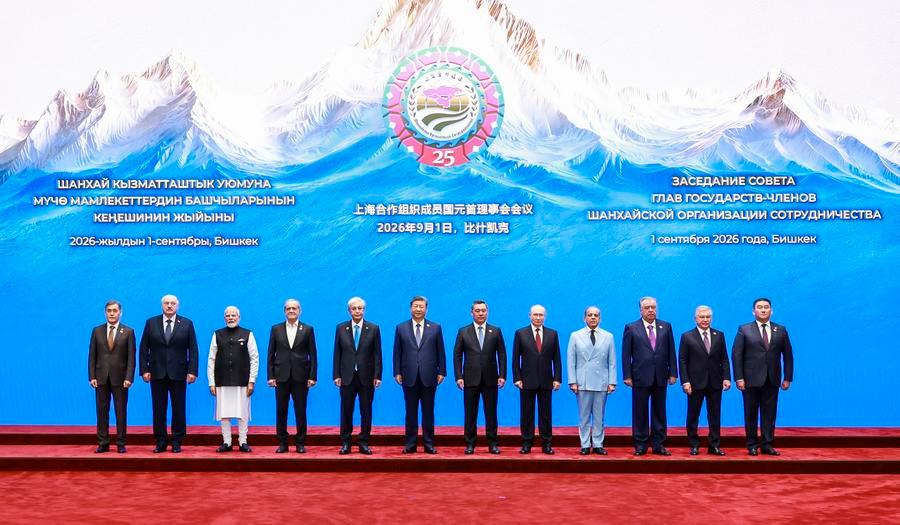
Beijing views the Shanghai Cooperation Organization (SCO) as a primary platform for advancing multipolarity, Global South representation, and economic integration across Eurasia
By contrast, China’s engagement with the Pacific Islands Forum (PIF) remains constrained by geopolitical friction over Taiwan’s participation and military concerns in the Pacific
China’s recent responses to two regional organizations – the Shanghai Cooperation Organization (SCO) and the Pacific Islands Forum (PIF) – have shown its distinct foreign policy priorities and objectives, whilst also highlighting the varying nature of the two geopolitical groupings.
On 1 September, President Xi Jinping traveled to Bishkek, the capital of Kyrgyzstan, to attend the 26th meeting of the Council of Heads of State of the SCO. He delivered a speech emphasizing the importance of global governance amid an increasingly multipolar world (Xinhua, 1 September 2026).
First, President Xi stressed the significance of strengthening the work of the United Nations and building a multipolar world, asserting that the SCO can contribute to the reform and improvement of global governance.
Second, as in his speeches on various other occasions, Xi criticized hegemonism, unilateralism, and protectionism, adding that most countries in the world do not embrace power politics, conflict, confrontation, isolation, or backwardness (Xinhua, 1 September 2026). He emphasized the need for the Global South to play a crucial role in maintaining the balance of power in international politics – a trend toward the inevitability of multipolarity.
Third, to move the world toward multipolarity, President Xi advocated the need for countries to build consensus, maintain equality and order, and uphold sovereignty and mutual respect. Regarding equality, he referred to the right of Global South countries to enjoy greater representation and a stronger voice in international affairs – a reflection of the socialist tone in Chinese international relations discourse.
Xi outlines vision for Global South and Eurasian cooperation
Fourth, President Xi appealed to all nations to support the UN Charter, to reject double standards, to jettison “bullying and the law of the jungle,” to oppose foreign interference, and to advance the rule of law in international relations.
Fifth, he asserted that global governance dominated by one country, a few countries, or a single bloc is by no means true multilateralism. As such, mutual respect, win-win outcomes, and inclusiveness represent the way forward.
Sixth, with its 25-year history, the SCO, according to President Xi, should advance prosperity and unleash its potential given that its member states straddle Asia and Europe. In other words, the SCO serves as a pragmatic platform for Eurasian countries to develop their economies, strengthen human interactions, and foster cross-border cooperation.
Seventh, the SCO can and should nurture a Global South spirit, foster South-South cooperation, and fulfill its mission of making global governance equitable and just through dialogue rather than confrontation.
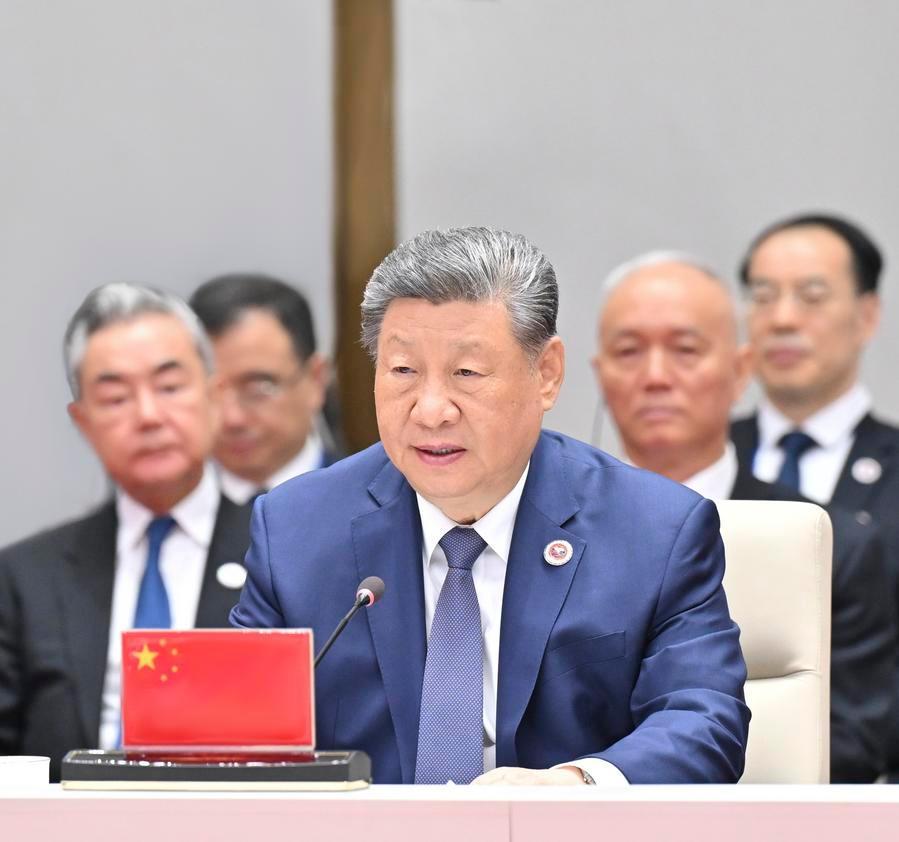
Eighth, President Xi appealed to SCO member states to adopt a people-centred and action-oriented approach to build “a community with a shared future for humanity” (Xinhua, 1 September 2026).
The tone of President Xi’s speech reflects a socialist outlook in China’s foreign policy framework, emphasizing equity, equality, justice, greater representation for the Global South, and the construction of a shared global community. Arguably, the vision of advancing toward multipolarity is similarly rooted in this conceptual context.
Evolving dynamics and pragmatic alliances within the SCO
This vision naturally contrasts with the US-led order focused on Western dominance and the universalism of Western values. China’s perspective not only incorporates socialist principles, but also takes into account the cultural, historical, and traditional differences of nations across the Global South—many of which were historically victims of Western imperialism and colonialism.
Currently, the SCO has ten member states: Belarus, China, India, Iran, Kazakhstan, Kyrgyzstan, Pakistan, Russia, Tajikistan, and Uzbekistan. Although some member states, such as India and Pakistan, or China and India, maintain territorial disputes, all members tend to focus on pragmatic areas of collaboration, ranging from trade and security to functional cooperation and sustainable development. As such, the SCO serves as a useful forum for discussing practical matters, emphasizing consensus, and mitigating bilateral tensions.
As one of the five original founding members—alongside Russia, Kazakhstan, Kyrgyzstan, and Tajikistan—Beijing’s priorities within the SCO have evolved significantly since initial preparations began in April 1996. The disintegration of the Soviet Union initially drove the group’s gestation, focusing on demilitarizing borders and building mutual trust. Following the SCO’s formal establishment in 2001, China’s focus shifted toward counter-terrorism and regional security, triggered by concerns over extremist movements bordering Central Asia. More recently, Beijing’s focus has expanded toward the Belt and Road Initiative, emphasizing energy, trade, transport, and infrastructure development.
India’s diplomatic balancing act between West and East
Although India is the only SCO member state that does not endorse China’s Belt and Road Initiative, New Delhi’s participation remains geopolitically significant. As a non-aligned nation and a Western-style democracy, India’s presence introduces a pro-Western perspective into a bloc otherwise dominated by Russia, China, and Central Asian states. India is also a member of the Quadrilateral Security Dialogue (QUAD)—alongside the US, Japan, and Australia—which functions as a security arrangement balancing China’s military posture in the Indo-Pacific. Consequently, India’s participation in the SCO is unique, requiring New Delhi to continually balance its Western security ties with its traditional non-aligned foreign policy stance.
The contrast between China’s strategic engagement with the SCO and the PIF is stark. Beijing places immense institutional value on the SCO, viewing it as a vehicle to foster global governance, advance multipolarity, and strengthen a non-Western multilateral coalition opposed to unilateral hegemonism
By contrast, China’s engagement with the Pacific Islands Forum (PIF) in 2026 was marked by formal protests regarding the forum’s handling of Taiwan, particularly given Taipei’s participation in the summit (Asia Times, 2 September 2026). The PIF took place concurrently with the SCO summit but witnessed the absence of five of its eighteen members: Kiribati, Fiji, Vanuatu, Samoa, and the Solomon Islands. Politically, the event was hosted by Palau, one of Taiwan’s remaining diplomatic allies in the Pacific (The Australian, 1 September 2026). Notably, Kiribati, Fiji, Vanuatu, Samoa, and the Solomon Islands all adhere to the one-China principle. It was widely observed that these nations skipped the event to avoid the diplomatic complications surrounding Taiwan’s presence.
Diplomatic friction over Taiwan’s standing in the Pacific
Addressing the absences, New Zealand Foreign Minister Winston Peters noted he was “suspicious” of the missing delegations, whereas Australian Foreign Minister Penny Wong remarked: “There are Pacific Island countries which have a different position, and we respect that they have that position” (The Australian, 1 September 2026).
Australian Prime Minister Anthony Albanese, who attended the PIF meeting alongside Energy Minister Chris Bowen and Pacific Islands Affairs Minister Pat Conroy, commented that the summit was well attended, adding that the debate surrounding Taiwan “distracted” from core substantive issues such as energy, climate change, and transnational crime (The Australian, 1 September 2026).
China’s ambassador to the Pacific, Qian Bo, stated that Beijing expressed “serious concern” regarding the platform afforded to Taiwan during the meeting (ABC News, 1 September 2026), confirming that the Chinese government had conveyed its position directly to Palauan authorities.
Taiwan’s Foreign Minister, Lin Chia-lung, led a large delegation of Taiwanese business leaders to the forum in Koror, Palau’s commercial centre. Their attendance aligned with Taipei’s “New Southbound Policy” aimed at deepening economic and practical ties with Pacific island nations.
Palau President and incoming PIF Chairman Surangel Whipps told reporters that China had attempted to block Taiwan’s participation, asserting that he “would not be bullied” (ABC News, 1 September 2026).
Historical precedents and the consensus mandate at the PIF
Interestingly, at the 2025 PIF meeting, Solomon Islands Prime Minister Jeremiah Manele proposed that all twenty-one external “dialogue partners” and “development partners”—including the US, China, the UK, and Taiwan—be excluded from attending. The official rationale was that the forum had grown overly cumbersome and required a review of partnership structures—a pragmatic move that effectively sidelined both Beijing and Taipei.
Similarly, at the 2024 PIF Summit, the Solomon Islands argued that Taiwan should be removed from the organization on the grounds that it is not a sovereign state, citing international legal norms. China supported the motion. However, three Pacific nations maintaining formal diplomatic ties with Taiwan—Palau, Tuvalu, and the Marshall Islands—opposed the initiative. Because the PIF operates on strict consensus, the motion failed to secure unanimous support, and the forum ultimately reaffirmed its 1992 communiqué maintaining the status quo (ABC News, 30 August 2024). Taiwan subsequently signed a three-year development agreement (2024–2027) with the PIF Secretariat (Island Times, 3 September 2024).
In response to the 2024 decision, Ambassador Qian Bo argued that the 1992 communiqué should be “corrected,” noting: “The situation is obvious; among the eighteen members of the PIF, fifteen countries have diplomatic relations with China, and fifteen countries have categorically stated they stand by the one-China principle” (ABC News, 30 August 2024).
Consequently, Taiwan’s status within the PIF remains a persistent source of friction, both among member states themselves and between Beijing and Taipei’s regional allies.
Pacific security anxieties and contrasting diplomatic outcomes
Compounding the geopolitical sensitivity of the early September 2026 PIF summit was China’s testing of a submarine-launched intercontinental ballistic missile into the Pacific Ocean on 6 July—an action that raised immediate concerns in Japan, Australia, and New Zealand (The Straits Times, 6 July 2026). Xinhua reported that the test was a routine, safe, and professional exercise.
However, for Pacific nations that view China’s expanding military footprint with apprehension, the missile test heightened regional anxieties. As a result, Palauan President Surangel Whipps called on 3 September 2026 for a “unified” response from PIF member states on the final day of the summit (The Straits Times, 3 September 2026).
The contrast between China’s strategic engagement with the SCO and the PIF is stark. Beijing places immense institutional value on the SCO, viewing it as a vehicle to foster global governance, advance multipolarity, and strengthen a non-Western multilateral coalition opposed to unilateral hegemonism.
In conclusion, Beijing’s divergent experiences with the SCO and the PIF highlight the former’s central role in Chinese grand strategy and the persistent friction surrounding Taiwan at the latter. While the SCO provides a reliable platform for China to deepen ties with Russia and Central Asia—advancing economic integration, regional security, and its vision of a multipolar world order—the PIF illustrates the limits of Beijing’s influence in sub-regions where Taipei retains diplomatic recognition. As long as Palau, Tuvalu, and the Marshall Islands maintain formal ties with Taiwan, the PIF will remain a challenging venue for Beijing to exert full diplomatic leverage.
*Sonny Shiu-Hing Lo is a political scientist, veteran commentator, and author of numerous books and academic articles on Hong Kong, Macau, and Greater China. He is also an honorary professor in the Department of Politics and Public Administration at the University of Hong Kong.