

Olam Palm Gabon wants to close Makouké after the destruction of 5,000 hectares of its palm groves by elephants
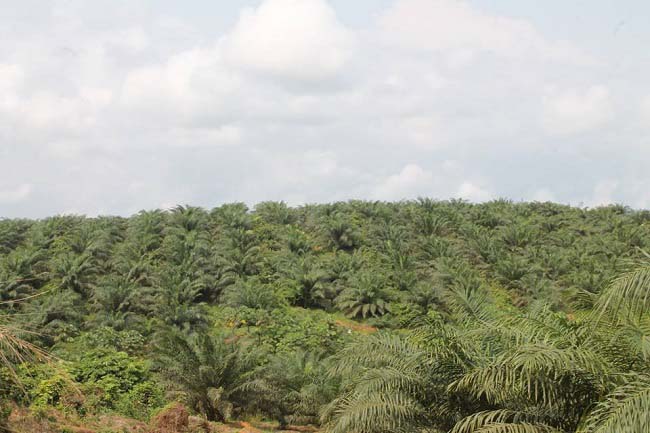
In Gabon, the pressure exerted by conflicts between wildlife and agribusiness has reached a critical level. In Makouké, a locality in Moyen-Ogooué near Lambaréné, the local subsidiary of Olam Palm is now considering a partial or even total closure of its oil palm production site. The repeated incursions of elephants into the industrial plantations are to blame. According to the Singaporean trading and brokerage company, “almost 5,000 hectares of palm groves have been destroyed by the pachyderms, compromising the site’s profitability and forcing a significant reduction in activities.”
This situation poses a serious economic and social threat to Makouké. A significant portion of the local population depends directly or indirectly on the operations of Olam Palm Gabon, a subsidiary of the Singaporean group specializing in palm oil.
The contraction of activities has already resulted in job losses and a visible slowdown in the local economy. For a city with a strong agricultural vocation, the impact is immediate and profound.
The concern is echoed by political leaders. On the airwaves of Radio France Internationale (RFI), the local deputy, Rolf Mavitsi Nziengui, sounded the alarm: “There is really unemployment. In the area, I assure you, I don’t know how to describe it, but it’s alarming.” He calls for dialogue with the company to avoid a total disappearance of its activities in Makouké. According to the elected official, “there are still opportunities to avoid a permanent closure.” He pleads “for urgent discussions between the State, local communities, and the agribusiness operator.”
Official sources report that Olam Palm Gabon has also lost around 10,000 hectares of palm groves in the Ngounié province, in the south of the country, due to elephants. Faced with the extent of the losses, the company has started deploying electric fences around certain plantations. These investments aim to limit animal intrusions, without offering a sustainable solution on a large scale.
On a field mission, the Gabonese Minister of Agriculture, Pacôme Kossy, acknowledged “the seriousness of the situation.” However, he calls for “a balanced response, reconciling crop protection and preservation of the elephant, a strictly protected species in Gabon.”
For the government, the rapid growth of the elephant population, facilitated by conservation policies, is now intensifying conflicts with human activities, both agricultural and industrial. While authorities consult scientists and sector experts, the future of the Makouké site remains uncertain. For local populations, a closure of Olam Palm Gabon would be a major blow to employment and regional economic stability.
Credit: Source link