

Nuclear Fusion: New US-China Race for Limitless Power
While U.S. competition with China dominates discussions around artificial intelligence, rare earth metals, trade and defense, another race is quietly underway—and the winner could shape the future of energy.
The prize, nuclear fusion, could be a near-limitless long-term energy source. Its fuel is mainly isotopes of hydrogen—the most common element in the universe.
“We need to understand that what’s actually at stake here isn’t just an energy technology—it’s a potential reordering of global power,” David Lin, senior adviser for tech leadership and fusion energy at the Special Competitive Studies Project (SCSP) think tank, told Newsweek.
Unlike fossil fuels, fusion does not rely on combustion. And unlike nuclear fission, there’s no risk of a catastrophic meltdown. Fusion is also not at the mercy of weather conditions as solar, wind, and wave power so often are.
No country has generated electricity from fusion on the scale needed for commercial power. But the technology already has the interest of a growing number of future-focused companies, including AI firms that have signed deals for power years before it’s ready.
Trump Media & Technology Group, the parent of President Donald Trump’s media firm Truth Social, is one of these players. It’s merging with California-based fusion developer TAE Technologies this year in a deal worth over $6 billion.
Power of the Sun
Fusion occurs in most stars when light atomic nuclei collide. Reproducing it on Earth requires temperatures exceeding 180 million degrees Fahrenheit.
While several means of achieving fusion have been explored, most experiments are held in tokamaks, a Russian acronym that describes a ring-shaped construction where magnetic coils contain superheated plasma and keep it from damaging the reactor wall.
American scientists have more than half a century of experience, dating back to early programs that emerged from mid-20th century nuclear weapons research. In 2022, scientists at the Lawrence Livermore National Laboratory’s National Ignition Facility in California achieved a key milestone with a fusion reaction that produced more energy than was required to ignite it.
But while the country retains an edge in research, superconductors, software and lasers, this lead is narrowing as China closes the gap through heavy investment and its rapid build out of new facilities.
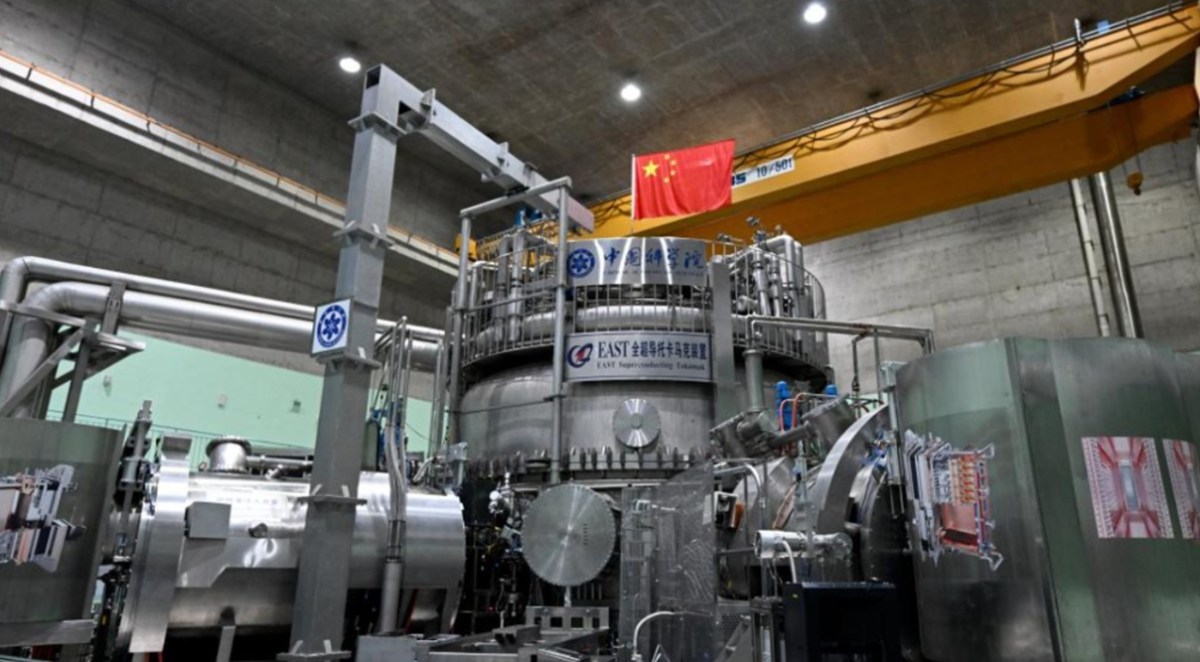
In June, scientists at the Institute of Plasma Physics in Hefei, in the eastern province of Anhui, said the Experimental Advanced Superconducting Tokamak (EAST), dubbed China’s “artificial sun,” announced they had successfully tested two domestically developed parts critical to future commercial reactors: a toroidal-field magnet and a high-temperature superconducting central solenoid coil.
Chinese dominance in manufacturing, mass production, skilled labor, and rare earth elements could hamper the U.S.’s fusion push, the SCSP warned in an October assessment.
“This strategic approach mirrors [China’s] success in solar panels and electric vehicle batteries, potentially limiting the United States’ ability to scale fusion engineering breakthroughs into commercial reactors,” the report said.
AI Push and Pull
Artificial intelligence is expected to supercharge fusion advances, and the relationship is a symbiotic one.
AI can help accelerate reactor design, optimize real-time operations and run complex simulations of plasma behavior and reactor performance, potentially allowing the industry overcome some of the technical hurdles that have kept the technology from becoming commercially viable.
Fusion could eventually provide the reliable electricity needed to power the next generation of AI infrastructure, Dennis Whyte, fusion scientist and CEO of the United Kingdom Atomic Energy Authority (UKAEA) Group, told Newsweek.
The scale and reliability of the electricity required by data centers could make technology companies among the first major buyers of commercial fusion power, he said.
“You need significant amounts of power generation. This will likely be one power which is dedicated or largely dedicated to the use of the data at the data centers,” he said. “And the data centers themselves are going to require extremely reliable and large amounts of power.”
That surprised many in the fusion industry who had expected large utilities to be the biggest customers, Whyte said.
The market is already responding.
Commonwealth Fusion Systems, a private company cofounded by Whyte and other MIT researchers, signed a deal with Google last year to sell half the power from its planned 400-megawatt single-tokamak reactor plant—enough to power roughly 150,000 to 200,000 homes.
Construction of the plant, named ARC, is slated to begin near Richmond, Virginia, next year, with hopes it can be brought online in the early 2030s.
The deal is a bet on a “technology with transformative potential,” Google’s head of advanced energy, Michael Terrell, said.
In Everett, Washington state, Helion Energy has signed a deal to supply Microsoft with at least 50 megawatts of electricity from a planned fusion power plant. The company is pursuing a field-reversed configuration, an alternative design to the tokamak.
And unlike the ARC project, the Helion site is designed to deliver electricity to the local grid.
How To Break Through
Three things are required to make fusion energy commercially viable: the fuel must be hot enough, dense enough and confined long enough to sustain the reaction and produce excess energy.
But the “triple product” is only one part of the picture, said Thomas Sunn Pedersen, CTO of Type One Energy, a fusion startup pursuing stellarators, a rival design that seeks to hold plasma steady without the large electrical currents used in tokamaks.
A reactor must also keep the fusion reaction going long enough to generate a steady supply of electricity, and at a cost that makes commercial power practical. Simply achieving a higher number in an experiment does not resolve the engineering hurdles standing between fusion and commercial power generation, Pedersen told Newsweek.
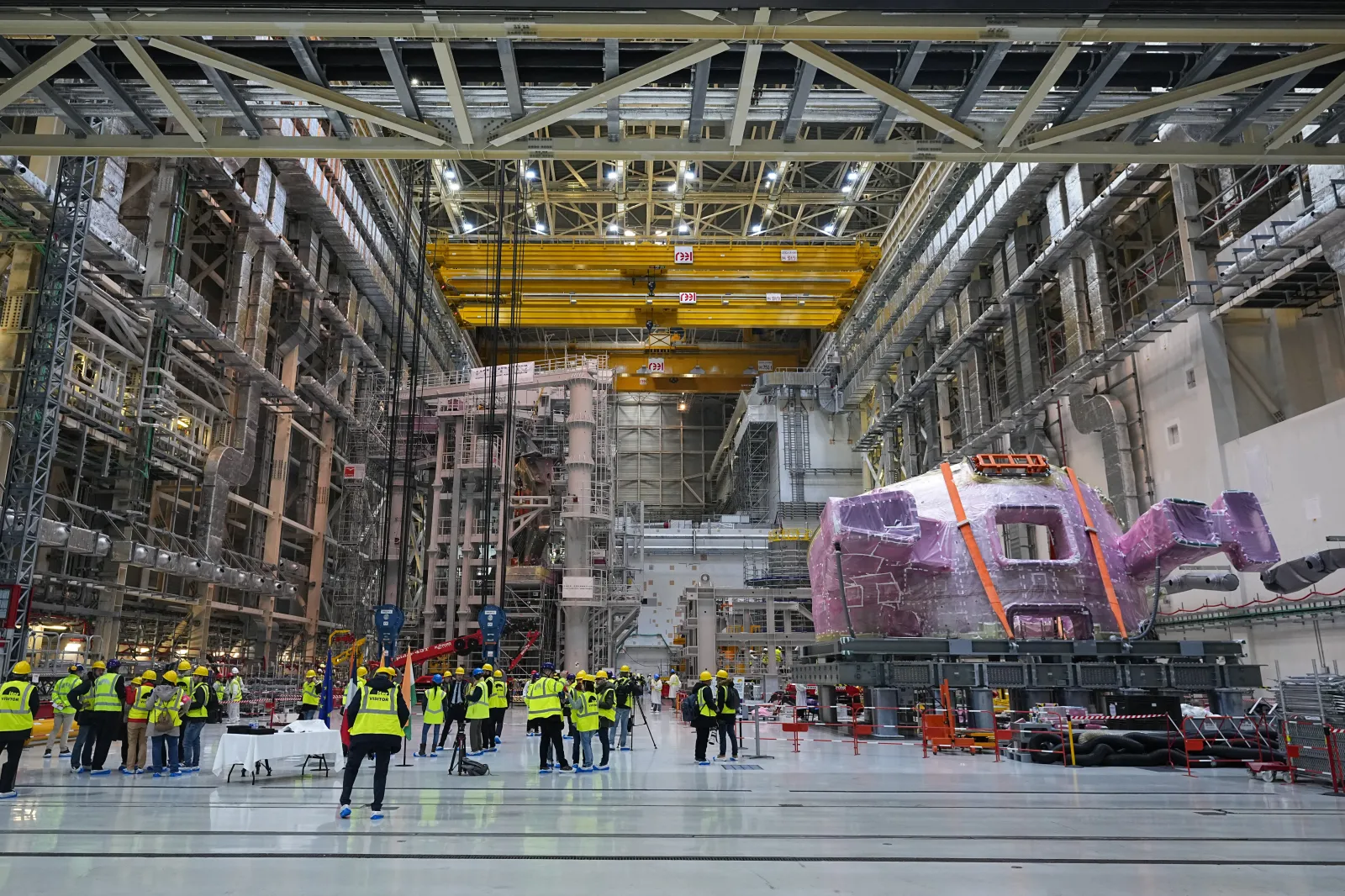
Both the U.S. and China are among the seven contributing members of ITER, a massive tokamak reactor core under construction in southern France, alongside the European Union, Japan, South Korea, India and Russia
The project aims to demonstrate sustained fusion at scale, with participants getting access to research, technology and operating experience that could shape their own commercial plants in the future.
The Slim US Lead
With the National Ignition Facility 2022 breakthrough, the U.S. remains the only country to have achieved fusion ignition.
“This, of course, did not happen overnight and was the result of decades of sustained federal funding and investments in research and development,” Lin said.
“Overall, I think the U.S., thanks largely to hard-charging startups backed by private capital, is leading the world in fusion, and remains home to the largest, most dynamic private fusion industry globally,” Lin said.
The U.S. fusion effort has so far been characterized by private investment alongside federal research funding. The U.S. Energy Department’s Fusion Energy Sciences program received $790 million last year.
The U.S. had 42 fusion companies as of 2025. Collectively, they had raised about $8.05 billion, accounting for roughly 53 percent of global funding for private fusion companies, according to a September assessment by the F4E Fusion Observatory., which is part of the EU organization managing contributions to ITER.
In terms of private funding, China is believed to be a distant second with about $5.14 billion invested in eight companies, or around 34 percent of the total, the report said.
Public and private funding is difficult to estimate in China given the close ties of many nominally private companies with the state.
China’s Rising Talent
China is pursuing the same goals as the U.S. but with a more state-directed approach.
“It’s actually a competition between larger [political] systems that are actually about development of these kinds of technologies,” Whyte, head of UKAEA, said.
There are virtually no limits on the Chinese Communist Party’s ability to marshal investment for technologies it deems strategic. Fusion was named an “industry of the future” in the Party’s five-year development plan unveiled in January.
“China is moving fast to convert that same science into large-scale infrastructure, a phase of commercialization where it stands to gain the most ground,” Lin said.
As of last year, China had mobilized at least $6.5 billion toward commercialization-relevant fusion projects since the start of 2023—almost three times what the U.S. Energy Department’s fusion program received over the same period, Lin said.
China boasts a growing pool of highly trained science and engineering workers. The country awarded around 50,000 STEM Ph.Ds in 2022, compared to fewer than 34,000 in the U.S., the Financial Times-owned magazine fDi Intelligence said last year.
China has also overtaken the U.S. in fusion patents, according to a 2023 analysis by Tokyo-based technology intelligence firm Astamuse.
America’s Greatest Hurdle
China benefits from a well-established manufacturing base, industrial-scale construction capacity and vast experience building nuclear energy infrastructure at home and abroad.
This matters because fusion cannot be commercialized solely through scientific breakthroughs. The U.S. will need to manufacture the specialized materials needed for reactors domestically or acquire them through secure supply chains, said Pedersen of Type One Energy.
“We can’t just all rely on China to produce everything for us,” Pedersen said. Western countries became overly reliant on Chinese factories, prioritizing short-term economics without fully accounting for geopolitical vulnerabilities, he added.
The U.S. government acted on one of SCSP’s recommendations last year by establishing a dedicated Office of Fusion at the Energy Department, but funding levels aren’t there yet, according to Lin, the SCSP adviser.
The think tank has called on the federal government pump $10 billion into the fusion ecosystem, funding that will derisk private sector pilot plants, build shared infrastructure and develop a domestic supply chain that no one company could build alone.
An investment of this scale could “turn fusion from a scientific breakthrough into a scalable commercial energy source,” Lin said. But there is much work left to be done to convince private investors that “there is a path to fusion energy on a time scale that is of interest.”
Contact Newsweek editors on this story: John Feng and James Debens