

NRA Bill Reaches Key Legislative Deadline | Politics
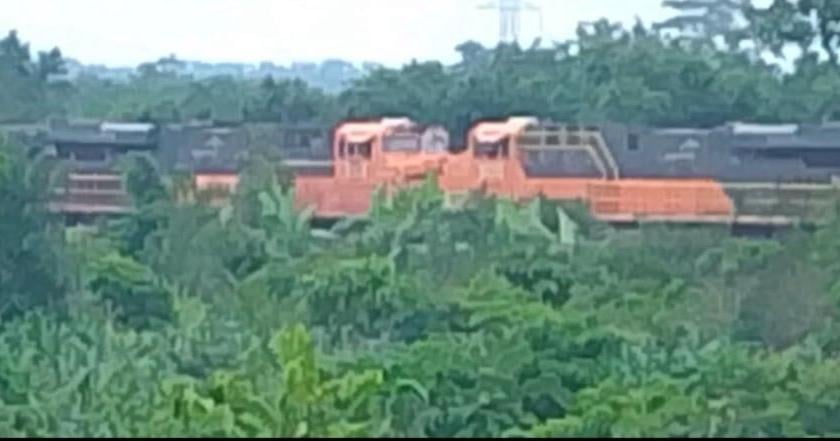
As the Legislature reaches today’s submission deadline for the proposed National Rail Authority (NRA) Act, unresolved questions surrounding ArcelorMittal Liberia’s (AML) latest train collision are reinforcing the very concerns the legislation is intended to address.
The proposed law, which seeks to establish an independent statutory regulator for Liberia’s railway sector, enters a critical stage at a time when the public is still awaiting answers about the May 27 collision involving two AML locomotives along the Yekepa-Buchanan railway. More than a month later, no official accident report has been released, while the identities and condition of the train operators involved remain unknown.
The convergence of the two developments has not gone unnoticed. While lawmakers move the legislation through the next phase of the legislative process, residents, rail observers and communities along the railway corridor continue to question whether Liberia’s existing oversight framework is adequate to regulate one of the country’s most strategic pieces of infrastructure.
The collision occurred near Kilometer 212, close to Gbadin Camp #3 along the Sanniquellie Highway, when two AML locomotives traveling in opposite directions—one hauling iron ore toward Buchanan and the other reportedly returning empty from Buchanan—collided, leaving several wagons derailed and scattered along the rail corridor.
Although the exact cause of the accident has yet to be officially established, early accounts suggested that communication failures may have played a role.
“The cause of the accident is yet to be established, but many presumed the cause to be poor communication along the railroad,” local accounts suggested.
The submission deadline for the NRA Bill marks another important step in converting President Joseph Nyuma Boakai’s Executive Order No. 136 into permanent legislation.
Issued on October 10, 2024, the Executive Order declared that Liberia’s railway infrastructure is a strategic national asset requiring independent regulation in the national interest.
Among its key provisions, the Executive Order states that “there is an urgent need to establish a National Rail Authority to regulate the rail sector and ensure safe, efficient, reliable, transparent and equitable access to Liberia’s railway infrastructure.” It further mandates the Authority to “regulate railway operations, promote rail safety, ensure fair and non-discriminatory access to railway infrastructure, protect the national interest, and facilitate the development of a modern, efficient and multi-user railway system.”
If enacted, the proposed legislation would give the National Rail Authority permanent statutory authority to regulate railway operations, establish safety standards, oversee infrastructure access, enforce accident reporting requirements and supervise the country’s transition toward a multi-user railway system under independent oversight.
Supporters of the legislation say the unresolved questions surrounding the May 27 collision underscore precisely why Liberia requires an independent rail regulator with legal authority to oversee safety, investigate accidents and ensure transparency on infrastructure that serves the country’s broader economic interests.
Journalists who arrived at the accident scene shortly after the collision reported being prevented by rail workers from photographing the wreckage or gathering information. They were instructed to first obtain clearance from ArcelorMittal Liberia’s Communications Department before taking photographs or making further inquiries.
Early reports also suggested that crew members aboard the empty locomotive may have sustained injuries, as that locomotive reportedly suffered extensive damage during the collision. However, no official information has since been released identifying the operators involved or explaining their condition.
At the time of the accident, the Liberia National Police confirmed the collision but indicated investigators had not yet interviewed the operators because they had been transported to Yekepa.
“We are yet to talk with the operators because they were taken to Yekepa, but there was no report of any casualty,” said Nimba County Police Detachment Commander Larmin Mendin.
More than a month later, however, Commander Mendin acknowledged that investigators had experienced difficulty obtaining information from the company.
“AML is not open to investigation, so I couldn’t say anything about the status of the company,” he said during a follow-up interview on June 29.
The questions surrounding the May 27 collision are not occurring in isolation. They come against the backdrop of previous rail accidents and longstanding concerns over whether existing government institutions possess sufficient authority to independently investigate serious incidents involving concessionaires operating Liberia’s railway.
Barely six months earlier, on December 15, 2025, another serious rail accident involving an ArcelorMittal Liberia locomotive occurred along the same Yekepa-Buchanan railway. That incident likewise raised concerns about transparency after government regulators disclosed that they had not been formally informed.
The Director of Rail at the Ministry of Transport, Mr. Amos K. Tuah, confirmed to the Daily Observer that his office had not been officially notified by ArcelorMittal Liberia about the December 15 incident.
Officials at both the Ministries of Mines and Energy and Labor also failed to respond to the Observer’s requests for comment.
The absence of official notification and response raised concerns about compliance with accident-reporting obligations and the effectiveness of government oversight over Liberia’s rail sector. The apparent lack of reporting in December, coupled with the continued absence of a public accident report following the May 27 collision, has intensified calls for an independent statutory regulator capable of ensuring that serious rail incidents are promptly investigated, documented and reported to the appropriate Liberian authorities.
The latest collision also follows several other rail-related accidents recorded along the Yekepa-Buchanan corridor over the years.
Among them was an earlier locomotive collision near the former CNC Camp along the Ganta-Saclepea road that left two operators—a South African and a Liberian—seriously injured. In another incident, two railway maintenance workers reportedly lost their lives when their maintenance cart collided with an oncoming train. About two years ago, a female heavy-duty truck driver transporting iron ore also reportedly died in another operational accident, the circumstances of which were never comprehensively disclosed publicly.
The recurrence of such incidents has intensified public debate over operational safety, accident reporting procedures, emergency response protocols and the extent of independent government oversight over Liberia’s busiest mining corridor.
The concerns are particularly significant given AML’s current operating model, which employs paired locomotives hauling trains estimated to exceed one hundred wagons of iron ore in order to maximize transportation capacity between Yekepa and Buchanan.
Residents in Nimba County say the continued absence of official information surrounding the May 27 collision has deepened public concern.
“It is becoming confusing why a company is refusing to comply with state security when it comes to situations that demand public attention, especially involving lives and properties,” one resident said.
Another resident, Elijar Bows, questioned whether previous railway accidents had ever been independently investigated by Liberian authorities.
“Since AML began operating, we don’t know whether the national police has ever investigated any incident involving a locomotive accident,” he said.
“No person or company is above the law, so we expect the police and any company to comply with the laws,” he added.
Whether by coincidence or circumstance, the Legislature’s consideration of the National Rail Authority Act has reached a critical stage just as the public continues to seek answers about one of the most serious rail accidents in recent months. Supporters of the legislation argue that the unresolved questions surrounding the May 27 collision—and the apparent difficulties experienced by regulators and investigators in obtaining information—illustrate why Liberia can no longer rely solely on concessionaires to police themselves. They contend that the country needs an independent authority, backed by law, with clear powers to regulate rail operations, enforce safety standards, investigate accidents, require timely accident reporting and ensure that one of Liberia’s most valuable economic corridors is governed in the national interest.
Up to press time, neither ArcelorMittal Liberia nor the Liberia National Police had released a comprehensive report detailing the cause of the May 27 collision, the identities or condition of the operators, the extent of the damage or the findings of any official investigation.
Credit: Source link