

Nigeria’s Election: Are We Watching the Wrong People?
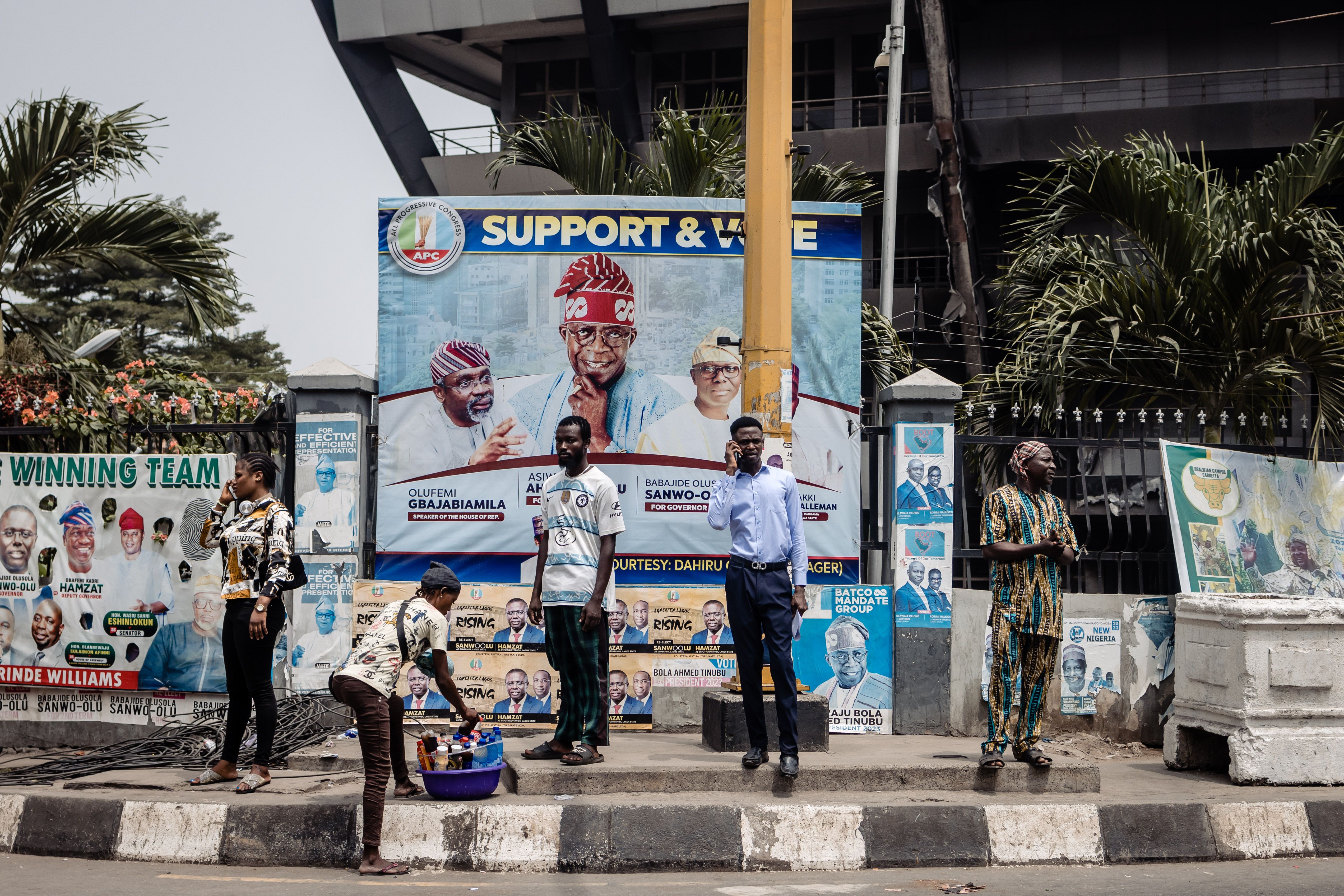
As Nigeria heads towards its presidential election early next year, we already know where we’re supposed to look.
The headlines will focus on President Bola Tinubu and the challengers hoping to unseat him. We’ll analyse rallies, defections, opinion polls, and endorsements. We’ll debate who’s up, who’s down, and who’s made the latest political misstep.
But what if we’re watching the wrong people? What if one of the most important figures in Nigeria’s election is the person who never turns up?
According to Nigeria’s Independent National Electoral Commission (INEC), President Bola Tinubu won the previous February 2023 presidential election with 8.79 million votes, defeating former vice-president Atiku Abubakar, who received 6.98 million votes, and Labour Party candidate Peter Obi, who won 6.1 million. Most striking, however, is this: although 93.47 million Nigerians were registered to vote, fewer than 25 million cast a ballot.
In other words, Tinubu became president with the support of fewer than one in ten registered voters. That does not make his victory illegitimate. He won under Nigeria’s electoral rules and his mandate is constitutionally valid.
But it raises a much bigger question than who won the election. It asks: what does it mean for a democracy when so many registered citizens do not vote? That question is particularly important because there is no shortage of public frustration across Nigeria today.
Wrong Direction
A recent voter tracker by SBM Intelligence, a Nigerian geopolitical risk and research consultancy, found that nearly 80% of Nigerians believe the country is heading in the wrong direction, with economic hardship and insecurity topping their concerns. Yet Cheta Nwanze, a partner at SBM Intelligence, believes dissatisfaction alone may not be enough to unseat President Bola Tinubu. Speaking to Reuters last week, he argued that the president’s best chance of re-election may lie in low voter turnout and a divided opposition.
This should make one stop and think. We tend to assume that dissatisfaction naturally translates into votes for change. It doesn’t always. Sometimes frustration leads not to political action but to political withdrawal.
I’ve covered elections across Africa for years, and this isn’t a uniquely Nigerian story. Every election has its rallies, slogans, promises, and crowds. As journalists, that’s where our attention naturally goes. That’s what we photograph. That’s what we report.
But elections are also shaped by the people who never arrive. How do you report on the person who isn’t there? How do you tell the story of someone who has simply disengaged?
Of course, we should be careful before assuming everyone who didn’t vote consciously chose to stay home. The INEC has acknowledged shortcomings in the voters’ register, including duplicate registrations, deceased voters, and inaccurate records, and has been undertaking a nationwide exercise to clean up and revalidate it ahead of the 2027 election. Not everyone who was registered was necessarily able to vote. Others never collected their Permanent Voter Cards. There were also logistical, administrative, and security obstacles that prevented some people from casting their ballots.
But those explanations do not account for everyone. There are those who care deeply about Nigeria but may no longer believe voting will change very much. We don’t yet know how many people fall into this category – and we may never know. But the possibility alone should concern us. Perhaps we’re too quick to assume that the opposite of political support is political opposition. Sometimes the opposite is disengagement. It’s a distinction that matters.
Faith
Elections don’t simply measure public opinion. They also measure public faith. Every ballot cast says, “I still believe this system is worth participating in.” Nowhere may that question be more important than among younger Nigerians.
INEC’s figures show that voters aged between 18 and 34 made up almost 40% of Nigeria’s electoral register in 2023. Spend five minutes on Nigerian social media and you’ll see just how politically engaged many young Nigerians are. They debate, organise, criticise, and campaign with remarkable energy. But political engagement is not the same as electoral participation.
You can follow every political development, be deeply unhappy with the direction of the country, argue about politics every day – and still decide not to vote. That, to me, is one of the most important stories of Nigeria’s next election. Not simply who wins, but whether more Nigerians decide that participating in democracy is still worth their time and their trust.
When the votes are counted, the headlines will naturally focus on the winning candidate. I hope we pay just as much attention to another number: how many Nigerians turned up at all. Because the health of a democracy isn’t measured only by who wins power. It’s also measured by how many citizens still believe their vote is worth casting.
For me, that’s one of the most important questions of Nigeria’s next election. Not simply who wins, but whether enough Nigerians still believe democracy is worth showing up for.
Paula Slier is an international journalist, war correspondent, and speaker whose work focuses on geopolitics, modern conflict, and information warfare.
Credit: Source link