

Nigeria’s data localisation deadline is testing its financial infrastructure
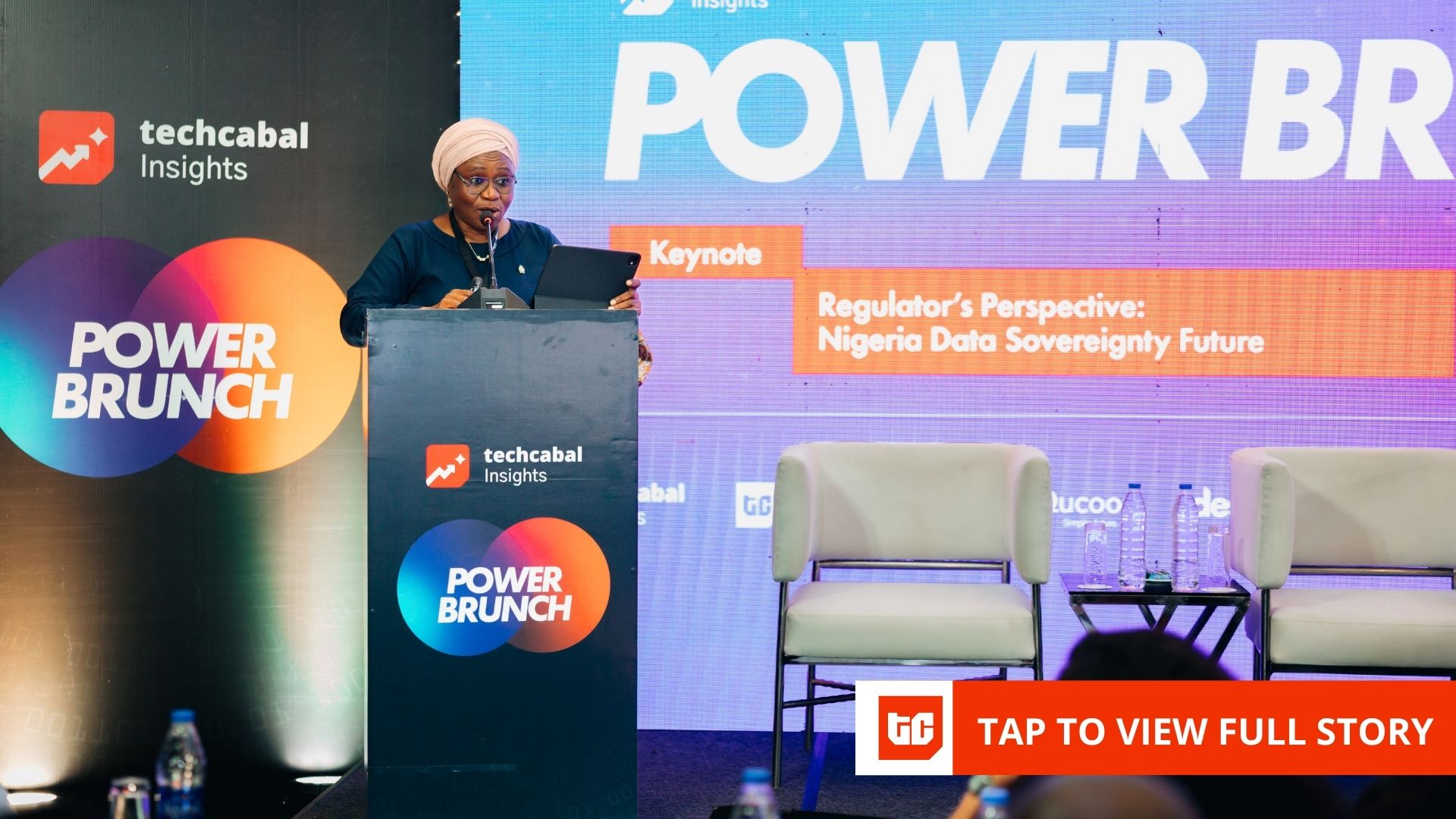
Nigeria’s January 1, 2027 deadline for payment data localisation is forcing financial institutions to rethink how they store, secure and manage critical customer and transaction data.
The challenge goes beyond moving databases onto Nigerian servers. Banks and fintechs must strengthen local control without sacrificing access to global technology or creating new infrastructure and concentration risks.
That question was at the heart of discussions across three panel sessions at the TC Insights Power Brunch, organised by TechCabal’s research and intelligence arm, in collaboration with Amazon Web Services (AWS). Speakers examined what localisation will mean in practice—and the infrastructure, security and governance challenges financial institutions must address before the deadline.
Localisation is fundamentally an engineering and governance hurdle rather than a simple real-estate mandate for servers. Moving databases into domestic facilities addresses regulatory compliance on paper, but it does not inherently guarantee operational resilience or security against systemic shocks.
The Central Bank of Nigeria (CBN) also sought to draw a line between sovereignty and isolation. The regulatory objective is not to sever links with global hyperscalers or to replace foreign platforms with untested domestic alternatives, but to establish local oversight of core financial records.
That approach reflects how Nigeria’s digital infrastructure already operates. Government agencies maintain active partnerships with global technology providers: Microsoft works with the Economic and Financial Crimes Commission (EFCC) on cloud-based AI and machine-learning analytics; Amazon Web Services partners with the Federal Ministry of Education on cloud computing and AI certification programmes across federal and state tertiary institutions; while Huawei maintains a technical partnership with state-owned digital infrastructure provider Galaxy Backbone Limited.
For the financial sector, the implication is clear: greater control over critical data does not have to come at the expense of access to global cloud, software and infrastructure capabilities. The challenge is to build a model that strengthens domestic control while keeping Nigeria connected to the global technology ecosystem.
But local data does not automatically mean resilient data. An institution could move its primary database to Nigeria while retaining an offshore backup. It could localise production while remaining dependent on an external control plane, or several financial institutions could rely on the same local infrastructure provider, creating a new concentration risk. This is why the discussions increasingly framed localisation as an exercise in resilience.
Before migration comes mapping
To avoid costly configuration failures, institutions must audit data pipelines exhaustively prior to physical database migration. A comprehensive audit must map where payment data originates, where it is transformed, how it replicates across fallback clusters, and which third-party microservices hold peripheral access keys.
The mapping must go beyond databases to include metadata, logs, applications, workflows and other systems surrounding payment data. This also makes localisation much more than an IT project. Decisions will affect legal, compliance, cybersecurity, finance, product, operations and vendor relationships. Executive and board-level ownership will therefore be necessary.
Panel discussions also stressed that organisations should establish their compliance baseline, adopt a risk-based approach and determine the architecture that fits their objectives before sequencing migration. Data privacy impact assessments and demonstrable technical controls should form part of the process.
The infrastructure paradox
Enforcing local storage accentuates structural infrastructure deficits. A local server room provides negligible protection if redundant power grids, fibre optic backbones, and geographically separated disaster-recovery sites are lacking. That creates a delicate balance.
Nigeria needs stronger domestic infrastructure without cutting its financial sector off from the scale and capabilities of global cloud platforms. The CBN’s position is that the two are not mutually exclusive: international technology providers can remain part of the ecosystem, provided services supporting critical financial institutions meet requirements for security, resilience, sovereignty and regulatory visibility.
The shift could also unlock a broader infrastructure market, driving demand for data centres, cloud services, connectivity, cybersecurity, systems integration, digital skills and disaster recovery. But that investment will depend on regulatory clarity. Questions remain around hybrid environments, cross-border processing, third-party arrangements, disaster recovery, and which datasets ultimately fall within residency requirements.
True scale demands moving beyond surface-level integrations to robust execution. We’ve filtered the noise out of Moonshot 2026, optimising the conference strictly for high-calibre connections between startup founders, global financial operators, enterprise leaders and individuals rewiring Africa’s technical frameworks. Get 20% off Early Bird tickets for a limited time.
Crédito: Link de origem