

Nigeria yellow fever situation: First five months of 2026
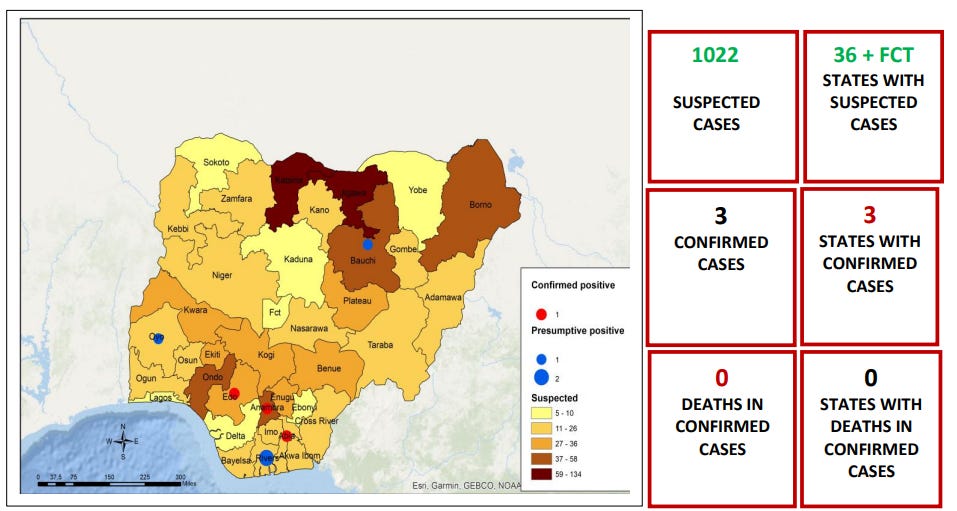
The Nigeria Centre for Disease Control & Prevention (NCDC) reported a total of 122 suspected yellow fever cases from 94 Local Government Areas (LGAs) across 29 states in May 2026. No confirmed case was recorded within the month.
This brings the totals for the first five months of the year to 1,022 suspected cases have been reported from 413 LGAs in 36 states including the Federal Capital Territory (FCT)- Abia (24), Adamawa (24), Akwa Ibom (25), Anambra (51), Bauchi (44), Bayelsa (11), Benue (36), Borno (42), Cross River (15), Delta (8), Ebonyi (5), Edo (30), Ekiti (28), Enugu (32), FCT, Abuja (6), Gombe (13), Imo (20), Jigawa (134), Kaduna (8), Kano (12), Katsina (107), Kebbi (22), Kogi (27), Kwara (33), Lagos (5), Nasarawa (16), Niger (26), Ogun (21), Ondo (58), Osun (11), Oyo (24), Plateau (36), Rivers (19), Sokoto (9), Taraba (22), Yobe (6) and Zamfara (12).
Three confirmed cases were recorded from January1 to May 31, from Abia (1) [Isiala-Ngwa South (1)], Anambra (1) [Aguata (1)] and Edo (1) [Oredo (1)] respectively.
No deaths were reported.
78 percent of suspected cases were predominantly aged 30 years and below.
Yellow fever is a severe viral disease with jaundice and hemorrhagic manifestations that is spread through the bites of infected mosquitoes.
Symptoms of yellow fever include fever, chills, headache, backache, and muscle aches, and develop 3–6 days after infection. About 15% of people infected with yellow fever virus will develop severe illness that can lead to liver disease, bleeding, shock, organ failure, yellowing skin and eyes (jaundice), and sometimes death.
Diagnosis is based on symptoms, laboratory testing, and travel history. There are no medications to treat or cure yellow fever.
Yellow fever vaccine is the best protection against this disease.
Credit: Source link