

Nigeria Witnesses Return of Traditional Religion
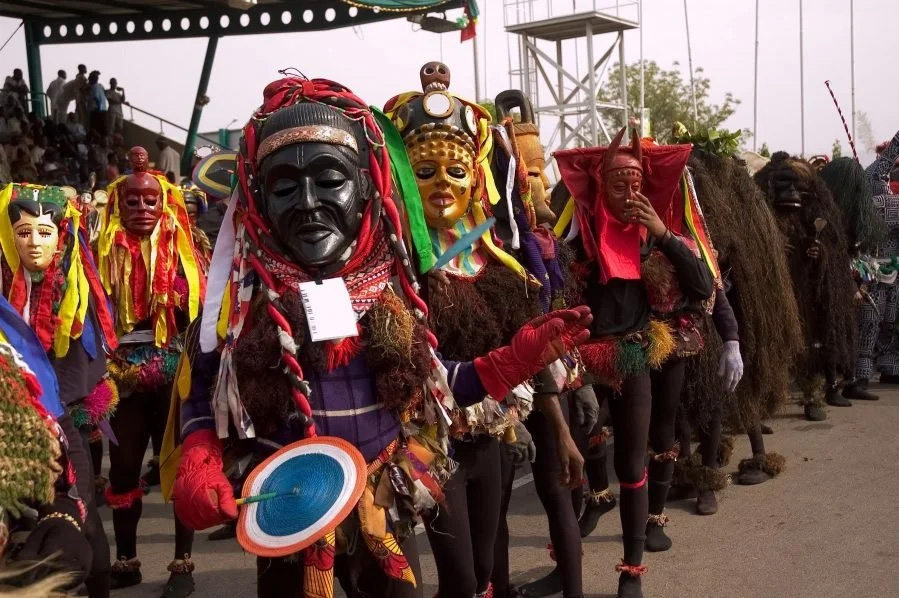
Significant numbers of young Christians in southeast Nigeria are turning to African traditional religion, including ritual practies that predate Christianity’s arrival in the 17th century. The trend has attracted public commentary and statements by some clergy, and has also generated academic discussions.
Deacon Emmanuel Ndubuisi, a former board member of Living Faith Church (LFC) in Durumi, Abuja, said, “I see this as a spiritual reawakening—the emergence of what some have described as Afro-Pentecostalism.”
He describes this movement as “a deliberate fusion of African spirituality with Christian theology that seems to present our Lord and Savior Jesus Christ as the ‘fulfillment’ of African religious aspirations. I think those churches pursuing this are seeing Christianity beyond the colonial and missionary narratives. They are making the argument that the Christian faith should be seen from the lens of spirituality that is homegrown and unmediated by foreign influences.”
A popular Ondo Pastor, Olabanjo Felix Gold, has reportedly denounced Christianity publicly to become a “Babalawo Ifa”—a native diviner. Felix Gold, founder of Image of God Evangelical and Prophetic Ministries, announced in mid-August that he had left Christianity and embraced Isese, a traditional Yoruba spiritual system.
In a 2025 interview Pete Edochie, a Nollywood actor, tried to draw a parallel between African traditional religion and Christianity, advocating what he referred to as harmonization rather than strict separation. He argued that traditional rituals parallel Christian sacraments and customs, while ancestors are the equivalent of saints, who act as intermediaries between God and humanity.
No statement so far has been issued by either the Christian Association of Nigeria (CAN) or the Pentecostal Fellowship of Nigeria. However, at an August 24 meeting, Nigeria’s Catholic Bishops’ Conference listed the “incorporation of local customs that are inconsistent with the faith under the umbrella of inculturation” among a series of liturgical abuses in need of correction.
In January, three bishops serving near Lagos publicly condemned “money making rituals and internet fraud schemes” with pagan roots that they say are increasingly popular among Nigerian youth. They urged parents and religious leaders to provide youth with a sound biblical foundation, but also recognized that “we must also engage with them in a more intentional way and listen to their concerns so that we can provide them with relevant and meaningful support.”
Sophie Ogwude, an emeritus professor of linguistic studies of the University of Abuja and a Roman Catholic, says, “For the youth in the church, it is a story about freedom, identity and resilience of the African soul. I would rather see this as their desire for a pragmatic and theological response to the changing evangelical and spiritual landscape that symbolizes an evolving African spirituality that tries to find expression in a post-colonial world.”
In his Easter message earlier this year, the Anglican Bishop of Aguata Diocese, the Rt. Rev. Samuel Chikwudi Ezeofor, argued that certain traditional practices are incompatible with the Christian faith, urging priests to rise against growing idolatry among Christian youths.
He also condemned Christians—especially young people in Igbo land—for Eastertime celebrations of masquerades or mmanwu, traditional rituals involving the enacting of dramas in elaborate costumes to invoke the ancestral spirits. There should be no connection between Easter and masquerading, he said, since masquerading belongs to what he referred to as the forces of darkness.
In a later statement during a diocesan lecture series called “Culture, Tradition and the Gospel,” Bishop Ezeofor cautioned against blurring the lines between culture, tradition, and the gospel of Christ.
Dr. Obi Anyadiegwu, an Anglican elder from Oba community in Anambra state, attempted to identify a reason for turning African traditional practices. “Many in predominantly Christian communities who have been traumatized due to relentless attacks by terrorist and assailants perceived as jihadists are reportedly resorting to charms and amulets for protection,” he says. “They resort to ancestral spirits in the face of the failure of the state to protect them.”
TLC reached out to Christians living in rural communities to seek their views on this phenomenon. Philip Adikankwu, a Roman Catholic, lives in Isheagu, a community contiguous to the Niger River. He said, “We have seen many who pretend to be Christians patronizing these local diviners. They come to churches during the day and consult the deities at night. And you really cannot blame them as these spiritual specialists promise them protection against attacks, kidnapping, and other forms of criminality.”
Nyingi Dappa, an Anglican and a pensioner, believes that the trend of returning to traditional African religion may not be unconnected with the broader generational reaction of Gen Z.
“These are interesting times for Christianity globally. In Nigeria, even across Africa, while some traditional Christians are reportedly systematically and even openly denouncing the Christian faith for traditional spiritual systems, some churches are permitting or sometimes integrating traditional practices into worship. But of greater concern is the biblical revisionist agenda of the Church of England-led permissiveness of same-sex marriages in the body of Christ.”
Osofia Ibezim frames the phenomenon as a quest for an indigenous cultural identity, seeking roots beyond colonial missionary historicity. “Don’t forget that the youths of this age are on a search for identity. Unlike some Christianity teachings that preach ‘waiting on God,’ traditional religion seems to speak to immediate and tangible concerns—prosperity, justice in the here and now, protection, healing.”
Ibezim continued, “Many young people also see this as a response to perceived moral contradiction and hypocrisy—homosexuality, same-sex marriage—whereas traditional religion in contrast does not condone ‘inappropriate’ behaviors.”
Credit: Source link
Comments are closed.