

Nigeria ranks 2nd in acute pesticide poisoning in West Africa — Study
…It is understated, consumers at high risk – AAPN
…Safe use impossible in Nigeria – Prof Irtwange
…Calls for ban, saying it contributes to rise in cancer, other health risks
By Gabriel Ewepu and Cynthia Alo
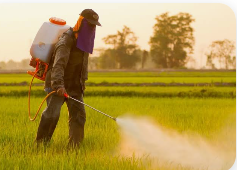
A new study has shown that about 69 per cent of farmers and farm workers in Nigeria are exposed to and affected by Unintentional Acute Pesticide Poisoning (UAPP) every year.
According to the study, acute pesticide poisoning refers to illnesses or health effects experienced shortly after exposure to pesticides.
The study, published in the journal – Frontiers in Public Health, which was commissioned by the Pesticide Action Network, PAN, found that Burkina Faso had the highest national incidence in the region at 83.8 per cent, followed by Nigeria at 69.0 per cent.
PAN is a UK-based network of over 600 participating nongovernmental organizations, institutions and individuals in over 90 countries including Nigeria.
According to the report, The Gambia recorded 51.5 per cent, Ghana 39.0 per cent, Senegal 30.5 per cent, while Côte d’Ivoire recorded 20.0 per cent.
Overall, the study estimated that an average of 48.9 per cent of farmers and farm workers in the six West African countries experienced unintentional acute pesticide poisoning annually.
Meanwhile, according to the study, globally, it is estimated that between 402 million and 433 million farmers and farm workers suffer cases of unintentional acute pesticide poisoning globally every year.
Based on an estimated global farming population of 934 million, the figure means that about 46 percent of farmers worldwide are affected annually.
The study also estimated that pesticide poisoning causes about 11,000 deaths every year, with India accounting for nearly 60 percent of the fatalities.
The authors called for immediate action to reduce pesticide-related harm, including implementation of a United Nations recommendation to phase out highly hazardous pesticides immediately (HHPs).
Head of International Programmes, Pesticide Action Network UK, Dr. Sheila Willis, said farmers needed greater support to access safer alternatives.
She stated: “Now that the scale of suffering has been revealed, farmers must be supported to access safer alternatives to protect their health and that of their families.”
Figure largely below reality – Ofoegbu
Nigerian agro-sector stakeholders indicated they are fully aware of the situation in Nigeria and called for urgent government intervention.
Commenting on the statistics, the Lead Coordinator of the Alliance for Action on Pesticides in Nigeria, AAPN, Donald Ikenna Ofoegbu said, “This finding is not contested. In fact, from what we see, this figure is largely below the reality in Nigeria.”
He added, ‘‘We surveyed farmers to understand the types and brands of pesticides they use. We went further to identify and assess the active ingredients in these pesticides.
“We have also examined the list of registered pesticide brands and agrochemicals on the NAFDAC website. We reviewed NAFDAC’s records of these chemicals and conducted our own assessment. If you visit the AAPN website, you will find a copy of our review of dozens of registered and unregistered pesticides in the Nigerian market.
“Our findings speak even louder than the reported figure of 69%. In a survey we conducted specifically among smallholder women farmers we found that 94.2% of these women use synthetic chemicals.
“The farmers are already exposed and becoming sick. How many market women are buying produce from them? How many consumers, including all of us, are eating food produced by these farmers?
“Close to 80% of the food we eat in this country is produced by smallholder women farmers. Do the multiplication and then ask why the number of cancer cases in Nigeria is increasing, with about 107,000 cases reportedly recorded annually.
“Of course, cancer cases will increase. Kidney diseases, which affect more than two million Nigerians, will increase. Infertility and other reproductive health problems will also increase.
“From our assessment of NAFDAC’s records, I have already mentioned the number of registered pesticides classified as highly hazardous and the number that are not approved in Europe.
“When we conducted our 2023 assessment of 104 chemical pesticide brands, we found that 25% were carcinogenic. We found that 47% were endocrine-disrupting, meaning that they could affect the body’s hormones.”
Safe use of chemicals near impossibility in Nigeria – Prof Irtwange
In his comments, Chairman, Technical Committee on Nigeria Yam Export Programme, Prof Simon Irtwange, said it is difficult to have safe use of chemicals in Nigeria, which is one of the major reasons farmers are poisoned by the chemicals they apply on their farms.
Irtwange, stated: “Safe use of chemicals in Nigeria is a near impossibility. The people that market these chemicals, they always say that farmers don’t use it correctly.
“And it is not possible in Nigeria for farmers to ever get it right in terms of use of these chemicals. That’s a major issue. Number one, our level of literacy of the farmers; Secondly, the lack of training of the farmers on the use of these chemicals.
‘‘Next is the environment, the weather, the tropical nature of our environment because when you look at countries where these chemicals are coming from, you look at the temperature under which they are supposed to be stored, you see a major gap.
“Here in Nigeria, our ambient temperature is much higher than even the storage temperature.
‘‘So those are some of the challenges that we have with respect to the safe use of these agricultural chemicals. So, if we are not using them safely, then what do you expect? That is why for us, we keep saying that safe use is something that is unattainable in our environment’’.
However, he said the way out “is an outright ban on the use of these chemicals, and then we go for alternatives. There are a lot of alternatives, mechanical alternatives, organic, and among others.”
Credit: Source link