

Ngafuan Wants Revenue Gains Reflected in Roads, Schools, Health | Business
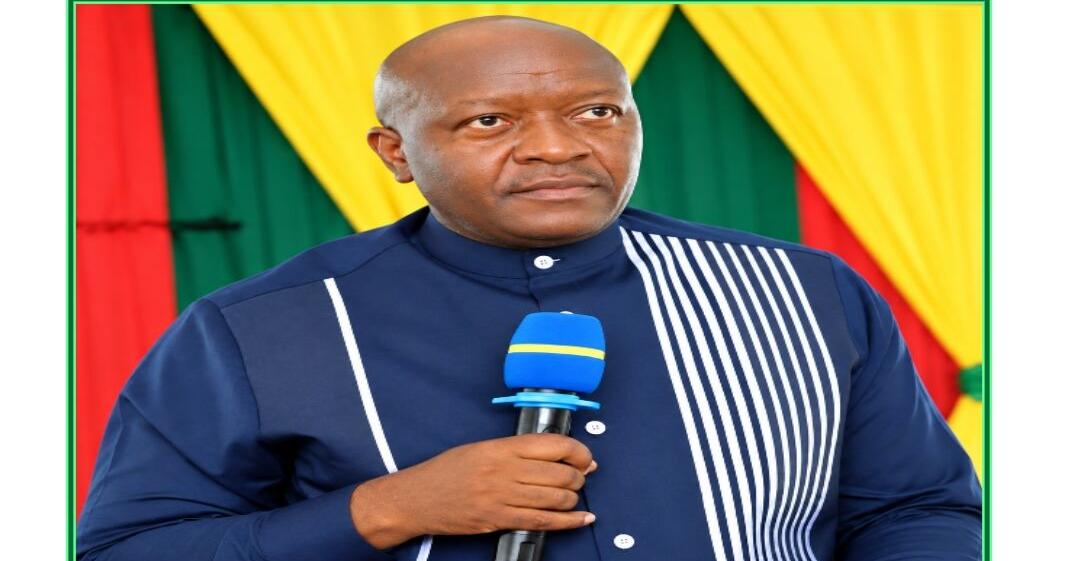
Finance and Development Planning Minister Augustine Kpehe Ngafuan has challenged the Government of Liberia to ensure that the country’s rising domestic revenue is translated into visible improvements in roads, schools, healthcare and other essential public services.
Ngafuan said increased revenue collection should not be viewed as an achievement in itself unless Liberians can see tangible improvements in their daily lives.
He made the remarks Monday, September 14, 2026, at the 17th Founders’ Day celebration of William V.S. Tubman University in Harper, Maryland County, where he stressed the need for stronger public investment and accountability as government revenue continues to rise.
Liberia has surpassed US$1 billion in domestic revenue collection within a single year for the first time in the country’s history, with the government projecting that collections could reach approximately US$1.3 billion by the end of the current fiscal year.
But Ngafuan cautioned that revenue collection alone does not constitute development.
He said the increase in domestic resources must result in stronger public investment, improved service delivery and greater accountability, particularly in areas that directly affect citizens.
According to the Minister, government should prioritize roads, education, healthcare, employment and transportation while ensuring that development projects are visible, measurable and responsive to the needs of communities.
Ngafuan said his recent trip through Maryland and Grand Kru counties provided a practical reminder of both the progress being made and the challenges that remain.
He cited improvements in road infrastructure, the extension of paved roads toward Tapeta City and the operation of National Transit Authority buses between Zorgoe and Fishtown as examples of government interventions that citizens can see.
However, he said serious challenges persist, including poor road conditions, inadequate educational facilities, healthcare needs, limited employment opportunities and transportation constraints.
Ngafuan argued that limited resources should encourage government to prioritize strategically rather than serve as an excuse for delayed implementation.
He called for the completion of ongoing projects before government takes on too many new initiatives and urged ministries, agencies and commissions to take greater responsibility for implementing their budgetary allocations.
As preparations begin for the 2027 national budget, the Minister said government must ensure that budget priorities reflect realities beyond Monrovia.
He also called for stronger project supervision, coordination and reporting to ensure that public resources produce the intended results.
Ngafuan pointed to William V.S. Tubman University as one example of how increased public investment can support development.
The university’s 2026 budget allocation is approximately US$6.4 million, including about US$1 million for priority capital projects and rehabilitation.
The funding is supporting the rehabilitation of academic facilities, faculty residences, staff quarters and classrooms, as well as the construction of a perimeter fence and work on the old engineering building and the university’s Monrovia office.
The university is also pursuing construction of a new College of Engineering and Technology building.
Ngafuan stressed that such investments must be accompanied by transparency, sound procurement practices, proper execution, maintenance and effective monitoring.
He further challenged Tubman University to position itself as a “problem-solving laboratory” for southeastern Liberia by using research and innovation to address practical development challenges, including coastal erosion, climate-resilient roads, renewable energy, sustainable mining and public health.
The university’s five-year strategic plan, “Transformation for Quality Service,” targets having 80 percent of its graduates employed within six months and 10 percent establishing businesses within three years.
Ngafuan urged the institution to strengthen partnerships with the private sector through internships, apprenticeships, laboratory sponsorships, research collaboration and curriculum development.
He also cited the university’s Smart School System and locally developed online examination platform as examples of practical innovations that can improve education delivery.
Credit: Source link