

Newly discovered cave snail in China lived hidden in darkness, and only 3 adults are known
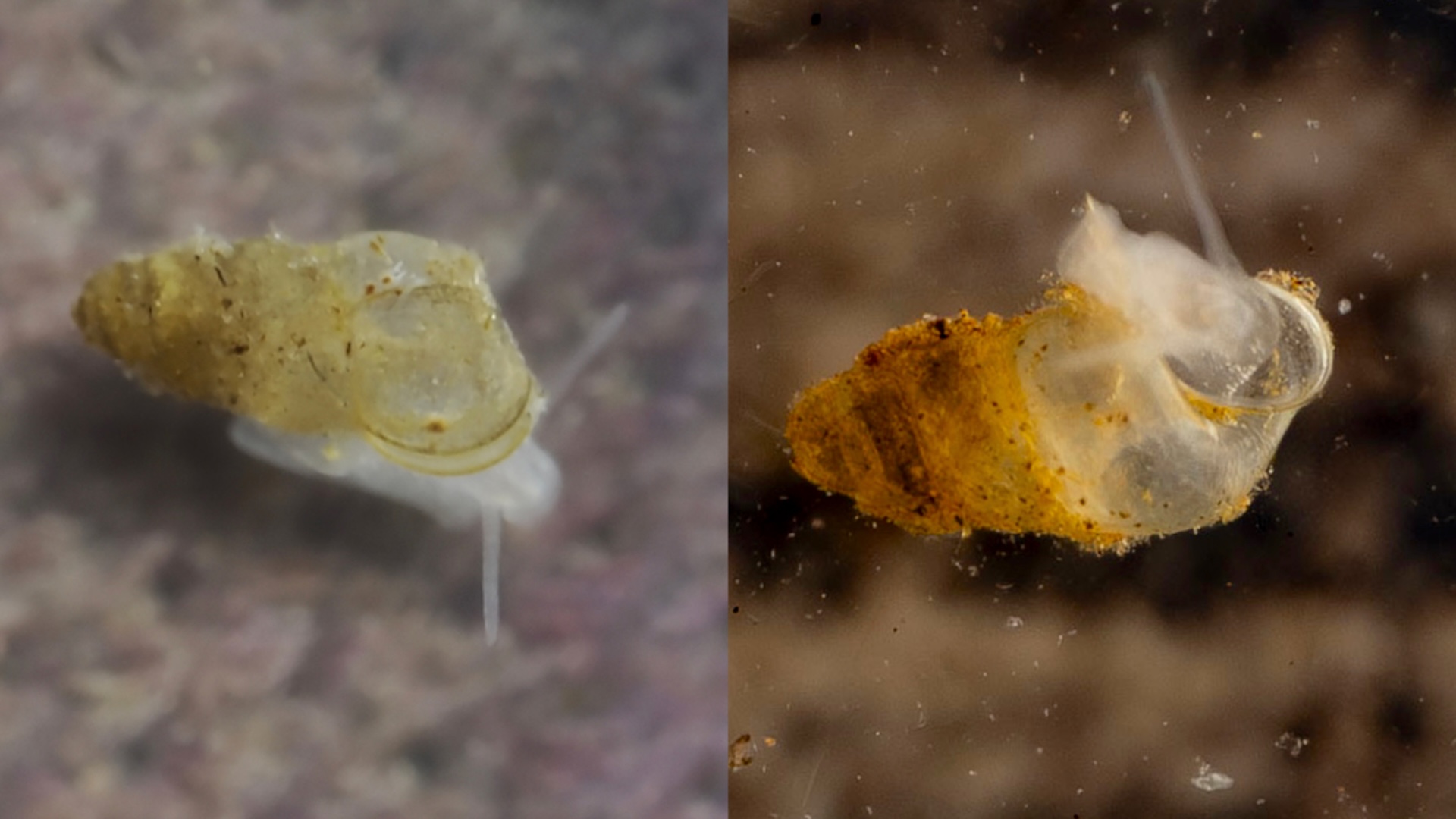
Photo Credit: He Y-M, et al.
Scientists exploring a mountain cave in southwestern China have identified the country’s first known freshwater cave snail, a nearly transparent, eyeless species so rare that only three living adults have ever been documented.
The find underscores how much remains unknown about China’s underground waterways — and how quickly a species can edge toward extinction before most people know it exists.
What happened?
According to SciTechDaily, the findings were published in the journal Subterranean Biology. Researchers discovered the new species, Erhaia dijiang, in a freshwater cave in China’s Yunnan Province.
SciTechDaily noted that the lack of eyes and translucent shell — which lets its delicate body show through — all point to an animal adapted to complete darkness. Researchers classify it as a troglobiont, meaning a species that has evolved over many generations to live entirely inside caves.
In lab observations, the snails moved away from light and slipped into narrow spaces under rocks when illuminated, the outlet reported. The species takes its name from “Di Jiang,” a faceless mountain god that appears in the ancient Chinese text Classic of Mountains and Seas.
Why does it matter?
According to SciTechDaily, during an August 2025 survey, scientists found three living adults and one empty shell, with no juveniles observed. The species has only been found in a single cave habitat thus far.
The outlet reported that the snail was found in a cave system about 6,765 feet above sea level. It proves that freshwater cave snails in high-altitude networks called karst systems.
Karst caves are part of groundwater-linked systems that live isolated from other habitats. These systems can form unique creatures that evolve completely separate from surrounding ecosystems.
What’s being done?
According to SciTechDaily, researchers want much broader cave surveys in China, both to determine whether Erhaia dijiang lives in other underground waters and to search for additional overlooked species. Such fieldwork is especially important in remote habitats where biodiversity can remain hidden for decades.
They are also urging rapid conservation planning, the outlet reported. Because the snails were observed only inside the cave — and no farther than about six and a half feet from its entrance — even localized damage could threaten the entire species.
Researchers say the species’ survival outlook is “far from optimistic”: only one cave is known, and just three living adults have been observed. For an animal evolved for permanent darkness, even minor disturbance could erase the species almost as soon as it was discovered.
Get TCD’s free newsletters for easy tips, smart advice, and a chance to earn $5,000 toward home upgrades. To see more stories like this one, change your Google preferences here.
