

Morocco’s soft fruit exports down 5%
Morocco’s soft fruit season closes 5% down as Chinese competition and labor shortage bite
Morocco’s 2025-2026 soft fruit campaign has drawn to a close well below expectations, with exports down 5% in volume terms compared to the previous season. According to Amine Bennani, president of the Moroccan Association of Red Fruit Growers, the season was marked by catastrophic flooding early in the year, an abrupt entry of Chinese volumes into international markets, and a persistent labor shortage that forced many growers to end their harvest prematurely.
© Amine Bennani
“The blueberry season has ended, except for minimal volumes from the Meknes region, which are running into very low prices on the market,” Bennani says. “The raspberry season has also ended. Many growers were not able to resume picking after the Eid holidays due to a lack of available labor, and the market wasn’t encouraging either. It was a difficult season, especially for the fresh segment. We saw a decline in fresh soft fruit exports and a reorientation toward processed fruits.”
Exports are down across the board
The growers’ representative says that “the season was well below average, far from what we were counting on.” He provides the following figures:
- Morocco exported 162,540 tonnes of fresh soft fruit, against 168,783 tonnes in the 2024-2025 season, a decline of 4%.
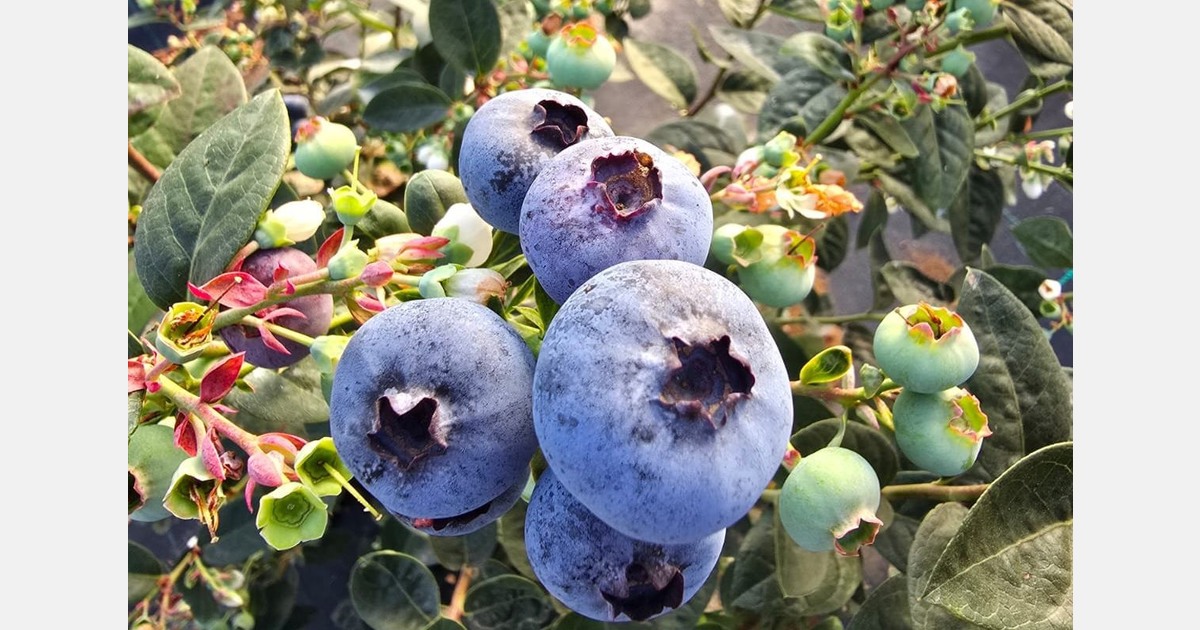
- Fresh blueberry exports totaled 5,841 tonnes, down 17% from 7,019 tonnes the previous season. A notable development was the remarkable increase in exports from the Oriental region, a new region in the Moroccan blueberry sector, up 594%, with a volume of 112 tonnes against 16 tonnes last season. The Meknes region recorded the steepest decline, down 79%, with 127 tonnes against 614 tonnes.
- Fresh raspberry exports fell 7%, to 59,149 tonnes from 63,554 tonnes, with the Rabat-Salé-Kenitra region posting the heaviest drop at -22%.
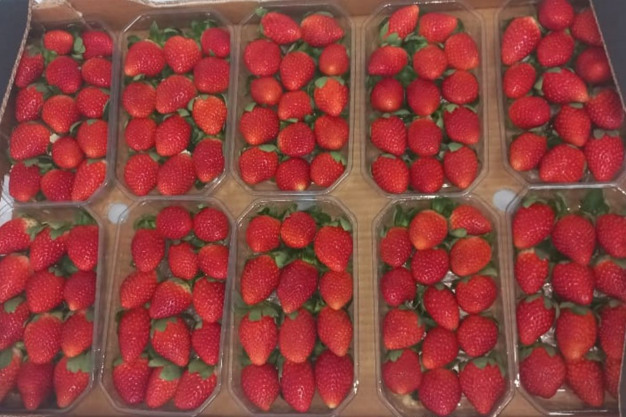
- Fresh strawberry exports are down 49%, at 8,906 tonnes against 17,539 tonnes the previous season. Production fell by roughly half across all regions.
- On the frozen segment, exports across the three products declined 8%, to 53,384 tonnes from 58,182 tonnes. For frozen blueberries, the decline is 17%, 5,841 tonnes against 7,019 last season. For strawberries, it’s a decline of 16%, 31,920 tonnes against 38,037 last season. However, frozen raspberry exports posted an increase of 19%, rising from 12,950 tonnes to 15,452 tonnes last season.
- Overall, the sector recorded a 5% decline in export volumes, fresh and processed combined, from 226,964 tonnes last season to 215,924 tonnes through the end of May this season.
Surface area expansion masks deeper losses
For Bennani, the aggregate figures understate the real difficulty of the season. “The numbers hide a harder reality, because the expansion of planted area has largely offset yield losses,” he explains. “Take the Loukkos region, for example, where the decline in blueberry exports is 16%. In truth, we were expecting an increase in exports similar to that of Souss Massa, which recorded a positive gap of 33%, reflecting surface area expansion. The real losses are therefore much greater than they appear.”
Three factors behind the decline
Bennani attributes the season’s losses to a combination of three factors. “The most obvious was the catastrophic weather conditions at the start of the year, when flooding in northern Morocco paralyzed production and destroyed numerous plantations,” he says.
The second factor, he says, is structural. “A profound shift has hit the international market, which until now had been favorable to Moroccan exporters. There is now an oversupply of soft fruit, especially blueberries. China’s abrupt entry into the fresh blueberry market this season caused prices to collapse. Prices plunged to catastrophic levels from the end of April onward. Other origins will also be entering the market with significant volumes in the coming years, such as Egypt. In turn, we are seeing Moroccan market shares in important markets, such as Russia, disappear.”
This shift, Bennani argues, calls into question strategic choices made by Moroccan producers in recent years, notably the move toward planting Jumbo varieties such as Sekoya. “It’s a variety geared specifically toward markets outside the European Union, now dominated by Chinese growers exporting the same variety,” he says.
 © Youness Bensaid | FreshPlaza.com
Amine Bennani, president of the Moroccan Association of Soft Fruit Growers
The third factor is labor. “The labor shortage is a thorn in the side of producers. It also affected the 2025-2026 season and contributed to a premature end to the campaign.”
Bennani says. “We simply aren’t able to cover our labor needs. We’ve done everything, tried everything, and don’t know how to mobilize manpower. Many producers weren’t able to harvest the full extent of their plantations this season, and many of them are now actively looking for labor from outside Morocco.”
No further expansion justified
Looking ahead, Bennani says the sector is entering a period of uncertainty. “The sector is going through a period of turbulence,” he says. “The question of whether the sector remains attractive to producers is still open, and we’ll see what the coming seasons bring.”
What is clear, he says, is that growth in planted area is off the table for now. “In any case, this is not the time to invest. It won’t be about growing more in the coming seasons, but about adding value, finding the right commercial window, focusing on quality, maintaining the cold chain, and so on, to try to sell at a fair price and sustain the sector.”
For more information:
Amine Bennani
Moroccan Association of Soft Fruit Growers
Tel: +212 66124 3424
Email: [email protected]
Credit: Source link