

Morocco’s Long Game in Namibia: Winning Hearts Where Politics Can’t
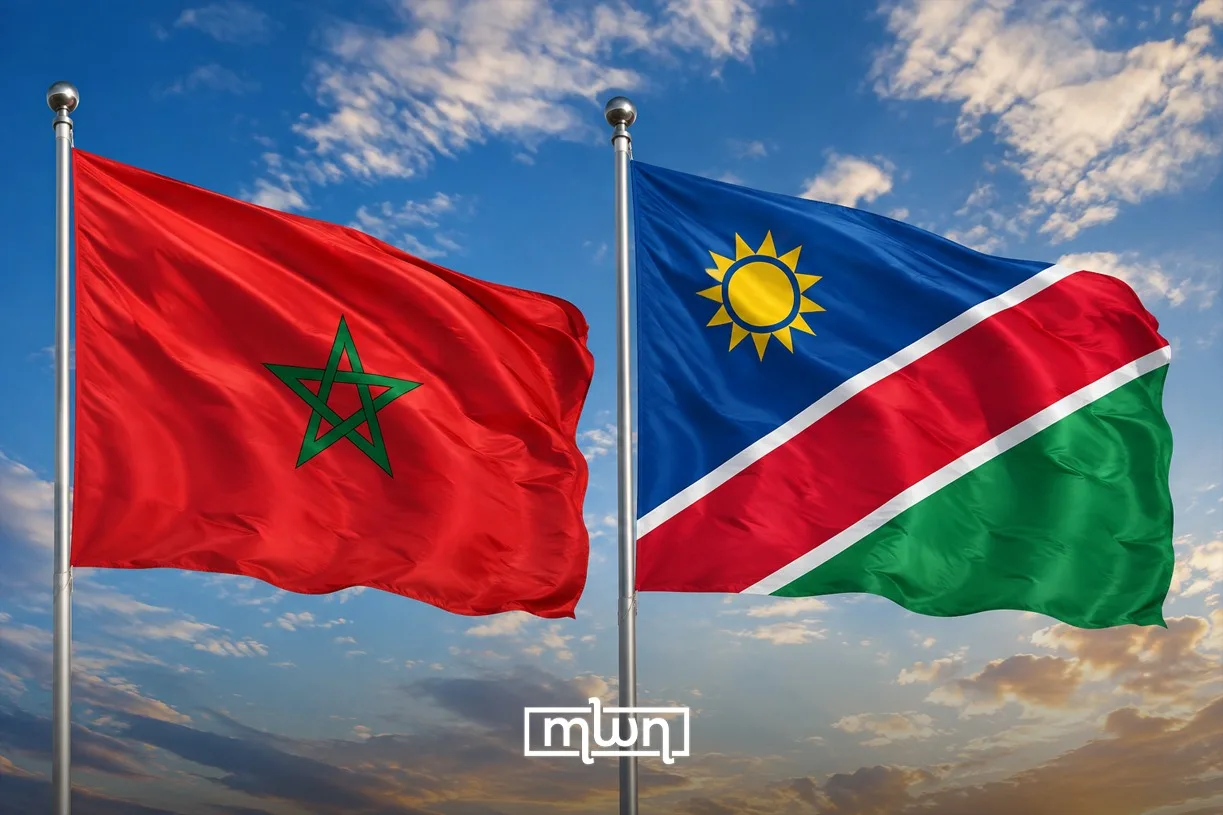
Since 1998, Morocco has been playing a long game in a country where politics alone can’t get it. Rabat has been working on its Namibia presence and approach since 1998. Slowly. Quietly. In a way that politics, by itself, hasn’t been able to crack.
When Morocco rejoined the African Union in January 2017, the logic behind it was simple enough: if you want to protect your claim over Western Sahara, you don’t do it by shouting from the parking lot. You do it from inside the room. Almost a decade on, that bet has mostly paid off. Country after country has walked back its support for the Sahrawi Arab Democratic Republic, and Morocco, once treated as something of a continental outcast, is now one of Africa’s more active investors and partners.
Namibia is the exception. There, the old approach keeps running into a wall.
I spent months on this — reading up on Morocco’s AU comeback, tracing the influence South Africa still holds over the region, and eventually sitting down with someone from Morocco’s Ministry of Foreign Affairs who oversees relations with West Africa. What I came away with wasn’t really a story about treaties or vote counts. It was closer to a story about memory, and how slowly minds actually change.
A return built on patience
The separatist Polisario Front’s self-styled SADR was accepted as a full member of the Organisation of African Unity in 1984, Back in 1984, the Organization of African Unity let the SADR in as a full member, and Morocco walked out over it. That cost them. For more than thirty years Morocco simply wasn’t in the room when the continent hashed out its biggest security and development questions, and Algeria and South Africa got to shape the Western Sahara conversation more or less unopposed.
The comeback, when it happened, wasn’t sudden. Between 2014 and 2017, King Mohammed VI made over 25 state visits around Africa and signed more than 1,000 bilateral agreements — banking, energy, agriculture, infrastructure — enough to put Morocco among the continent’s top investors, particularly in telecoms and finance. Scholarships for African students. Training programs for imams. Renewable energy projects in Burkina Faso and Mali. All of it pointed in the same direction: Morocco trying to make itself useful, not just trying to win an argument.
And it worked. When the AU voted on Morocco’s readmission in January 2017, 39 of the continental body’s 54 members backed Morocco coming back in. Since then, more than twenty African countries have pulled their support for the SADR, and Morocco pushes back on pro-Sahrawi resolutions from inside meetings now, instead of complaining about them from the outside.
King Mohammed VI’s tour wasn’t random; it followed the map pretty deliberately. In West Africa he leaned on old relationships and religious networks, especially the Tijaniyya Sufi order, which has millions of followers across Senegal, Mali, and Niger, and which recognizes him as Commander of the Faithful. Senegal became something like the poster child of the whole campaign.
Elsewhere, he went after countries with weaker negotiating positions, betting that a direct approach would move the needle faster. Nigeria, the big fish of that campaign, was — secured on a 2016 royal visit that culminated in the Nigeria-Morocco Gas Pipeline and a stack of energy and banking deals.
In forging closer, more strategic ties with the West African giant, Moroccan diplomacy had succeeded in nudging a country that had been leaning toward the SADR into something more neutral and transactional with Rabat. By the time the AU vote rolled around, Morocco had Senegal, Côte d’Ivoire, Gabon, Burkina Faso, and Mali more or less locked in, while Rwanda and Ghana — once sympathetic to the SADR — had drifted toward the middle.
Has it paid off?
The clearest evidence the strategy worked shows up inside the AU itself. Before 2017, Morocco had nothing to counter pro-SADR arguments except grumbling from the sidelines. Now it argues back inside committees, inside summits, wherever the actual decisions get made. The SADR’s old pitch, that its cause is just an extension of Southern Africa’s broader anti-colonial struggle, no longer lands the way it used to, simply because fewer states are still buying it.
Which creates a strange situation. Morocco and the SADR now sit inside the same institution, still fighting the same fight. Whether that closeness eventually pushes things toward real negotiations with the Polisario Front, or just hardens both sides further, is anyone’s guess right now. Still, what’s not in question is that Morocco isn’t making its case from outside the door anymore.
South Africa’s shadow
South Africa is really the main obstacle to Morocco’s influence in the region. Pretoria’s support for the Polisario Front usually gets framed as an extension of its own liberation history — the Sahrawi cause as unfinished business from the anti-apartheid struggle. That’s a genuine sentiment. It’s also a strategic one. A Morocco that gains ground in Southern Africa is a Morocco that chips away at South Africa’s self-image as the continent’s leading anti-colonial voice, and Pretoria has fought that using every lever it has, the Southern African Development Community included.
The 2019 Windhoek Declaration, which restated Sahrawi self-determination, didn’t just happen — it came out of serious lobbying by the South African government. And Pretoria’s economic weight backs all of this up: roughly 70 percent of Namibia’s imports come from South Africa, which buys South Africa real say over how its neighbor positions itself.
Yet Pretoria’s reach goes well past public statements, too. In particular, South Africa has gotten good at what amounts to committee stacking inside the AU — quietly making sure the commissions and working groups that matter are staffed with people sympathetic to the Sahrawi cause. At the 2021 AU Summit, even with Morocco riding momentum elsewhere, South Africa still managed to block several of its attempts to land seats on influential committees and kept Western Sahara pinned to the agenda.
What makes Namibia different
Namibia’s loyalty to South Africa isn’t really a policy position. It’s more like something handed down. South Africa’s anti-apartheid movement backed SWAPO through its own liberation war, and that history still colors how Windhoek looks at the world.
Ask around, and a lot of Namibians won’t describe solidarity with the Sahrawis as diplomacy at all — it’s personal to them, a cause that feels like theirs. Which means Morocco’s usual playbook doesn’t really work here. The religious diplomacy that opens doors in West Africa barely registers in a country that’s majority Christian, and cultural or economic outreach can only chip away so far at something this deeply rooted.
Inside Morocco’s Namibia strategy
The most useful part of my conversation with the Moroccan foreign ministry official was, honestly, how unbothered she seemed by the whole thing. Not triumphant, not defensive — just realistic. She said plainly that Namibia’s position on Western Sahara isn’t something Morocco can shift quickly, because SWAPO’s relationship with the Polisario is tangled up with its own legitimacy at home.
So Morocco is playing something else entirely — what she called a “new game”: show up, be useful, stay consistent. Trade between the two countries hit 204 million dirhams in 2022, a number the Moroccan diplomat was upfront about calling modest. But Rabat doesn’t see it as a ceiling, more like a floor. “We want to tell the world that Morocco isn’t a country defined by old divisions,” she told me. “We’re a trustworthy, real business partner. Opportunity, not conflict.”
Beyond the trade numbers, she talked about something quieter — technical cooperation in areas where Morocco actually knows what it’s doing and Namibia has shown real interest: agriculture, renewable energy, water management. “We’re not coming with a flag and a speech,” she said. “We come with ideas, tools, and respect for what Namibia actually wants.”
She wasn’t pretending the obstacles weren’t there. South Africa’s political and symbolic pull is still strong, and Namibia’s government continues to back the Polisario at the top levels. But she pointed to something moving underneath all that — a rising curiosity, especially among civil society, business circles, and younger politicians, about Morocco’s growing footprint on the continent. “This isn’t about changing anyone’s mind today,” the diplomat said. “It’s about being there. Helping. Staying consistent. So that when people are ready to look at this again, we’re the ones who never tried to rush them.”
In a lot of ways, that patience is a bet on time itself — on a generation that isn’t carrying the same weight their parents did. Young Namibians didn’t live through the independence struggle the way their elders did, and as the country pushes to diversify its economy, practical concerns may start to outweigh inherited ones. Namibia’s present has been shaped by its history. Its future doesn’t have to be.
If Morocco wants to speed things along, the path isn’t complicated: more scholarships and university partnerships aimed at Namibia’s next generation of leaders, deeper investment in agriculture, renewable energy and infrastructure. These are all things Namibia has said it needs. And to these key, critical steps, add a bigger cultural presence through sport, art and shared-heritage events, and quiet use of neutral third countries to reframe Morocco as a complement to Namibia’s existing partners rather than a threat to them. None of it is flashy. If anything, that’s the whole point — Rabat seems to have figured out that this particular fight gets won by not making noise.
The long game and a shifting global map
Outside Namibia, the exception is fast becoming the rule. In 2020 the United States recognized Moroccan sovereignty over Western Sahara. The Biden administration kept this stance, if with a bit more caution attached.
The UAE, Bahrain, Gambia and Senegal have all opened consulates in Dakhla and Laayoune — about as clear a signal of support as diplomacy gets. And at the UN Security Council, the momentum has been tilting toward Morocco’s autonomy plan as the sole and most viable basis for a “realistic, practicable and enduring” solution, over the Polisario’s long-held demand for an independence vote.
The story — and the ensuing race — is not over, though. Algeria keeps pressing its case at the UN — most recently before the General Assembly’s Fourth Committee — and South Africa, Namibia, and Algeria remain the loudest bloc still defending the SADR’s seat at the AU table. Recent summits show the fight is still live: at the 2021 Extraordinary Summit on Silencing the Guns, Morocco reportedly used its influence to soften the final language on the conflict. Meanwhile Morocco keeps expanding its own bloc — Senegal, Côte d’Ivoire, Gabon — pushing the AU toward institutional neutrality rather than letting it tilt pro-SADR.
Step back and look at the last decade as a whole, and the trend line clearly favors Morocco, even if the finish line is nowhere in sight. Ten years ago Rabat was still fighting for allies and a seat at the table. Now it has both, and more countries every year treat its position as the more workable path to a settlement. And they are backed, increasingly, by a UN Security Council leaning the same way.
What Morocco is doing in Namibia says something bigger about its diplomacy since 2017: none of this was ever going to be won through treaties alone. Scholarships. Technical partnerships, quiet, respectful outreach — these are the slow tools Morocco is counting on to outlast ideology in ways no UN resolution or state visit ever could. Whether that bet actually pays off in Namibia — where the Western Sahara question is tangled up with national identity itself — is still genuinely open.
But if there’s one thing to take from Rabat’s rise elsewhere on the continent, it is that shifts like this don’t usually arrive with an announcement. They just quietly turn into fact.
Credit: Source link