

Morocco Reaffirms Spain Partnership Despite Rising Tensions
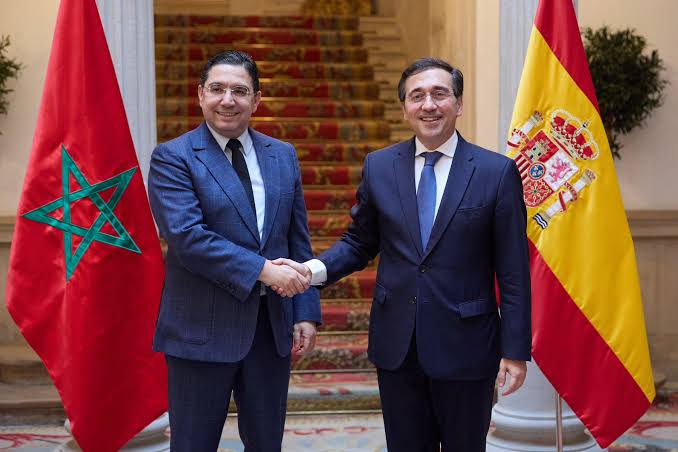
Rabat – The Ministry of Foreign Affairs, African Cooperation and Moroccans Abroad on Thursday reaffirmed Morocco’s commitment to its partnership with Spain while rejecting what it described as attempts by political and media circles to use Morocco for domestic political purposes.
In a statement addressing recent developments in Morocco-Spain relations, the ministry said Rabat has chosen to build ties with Madrid around good-neighborly relations, political understanding, economic partnership, and security cooperation.
The ministry cited the April 7, 2022 joint declaration between King Mohammed VI and Spanish Prime Minister Pedro Sánchez as the foundation of a new phase in bilateral relations based on mutual respect, reciprocal trust, continued dialogue, and a shared commitment to a mutually beneficial partnership.
According to the statement, this approach has enabled the two countries to strengthen areas of common interest while managing differences through dialogue and respect rather than unilateral actions.
The ministry highlighted the results of bilateral cooperation, particularly in the economic and security sectors. It noted that Spain is Morocco’s leading economic partner, while Morocco is Spain’s second-largest trading partner outside the European Union.
It also stressed the importance of security cooperation, saying joint efforts have helped save lives and dismantle terrorist and criminal networks, sometimes at a significant human and material cost for Moroccan security forces.
On migration, the ministry described cooperation between the two countries as coordinated and effective. It said the events of July require a thorough investigation to establish the circumstances, identify any interference or manipulation, and prevent similar incidents from occurring again.
The ministry also raised questions over the continued criticism directed at Morocco, arguing that “no facts or reports establish the involvement of Moroccan authorities.” It questioned why irregular migrants have not been returned despite Morocco’s official commitment to readmit them, and why unaccompanied minors remain separated from their families despite Morocco’s calls for their return.
According to the ministry, the answers to these questions should be sought from the relevant Spanish actors rather than from Morocco.
The statement also criticized what it described as the instrumentalization of Morocco by certain Spanish political and media circles as part of domestic agendas. The ministry deplored that populist rhetoric and misguided initiatives by some political, legislative, and judicial actors risk undermining relations between the two countries.
The end of the post-2022 diplomatic honeymoon?
Morocco has stressed that it does not want to be used as a tool in Spanish domestic politics, with the ministry stating that the North African country “refuses to be a pre-electoral business” and will not accept being made a scapegoat for political disputes.
Rabat’s firm response comes in the wake of a sustained Morocco-bashing campaign in some Spanish political, intellectual, and media circles.
The intensity of this viral and conspiracy-driven anti-Morocco campaign has been such that Samir Bennis, a senior political analyst and Morocco World News co-founder, has warned of a return to pre-2022 tensions between Madrid and Rabat.
Commenting on a recent Spanish parliamentary vote that extended Spanish nationality to Sahrawis born when the southern Moroccan region of Western Sahara was still under Spanish occupation, Bennis argued that Morocco-Spain relations could enter “a period of tensions and turbulence.”
Morocco would not accept what he described as Spain simultaneously recognizing Morocco’s autonomy proposal as the basis for a political solution while adopting legislation that could undermine Moroccan sovereignty over Western Sahara, Bennis stressed.
He also estimated that 80,000 to 100,000 Sahrawis could potentially gain access to Spanish nationality and questioned how some recipients might use that status to support or boost separatist activity in Morocco.
Bennis further argued that Spain appeared to be maintaining what he described as a “zero-sum game logic” toward Morocco and warned that Madrid could be seeking to preserve a form of leverage over Rabat.
He also pointed to the changing international context surrounding the Western Sahara dispute, arguing that the current geopolitical environment differs from that of previous Morocco-Spain crises.
Bennis concluded that relations between the two countries were likely to enter a period of tensions that could be “quite protracted.”
The Moroccan Foreign Ministry, for its part, concluded its statement by stressing that geographical proximity between Morocco and Spain is permanent, while political leadership can determine whether that proximity becomes an asset for the future or a source of recurring mistrust and tensions.
Credit: Source link
Comments are closed.