
Morocco emerges as a hub for manufacturing and exports
Panorama Media Ltd
A government focused on supporting businesses
Investments in infrastructure and human capital, coupled with competitive incentives, are attracting FDI to Morocco
According to the International Monetary Fund, Morocco’s gross domestic product expanded by 4.9 percent in 2025 and similar growth is expected this year, as the kingdom continues to surge ahead of others in North Africa.
This performance is the result of a successful long-term vision to transform the country into a manufacturing and export platform that is an integral part of the world’s supply chains for diverse high-value industries, most notably automotive, aerospace, agribusiness, pharmaceuticals, textiles, outsourcing services and engineering. “Over the past two decades, Morocco has not just built industry; we have built a global brand of trust,” Minister of Industry and Trade Ryad Mezzour summarizes.
The country’s economic momentum has been accompanied by rising foreign direct investment. Minister Delegate to the Head of Government for Investment, Convergence and Public Policy Evaluation Karim Zidane explains: “FDI increased by 28 percent in 2025, reaching $5.6 billion. Major companies that have strong confidence in Morocco and its industrial upgrading include Stellantis, which is investing more than $1 billion to expand its automotive plant, while Gotion High-Tech is building an electric battery gigafactory. The first project of its kind in Africa, this reinforces Morocco’s positioning within the green automotive value chain.”

“Morocco, which is the only African country to benefit from a free trade agreement with it.”
Karim Zidane
Minister Delegate to the Head of Government for Investment, Convergence and Public Policy Evaluation
Mezzour offers another example: “Safran is investing in an integrated site for the assembly and maintenance of aircraft engines and has chosen Morocco for its largest landing gear manufacturing center in the world. They are among the most sensitive components in civil aviation, demonstrating our ability to deliver highly technological solutions.”
The U.S. is the fourth-largest investor in the kingdom. Nearly 150 American firms are operating there and U.S. investment inflows over the first nine months of 2025 almost matched those for the whole of 2024. “An illustration of this positive dynamic is the agreement signed with GPM Holding for a green polysilicon production unit, an $800 million investment,” states Zidane. “The U.S. is a key partner for Morocco, which is the only African country to benefit from a free trade agreement with it. Morocco also offers American investors a rare combination of political stability, strategic geographic positioning and access to more than 2 billion consumers through its FTAs. Our young, highly trained multilingual workforce, along with world-class infrastructure such as Tanger Med, Africa’s largest container port, strengthens this value proposition.”
As well as advanced transport and logistics infrastructure, the government has invested in many sector-focused free trade zones where firms benefit from tax and import duty exemptions, on-site training providers and other advantages. “2025 was marked by the acceleration of expansion programs for existing industrial zones and the launch of new projects to meet growing investor demand,” Zidane notes. In addition, the Global Connectivity Index ranks the country’s digital infrastructure as the second-best in Africa and over 46 percent of Moroccan electricity comes from renewables. As Mezzour reveals: “Morocco has made the energy transition and green standards a strategic pillar of its industrial policy. Solar and wind power supply our factories at some of the most competitive costs worldwide, reducing operating expenses for companies.”
In recent years, Morocco has also undertaken deep structural changes that have significantly improved its investment climate. “For instance, our regulatory framework has been strengthened to provide greater clarity and security for investors,” says Mezzour. “These measures simplify business establishment, reduce administrative delays and costs and enhance legal certainty.”
In tandem, the government has modernized, simplified and digitalized investment processes and it introduced a new Investment Charter in 2023 that has revamped incentives. “Today, grants can reach 30 percent of an eligible investment amount, according to transparent criteria set by regulation,” discloses Zidane. “Incentives reward projects that generate value in job creation, gender inclusion, future-oriented and value-upgrading sectors, sustainable development, local integration rates, territorial equity and sectoral prioritization.”
Furthermore, support for strategic investments of at least $200 million is now available directly from his ministry, a dedicated mechanism for small and medium-sized enterprises has been established and investment agreements below $25 million are rapidly approved at the regional level, rather than nationally. “The charter’s impact is tangible. So far, 250 projects have been involved with it, representing $41.43 billion in investment, with 179,000 jobs expected to be created across multiple sectors and regions,” he states. “At the same time, entrepreneurial dynamism is strong. More than 72,000 new companies have been created recently.”
Going forward, “Our priority is clear: accelerate Moroccan industry’s move up the value chain in high value-added sectors that drive innovation and skilled employment,” asserts Mezzour. “This reflects our goal to move from ‘Made in Morocco’ to ‘Invented in Morocco’, strengthening research and innovation and positioning the country as a leading industrial and technological reference globally.”
Targeted sectors include renewable energy and green hydrogen, the circular economy, electric mobility, aerospace, pharmaceuticals and biotechnology, advanced digital services, agro-industries and technologies such as electronics, semiconductors and artificial intelligence.
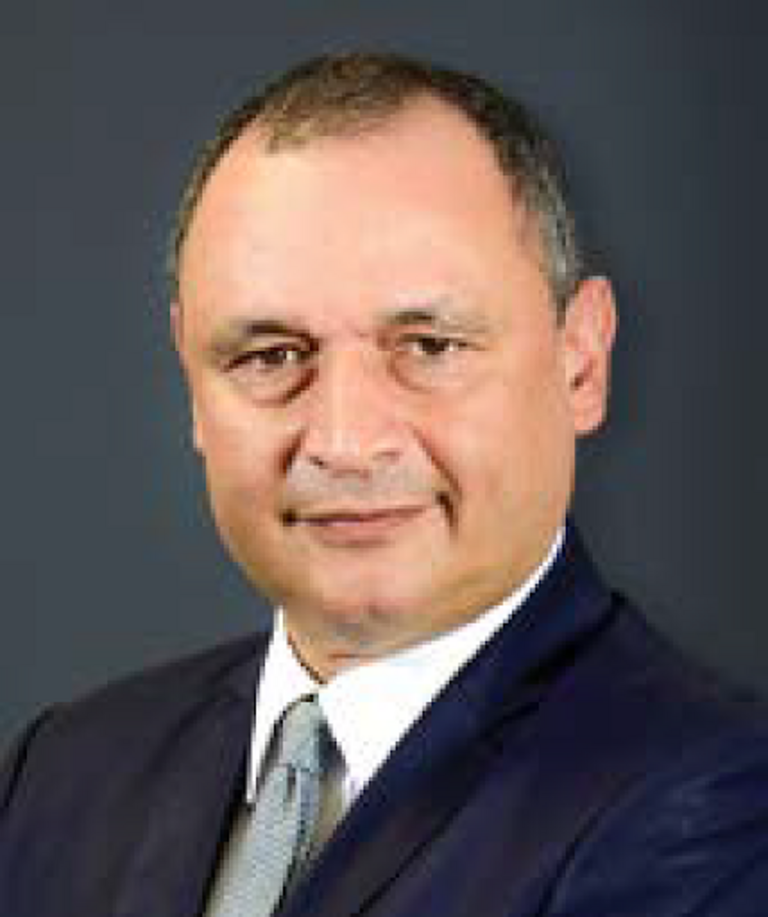
“Our priority is clear: accelerate Moroccan industry’s move up the value chain in high value-added sectors that drive innovation.”
Ryad Mezzour
Minister of Industry and Trade
“The Morocco Green Hydrogen Offer provides a concrete example of our ambition. We aim to be producing 1 million tons by 2027, rising to 3 million tons by 2032, and six integrated projects led by major international consortia are currently under advanced study,” says Zidane. “All of our priority sectors require increasingly specialized skills and we are mobilizing our entire training ecosystem to meet this demand. Our approach is to provide investors with a skilled, competitive and adaptable workforce, while offering Moroccan youth sustainable career opportunities in the sectors that will shape the global economy of tomorrow.”
According to Mezzour, the kingdom’s ambitions offer huge potential to U.S. investors: “Our action plan is focused on nearshoring for the Americas. We are positioning Morocco as the Atlantic Bridge, the most stable and competitive gateway for U.S. companies to access the African Continental Free Trade Area, as well as Europe. By leveraging our FTA, we want to drive more U.S. FDI into our high-tech ecosystems — when American technology meets Moroccan talent, the result is a win-win for global competitiveness.”
Nick Hazleton is a performance marketing writer specializing in sponsored content, contributor editing, and revenue-focused content across McClatchy Media brands, including Miami Herald, The Sacramento Bee, Us Weekly, and Woman’s World. He focuses on optimizing content workflows and monetization strategies to drive measurable results.
Credit: Source link