

More than a Peace Circle: Aweil youth find belonging through shared stories
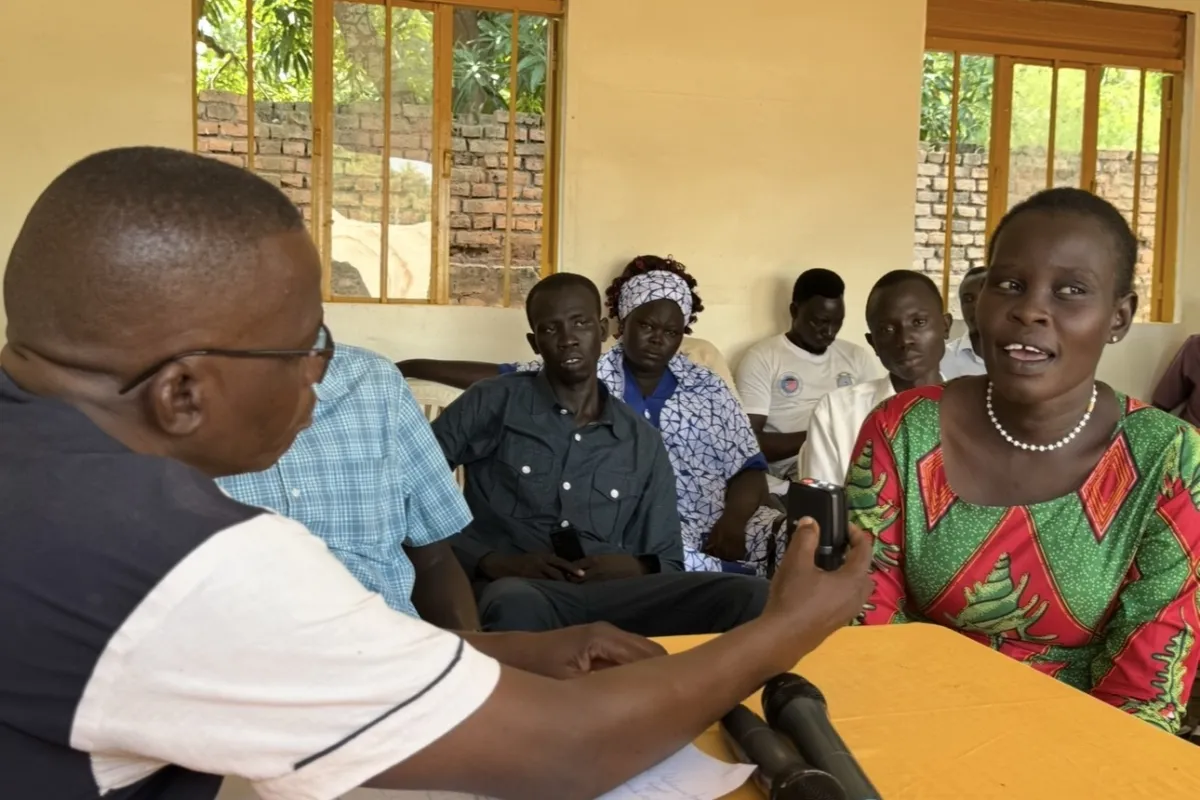
NORTHERN BAHR EL GHAZAL – In South Sudan, every gathering brings together stories shaped by different life experiences, shared pain and resilience.
A recent peace circle in Aweil was no exception. Participants came together to share their experiences and listen to one another. Some had fled conflict in neighbouring Sudan; others had returned home or grown up in Aweil. For a few hours, their different journeys converged around shared challenges and hopes.
Among them was Akut Dut, a mother of six who fled Sudan after fighting erupted in 2023.
“I was scared for my children. As a mother, I could not wait for something to happen to them. I decided we had to leave and find somewhere safer,” she recalls.
Leaving Sudan brought her family to safety, but it also meant starting over. As she worked to support her children and adapt to a new chapter of her life, Akut began knitting bedding to earn an income.
Her story was one of several shared during the peace circle in Northern Bahr el Ghazal, where young people from refugee, returnee and host communities spoke openly about the challenges shaping their lives.
Part of the global UN Peace Circles campaign, the engagement was supported by the United Nations Mission in South Sudan (UNMISS), in partnership with the Northern Bahr el Ghazal Youth Union. It provided a space to discuss displacement, livelihoods, unemployment, inclusion, women’s participation and the role young people can play in building peace in their communities.
For Akut, the discussion reflected many of the realities she has faced while rebuilding her life. For others, it opened doors to new connections and opportunities.
The Northern Bahr el Ghazal Youth Union has made that sense of connection central to its work. The Union regularly brings together young people from host, returnee and refugee communities, including persons with disabilities, to identify opportunities and strengthen skills through activities such as vocational and income-generating training.
The peace circle followed the launch of the UNMISS-facilitated ‘Hear Us Act Now’ campaign, which seeks to highlight existing peacebuilding initiatives and encourage new ones.
For the Union’s Chairperson, George Afem, the impact is already visible in the way young people are uniting around shared priorities.
“Youth are coming together, and our requests are starting to be heard by our leaders. Following the launch of this Peace Circle campaign, we received support from the government in the form of funding, which is now being used to create additional avenues for youth activities,” said the passionate advocate, pointing to a collection of bricks in front of him.
“We used the funding to buy bricks and other resources to build a space for our activities,” he added.
Creating a physical meeting place is only one part of the challenge. Participants also discussed how to ensure young women can participate fully and have a voice in decisions affecting their communities.
Every voice matters, says UNMISS Civil Affairs Officer Mawa Moses Alafi.
“Youth are among our primary actors in addressing localized conflicts. Through engagements such as this Peace Circle, UNMISS supports locally led dialogue that brings communities together, creates room for different perspectives and encourages young people to identify solutions to challenges affecting peace.”
For Akut, peace carries a deeply personal meaning: a sense of belonging.
Sitting alongside people whose journeys may differ from hers, yet are shaped by many of the same struggles, gave her a renewed sense of hope.
Peace Circles are more than gatherings. One conversation at a time, they help build connections, strengthen community and create a shared sense of possibility, shaping a more peaceful, united future for Aweil and beyond.
By Busang Davies Maruping