Continental Postal Services of Hebland

Mohammed VI buys his generals’ loyalty with Morocco’s wealth
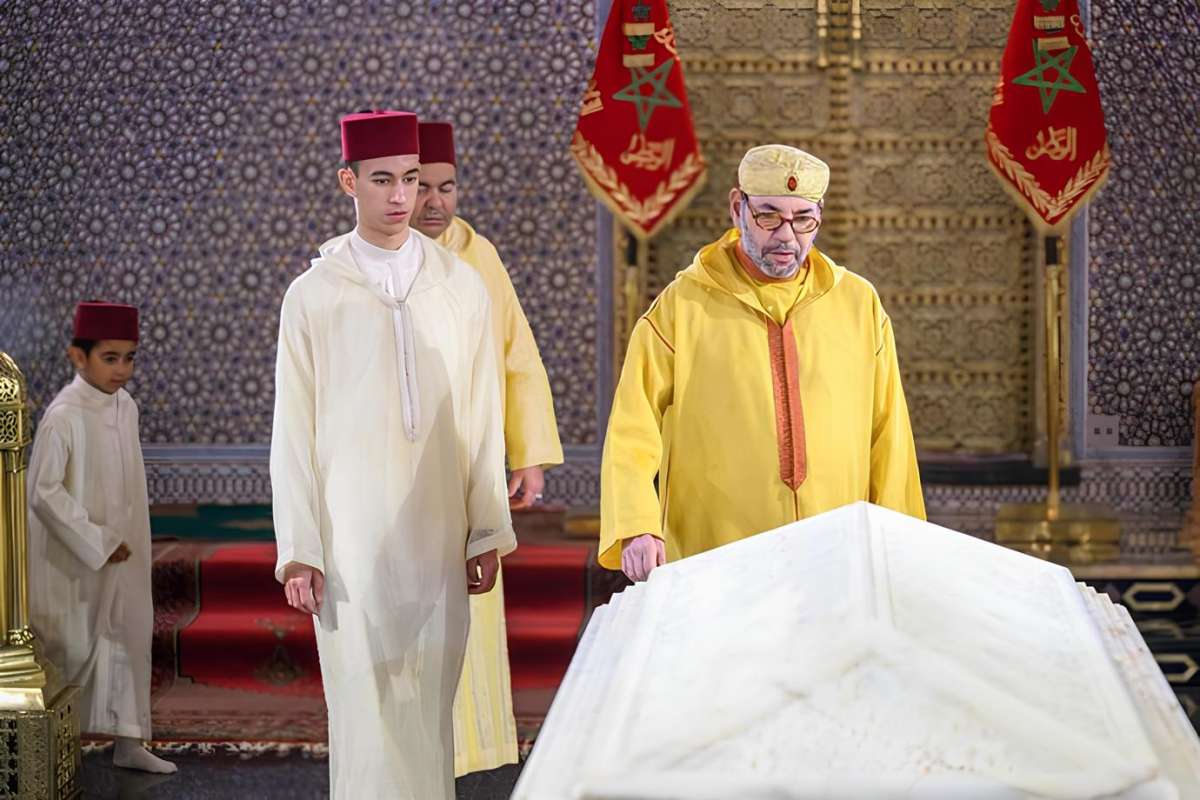
In Morocco, political, military, and economic power intertwines to the point where it becomes difficult to separate where the state ends and where the interests of the elite that runs it begin. The system is not limited to political control: it also relies on privileged access to strategic sectors, licenses, concessions, and businesses that can turn loyalty to the Palace into an extraordinary source of wealth.

This logic has roots in the reign of Hassan II and is linked, among other factors, to the coup attempts that the monarchy suffered in the early seventies. The first took place on July 10, 1971, when rebellious soldiers attacked the summer palace of Skhirat during the celebration of the king’s 42nd birthday. Hassan II and his family survived the assault, which left dozens dead and hundreds detained. A year later, a second coup attempt occurred, known as the attack of Uxda.

For the future Mohammed VI, who was then seven years old, it was not a history lesson but a survival experience. His father, Hassan II, responded to the overthrow attempts by reinforcing control over the Armed Forces and the security apparatus. But the monarchy’s survival mechanism was not limited to military structures. It also went through the construction of a network of political, economic, and personal loyalties around the Crown.

That framework is what is usually identified with the Makhzen, a term that encompasses the power structure linked to the monarchy, including high-ranking political, military, security officials, and other elites close to the Palace.

Privilege as an instrument of power

Talking about this system does not mean affirming that the generals simply receive an extraordinary salary from the state. The mechanism is more complex: it is about privileged access to certain economic activities, concessions, licenses, contracts, and business positions.

And one of the best windows to observe how this model works is precisely Western Sahara.

The region not only has strategic importance for Morocco. It also concentrates natural resources and economic activities of enormous value, from fishing to phosphates and certain agricultural and logistical activities.

The result is a paradox: the state assumes a large part of the economic, political, and military cost of maintaining control over the territory, while certain private actors linked to power can benefit from the economic opportunities that this presence generates:

1. Fishing and licenses in Western Sahara

The fishing ground of Dakhla in Western Sahara is one of the richest in the world in cephalopods, and there the industrial octopus and squid catch quotas have historically been distributed among the military elite. Figures from the old guard, like the late General Abdelaziz Bennani (former commander of the southern zone), or General Abdelhafid Alaui, appear on the lists of major beneficiaries of these exploitation permits.

Much of this octopus is processed in local plants in the Sahara and massively exported to Europe (especially to Spain) through intermediaries indirectly controlled by the military themselves or their relatives.

2. Land and agriculture

Agriculture constitutes other of Morocco’s major strategic sectors and also one of the areas where relations between political and economic power have generated criticism.

The problem is not simply that there are large agricultural exploitations. It is the possibility that access to land, water, authorizations, and regulatory advantages is conditioned by relationships with political and economic elites.

Through the Directorate of State Domains, the monarch grants thousands of cultivable hectares to officers. Highly productive lands are assigned in regions like the Gharb or the Souss basin, as well as experimental agricultural plots in the Sahara. 

Many of these lands are grouped into agricultural exploitation networks that operate with cheap labor and enjoy absolute tax exemptions, maximizing the profit margins of the military leadership.

3. The agréments: when a license becomes a rent

One of the classic examples of economic patronage in Morocco is the so-called agréments, authorizations that for decades have been used in certain sectors as a form of privileged access to an economic activity.

The best-known case is transportation. These licenses have been the subject of criticism for years due to their discretionary nature and the possibility of obtaining income simply through their exploitation or transfer. The phenomenon became a symbol of the privileges granted from the Palace’s environment.

It is undoubtedly one of the most widespread and informal methods of control and favor payment in Morocco. The Royal Palace gives away thousands of licenses for intercity bus lines, large taxi fleets (Grand Taxi), and transport trucks for aggregates or goods. But high-ranking military officials do not manage these transports; instead, they rent the licenses to private entrepreneurs in exchange for fixed monthly payments (lifelong rents guaranteed by the state).

This practice allows understanding a much broader mechanism: whoever controls an authorization necessary to develop an economic activity also controls a potential source of income.

4. The economic power of the Crown

The other major component of this system is the economy itself linked to the monarchy.

King Mohammed VI is associated with Al Mada, one of Morocco’s major business holdings, with interests in sectors such as banking, mining, telecommunications, energy, food, and other strategic businesses.

Through its holdings, Al Mada maintains significant positions in large Moroccan companies, including Attijariwafa Bank, Managem, Wana/INWI, and Nareva.

High-ranking military officers are facilitated the acquisition of preferred shares or seats on the boards of subsidiaries linked to mining (such as the Managem Group), the banking sector (Attijariwafa Bank), and telecommunications.

Although the OCP Group (Office Chérifien des Phosphates) is a state company, its auxiliary service contracts (security, logistics, rail transport, and maintenance) are routinely awarded to private security and logistics companies owned by the generals’ relatives.

5. Urbanism and beach concessions, even on the border with Ceuta

Protected urban land plots are discretionarily granted for the construction of luxury residential complexes in coastal cities like Rabat, Casablanca, Tangier, or Marrakech.

In these cities, the generals control a large part of the sand extraction licenses on the beaches (a vital business for construction in Morocco), a sector heavily criticized for its ecological impact but extremely lucrative.

This financial framework ensures that the military hierarchy enjoys a high bourgeoisie lifestyle. In return, the Royal Palace guarantees the containment of any hint of internal dissent and maintains absolute control over the armed establishment.

A system difficult to quantify

Here appears one of the main problems in measuring the economic dimension of the Makhzen: there is no official accounting of the incomes obtained by political and economic patronage networks.

However, independent economists, international transparency reports, and diplomatic cable leaks estimate that the so-called “rent economy” and palace monopolies represent between 5% and 10% of Morocco’s GDP indirectly. Considering that Morocco’s official nominal GDP is around 160 billion dollars, the estimated value that moves annually through this system of privileges for the ruling and military elite would be equivalent to a range of between 8 billion and 16 billion dollars annually.

This amount does not appear itemized as “military spending,” but it flows submerged or in parallel sectors through the following channels:

Cost of tax exemptions (“Fiscal Expenditure”), around 3% to 4% of GDP

The Moroccan Ministry of Finance has historically admitted that the state foregoes billions of dirhams annually in tax exemptions granted to large agriculture and real estate sectors dominated by the military and the Makhzen elite. These are revenues that the state gives away and that go directly into private hands.

The Al Mada Holding (The “Palace Economy”)

Although King Mohammed VI’s private holding operates legally, its oligopolistic control over the economy is massive. International analysts point out that dividends, contracts awarded at will, and the regulated sectors where the military leadership receives preferred shares, directly influence the industries that handle almost 40% of the country’s economic activity. The profits from these monopolies (banking, mining, telephony) are diverted from public coffers to grease the loyalty network.

The invisible rents of Western Sahara (fishing and phosphates)

Hundreds of millions of dollars annually in direct net benefits for the generals. The Saharan fishing ground generates a monumental fishing business. Around 70% of the octopus and cephalopod catch quotas in key areas like Dakhla are covertly linked to licenses in the hands of high-ranking military officials. This turns public resources from the territory into private fortunes that do not pay taxes.

The informal market of “agréments” (Transport and quarry licenses)

A constant cash flow that eludes the formal banking circuit. Commercial transport licenses, bus lines, and beach sand extraction operate as a lifelong currency. Retired or active generals receive shadow salaries ranging from 5,000 to 30,000 euros monthly simply by renting these free licenses to local transporters and builders.

To understand the magnitude, Morocco’s official defense budget is very high for its economy: it represents about 3.5% to 3.8% of GDP (around 5.2 to 6.9 billion dollars annually). The parallel system of prebends and licenses doubles or triples the real value of the state’s economic resources made available to the military leadership to guarantee their absolute submission to the Crown.

The employment paradox

The network of companies, agricultural exploitations, fishing fleets, transport, and services associated with power, of course, generates jobs. Precisely for this reason, its operation also has a social dimension.

Thousands of people depend on economic activities that may be directly or indirectly linked to large business groups, concessions, or regulated sectors. But generating employment does not necessarily mean generating a competitive economy.

An economy can create jobs and, at the same time, prevent many more from appearing because the entry barriers protect those already inside.

The impact of this system of privileges on the Moroccan labor market is immense. The military and palace elite’s control over key sectors not only generates wealth for a few but also directly or indirectly controls hundreds of thousands of jobs.

Although there are no detailed official figures due to the secrecy surrounding these networks, economic analysts and unions estimate that the network of companies, agricultural concessions, and licenses controlled by the military leadership and the Makhzen employs between 10% and 15% of Morocco’s formal workforce, which equates to a range of between 1 and 1.5 million jobs.

This employment is not state or military (they are not soldiers), but civilian labor distributed in four major areas: the agri-food sector and large estates, which employs about 300,000 to 400,000 people; industrial fishing and processing plants, which employs approximately between 150,000 and 200,000 people; private security and logistics companies, which employs between 100,000 and 150,000 people; and the informal transport sector (“Agréments”), which employs approximately 200,000 people.

Loyalty has a price

This system of social control has a dual function for Mohammed VI. It not only enriches the military to prevent coups but also turns the military leadership into the country’s main “patron” or private employer. By controlling so many jobs for the lower and rural classes, the regime ensures that any major strike or labor protest can be quickly quelled, as the strings of those companies are pulled by the military and state security leaders themselves.

It is not necessary to prove that each general owns a license, a farm, or a company to understand the mechanism. It is enough to observe how economic opportunities are distributed in a system where the concentration of political and economic power hinders competition and maintains a huge capacity for patronage in the hands of the Crown and the elites close to it.

The result is an economy that can grow and attract investments —the IMF predicts a real growth of 4.4% in 2026— and that at the same time maintains significant unemployment, competition, and opportunity inequality issues.

The question, therefore, is not whether Morocco has a real economy or if its growth is fictitious. It is not. The question is who has access to the most profitable part of that economy.

Because when resources, licenses, and opportunities are concentrated around the same power networks for decades, the cost is not only paid by the excluded competitors. It is also paid by the society that stops creating companies, jobs, and wealth because a part of its opportunities already has an owner before they can compete for them.

And that is probably the deepest way to understand the economy of the Makhzen: not as a simple system of corruption, but as a system of economic power distribution aimed at preserving political power.

In Morocco, political, military, and economic power intertwines to the point where it becomes difficult to separate where the state ends and where the interests of the elite that runs it begin. The system is not limited to political control: it also relies on privileged access to strategic sectors, licenses, concessions, and businesses that can turn loyalty to the Palace into an extraordinary source of wealth.

This logic has roots in the reign of Hassan II and is linked, among other factors, to the coup attempts that the monarchy suffered in the early seventies. The first took place on July 10, 1971, when rebellious soldiers attacked the summer palace of Skhirat during the celebration of the king’s 42nd birthday. Hassan II and his family survived the assault, which left dozens dead and hundreds detained. A year later, a second coup attempt occurred, known as the attack of Uxda.

For the future Mohammed VI, who was then seven years old, it was not a history lesson but a survival experience. His father, Hassan II, responded to the overthrow attempts by reinforcing control over the Armed Forces and the security apparatus. But the monarchy’s survival mechanism was not limited to military structures. It also went through the construction of a network of political, economic, and personal loyalties around the Crown.

That framework is what is usually identified with the Makhzen, a term that encompasses the power structure linked to the monarchy, including high-ranking political, military, security officials, and other elites close to the Palace.

Privilege as an instrument of power

Talking about this system does not mean affirming that the generals simply receive an extraordinary salary from the state. The mechanism is more complex: it is about privileged access to certain economic activities, concessions, licenses, contracts, and business positions.

And one of the best windows to observe how this model works is precisely Western Sahara.

The region not only has strategic importance for Morocco. It also concentrates natural resources and economic activities of enormous value, from fishing to phosphates and certain agricultural and logistical activities.

The result is a paradox: the state assumes a large part of the economic, political, and military cost of maintaining control over the territory, while certain private actors linked to power can benefit from the economic opportunities that this presence generates:

1. Fishing and licenses in Western Sahara

The fishing ground of Dakhla in Western Sahara is one of the richest in the world in cephalopods, and there the industrial octopus and squid catch quotas have historically been distributed among the military elite. Figures from the old guard, like the late General Abdelaziz Bennani (former commander of the southern zone), or General Abdelhafid Alaui, appear on the lists of major beneficiaries of these exploitation permits.

Much of this octopus is processed in local plants in the Sahara and massively exported to Europe (especially to Spain) through intermediaries indirectly controlled by the military themselves or their relatives.

2. Land and agriculture

Agriculture constitutes other of Morocco’s major strategic sectors and also one of the areas where relations between political and economic power have generated criticism.

The problem is not simply that there are large agricultural exploitations. It is the possibility that access to land, water, authorizations, and regulatory advantages is conditioned by relationships with political and economic elites.

Through the Directorate of State Domains, the monarch grants thousands of cultivable hectares to officers. Highly productive lands are assigned in regions like the Gharb or the Souss basin, as well as experimental agricultural plots in the Sahara. 

Many of these lands are grouped into agricultural exploitation networks that operate with cheap labor and enjoy absolute tax exemptions, maximizing the profit margins of the military leadership.

3. The agréments: when a license becomes a rent

One of the classic examples of economic patronage in Morocco is the so-called agréments, authorizations that for decades have been used in certain sectors as a form of privileged access to an economic activity.

The best-known case is transportation. These licenses have been the subject of criticism for years due to their discretionary nature and the possibility of obtaining income simply through their exploitation or transfer. The phenomenon became a symbol of the privileges granted from the Palace’s environment.

It is undoubtedly one of the most widespread and informal methods of control and favor payment in Morocco. The Royal Palace gives away thousands of licenses for intercity bus lines, large taxi fleets (Grand Taxi), and transport trucks for aggregates or goods. But high-ranking military officials do not manage these transports; instead, they rent the licenses to private entrepreneurs in exchange for fixed monthly payments (lifelong rents guaranteed by the state).

This practice allows understanding a much broader mechanism: whoever controls an authorization necessary to develop an economic activity also controls a potential source of income.

4. The economic power of the Crown

The other major component of this system is the economy itself linked to the monarchy.

King Mohammed VI is associated with Al Mada, one of Morocco’s major business holdings, with interests in sectors such as banking, mining, telecommunications, energy, food, and other strategic businesses.

Through its holdings, Al Mada maintains significant positions in large Moroccan companies, including Attijariwafa Bank, Managem, Wana/INWI, and Nareva.

High-ranking military officers are facilitated the acquisition of preferred shares or seats on the boards of subsidiaries linked to mining (such as the Managem Group), the banking sector (Attijariwafa Bank), and telecommunications.

Although the OCP Group (Office Chérifien des Phosphates) is a state company, its auxiliary service contracts (security, logistics, rail transport, and maintenance) are routinely awarded to private security and logistics companies owned by the generals’ relatives.

5. Urbanism and beach concessions, even on the border with Ceuta

Protected urban land plots are discretionarily granted for the construction of luxury residential complexes in coastal cities like Rabat, Casablanca, Tangier, or Marrakech.

In these cities, the generals control a large part of the sand extraction licenses on the beaches (a vital business for construction in Morocco), a sector heavily criticized for its ecological impact but extremely lucrative.

This financial framework ensures that the military hierarchy enjoys a high bourgeoisie lifestyle. In return, the Royal Palace guarantees the containment of any hint of internal dissent and maintains absolute control over the armed establishment.

A system difficult to quantify

Here appears one of the main problems in measuring the economic dimension of the Makhzen: there is no official accounting of the incomes obtained by political and economic patronage networks.

However, independent economists, international transparency reports, and diplomatic cable leaks estimate that the so-called “rent economy” and palace monopolies represent between 5% and 10% of Morocco’s GDP indirectly. Considering that Morocco’s official nominal GDP is around 160 billion dollars, the estimated value that moves annually through this system of privileges for the ruling and military elite would be equivalent to a range of between 8 billion and 16 billion dollars annually.

This amount does not appear itemized as “military spending,” but it flows submerged or in parallel sectors through the following channels:

Cost of tax exemptions (“Fiscal Expenditure”), around 3% to 4% of GDP

The Moroccan Ministry of Finance has historically admitted that the state foregoes billions of dirhams annually in tax exemptions granted to large agriculture and real estate sectors dominated by the military and the Makhzen elite. These are revenues that the state gives away and that go directly into private hands.

The Al Mada Holding (The “Palace Economy”)

Although King Mohammed VI’s private holding operates legally, its oligopolistic control over the economy is massive. International analysts point out that dividends, contracts awarded at will, and the regulated sectors where the military leadership receives preferred shares, directly influence the industries that handle almost 40% of the country’s economic activity. The profits from these monopolies (banking, mining, telephony) are diverted from public coffers to grease the loyalty network.

The invisible rents of Western Sahara (fishing and phosphates)

Hundreds of millions of dollars annually in direct net benefits for the generals. The Saharan fishing ground generates a monumental fishing business. Around 70% of the octopus and cephalopod catch quotas in key areas like Dakhla are covertly linked to licenses in the hands of high-ranking military officials. This turns public resources from the territory into private fortunes that do not pay taxes.

The informal market of “agréments” (Transport and quarry licenses)

A constant cash flow that eludes the formal banking circuit. Commercial transport licenses, bus lines, and beach sand extraction operate as a lifelong currency. Retired or active generals receive shadow salaries ranging from 5,000 to 30,000 euros monthly simply by renting these free licenses to local transporters and builders.

To understand the magnitude, Morocco’s official defense budget is very high for its economy: it represents about 3.5% to 3.8% of GDP (around 5.2 to 6.9 billion dollars annually). The parallel system of prebends and licenses doubles or triples the real value of the state’s economic resources made available to the military leadership to guarantee their absolute submission to the Crown.

The employment paradox

The network of companies, agricultural exploitations, fishing fleets, transport, and services associated with power, of course, generates jobs. Precisely for this reason, its operation also has a social dimension.

Thousands of people depend on economic activities that may be directly or indirectly linked to large business groups, concessions, or regulated sectors. But generating employment does not necessarily mean generating a competitive economy.

An economy can create jobs and, at the same time, prevent many more from appearing because the entry barriers protect those already inside.

The impact of this system of privileges on the Moroccan labor market is immense. The military and palace elite’s control over key sectors not only generates wealth for a few but also directly or indirectly controls hundreds of thousands of jobs.

Although there are no detailed official figures due to the secrecy surrounding these networks, economic analysts and unions estimate that the network of companies, agricultural concessions, and licenses controlled by the military leadership and the Makhzen employs between 10% and 15% of Morocco’s formal workforce, which equates to a range of between 1 and 1.5 million jobs.

This employment is not state or military (they are not soldiers), but civilian labor distributed in four major areas: the agri-food sector and large estates, which employs about 300,000 to 400,000 people; industrial fishing and processing plants, which employs approximately between 150,000 and 200,000 people; private security and logistics companies, which employs between 100,000 and 150,000 people; and the informal transport sector (“Agréments”), which employs approximately 200,000 people.

Loyalty has a price

This system of social control has a dual function for Mohammed VI. It not only enriches the military to prevent coups but also turns the military leadership into the country’s main “patron” or private employer. By controlling so many jobs for the lower and rural classes, the regime ensures that any major strike or labor protest can be quickly quelled, as the strings of those companies are pulled by the military and state security leaders themselves.

It is not necessary to prove that each general owns a license, a farm, or a company to understand the mechanism. It is enough to observe how economic opportunities are distributed in a system where the concentration of political and economic power hinders competition and maintains a huge capacity for patronage in the hands of the Crown and the elites close to it.

The result is an economy that can grow and attract investments —the IMF predicts a real growth of 4.4% in 2026— and that at the same time maintains significant unemployment, competition, and opportunity inequality issues.

The question, therefore, is not whether Morocco has a real economy or if its growth is fictitious. It is not. The question is who has access to the most profitable part of that economy.

Because when resources, licenses, and opportunities are concentrated around the same power networks for decades, the cost is not only paid by the excluded competitors. It is also paid by the society that stops creating companies, jobs, and wealth because a part of its opportunities already has an owner before they can compete for them.

And that is probably the deepest way to understand the economy of the Makhzen: not as a simple system of corruption, but as a system of economic power distribution aimed at preserving political power.


Credit: Source link

Leave A Reply

Your email address will not be published.