

Miami learns the cost of revoking Haitian temporary status
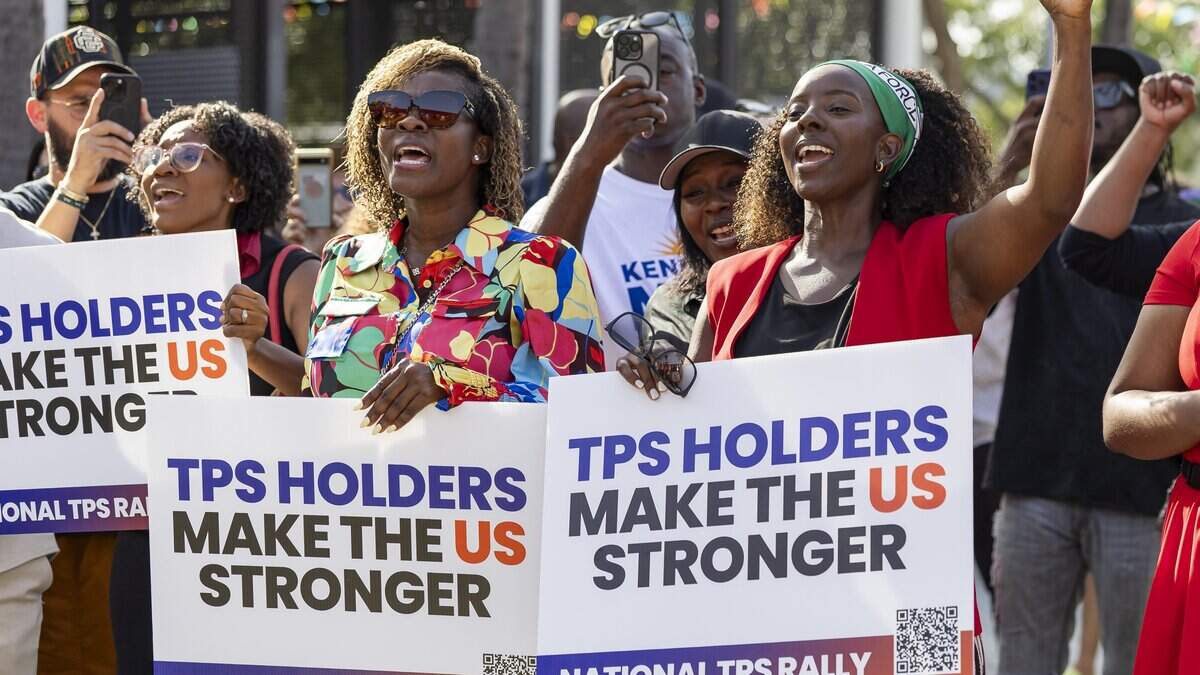
People attend a rally at the Little Haiti Cultural Center on Thursday, July 9, 2026, in Miami, Fla. The event called for protections for Temporary Protected Status (TPS) holders and other immigrants after the Trump administration stripped many of them of legal protections against deportation.
mocner@miamiherald.com
President Donald Trump telegraphed exactly how he felt about Haitians when he repeated during a 2024 presidential debate a debunked conspiracy theory that Haitians were eating people’s cats and dogs in Ohio. If you listened to Trump’s words back then, you’re not surprised he now wants to deport about 350,000 Haitians after revoking their Temporary Protected Status.
Now that a Miami chef whose restaurant chain lost TPS workers is facing backlash for saying he regretted voting for Trump in 2024, it’s become easier to understand why the president carried Miami-Dade despite attacking and demeaning immigrants, who helped build this community. Wilkinson Sejour, the Haitian-Bahamian owner of South Florida’s Chef Creole restaurants, has said he supported Trump because he viewed the president as a “business person.”
Many voters used to Trump’s rage-baiting comments might have assumed his rhetoric about immigrants was just Trumpian hyperbole, that his promise of mass deportations would mostly target undocumented immigrants with serious criminal records. After seeing a surge in immigration under the Biden administration, voters in Miami-Dade probably felt it was time for a course correction. With promises of reining in immigration and inflation with his business acumen, Trump carried the formerly blue county — a first for a Republican presidential candidate since the 1980s.
South Florida is now witnessing what Trump’s immigration policies actually look like after the revocation of TPS for Haitians and Venezuelans. Is this what Miami truly voted for?
Many voters believed that Trump would only deport criminals. Other voters believed that anyone here on TPS should be sent back to countries where there’s repression, no functioning government, gang violence and the widespread rape of women and children (TPS allows people from countries facing extraordinary conditions to work and live in the U.S.). They will repeat the line that TPS was always meant to be temporary, even though conditions in Haiti, particularly, have only gotten worse after the 2021 assassination of the country’s president. In Venezuela, two major earthquakes left thousands dead and further damaged the nation’s already fragile infrastructure.
It’s clear that voters gave Trump the benefit of the doubt, but some are now finding out that, unlike in his first term, Trump 2.0 implements immigration policy with a vengeance and a clear desire to terrorize immigrant communities. Trump, the businessman, should have known what the Herald Editorial Board and others have been saying since he began revoking TPS for large numbers of foreign workers: that those people have found jobs in important South Florida industries known for the high turnover of workers, such as hospitality, elderly care and other services.
If foreigners are stealing American jobs, South Florida will learn very soon whether Americans will step up to work in restaurant kitchens or do graveyard shifts cleaning restrooms at Fort Lauderdale-Hollywood International Airport. That’s the job a 70-year-old Haitian man performed with pride for 19 years, often from 10 p.m. to 6 a.m., cleaning and waxing floors five days a week. Then he lost his work permit in July because his TPS was revoked, the Herald reported. He asked the Herald not to publish his name because he said he fears for his life.
About 52,000 Haitian TPS holders were in the workforce in Miami-Dade, Broward and Palm Beach counties, according to an estimate by Phillip Connor, a research fellow at Princeton University’s Center for Migration and Development, the Herald reported. An estimated 6,000 were cooks and servers, 4,000 were stockers and packers, 2,000 were maids and housekeepers and 2,000 security guards.
Now imagine being the restaurant owner competing with hundreds, or thousands, of other businesses to find replacements for 6,000 cooks and servers. In Chef Creole’s case, Sejour said he may have to shut down two of seven locations.
The November midterms will test whether Miami-Dade voters now reject Trump’s immigration policies. Whether they fully understood it or not, voters chose in 2024 exactly what we’re getting from Trump’s mass deportations. But did they think they would be hurting businesses and creating chaos? Probably not.
BEHIND THE STORY
What’s an editorial?
Editorials are opinion pieces that reflect the views of the Miami Herald Editorial Board, a group of opinion journalists that operates separately from the Miami Herald newsroom. Miami Herald Editorial Board members are: opinion editor Amy Driscoll and editorial writers Isadora Rangel and Mary Anna Mancuso. Read more by clicking the arrow in the upper right.
What’s the difference between an op-ed and a column?
How does the Miami Herald Editorial Board decide what to write about?
The Editorial Board, made up of experienced opinion journalists, primarily addresses local and state issues that affect South Florida residents. Each board member has an area of focus, such as education, COVID or local government policy. Board members meet daily and bring up an array of topics for discussion. Once a topic is fully discussed, board members will further report the issue, interviewing stakeholders and others involved and affected, so that the board can present the most informed opinion possible. We strive to provide our community with thought leadership that advocates for policies and priorities that strengthen our communities. Our editorials promote social justice, fairness in economic, educational and social opportunities and an end to systemic racism and inequality. The Editorial Board is separate from the reporters and editors of the Miami Herald newsroom.
How can I contribute to the Miami Herald Opinion section?
The Editorial Board accepts op-ed submissions of 650-700 words from community members who want to argue a specific viewpoint or idea that is relevant to our area. You can email an op-ed submission to oped@miamiherald.com. We also accept 150-word letters to the editor from readers who want to offer their points of view on current issues. For more information on how to submit a letter, go here.