

Meet the Gabonese artist making waves on the global art scene
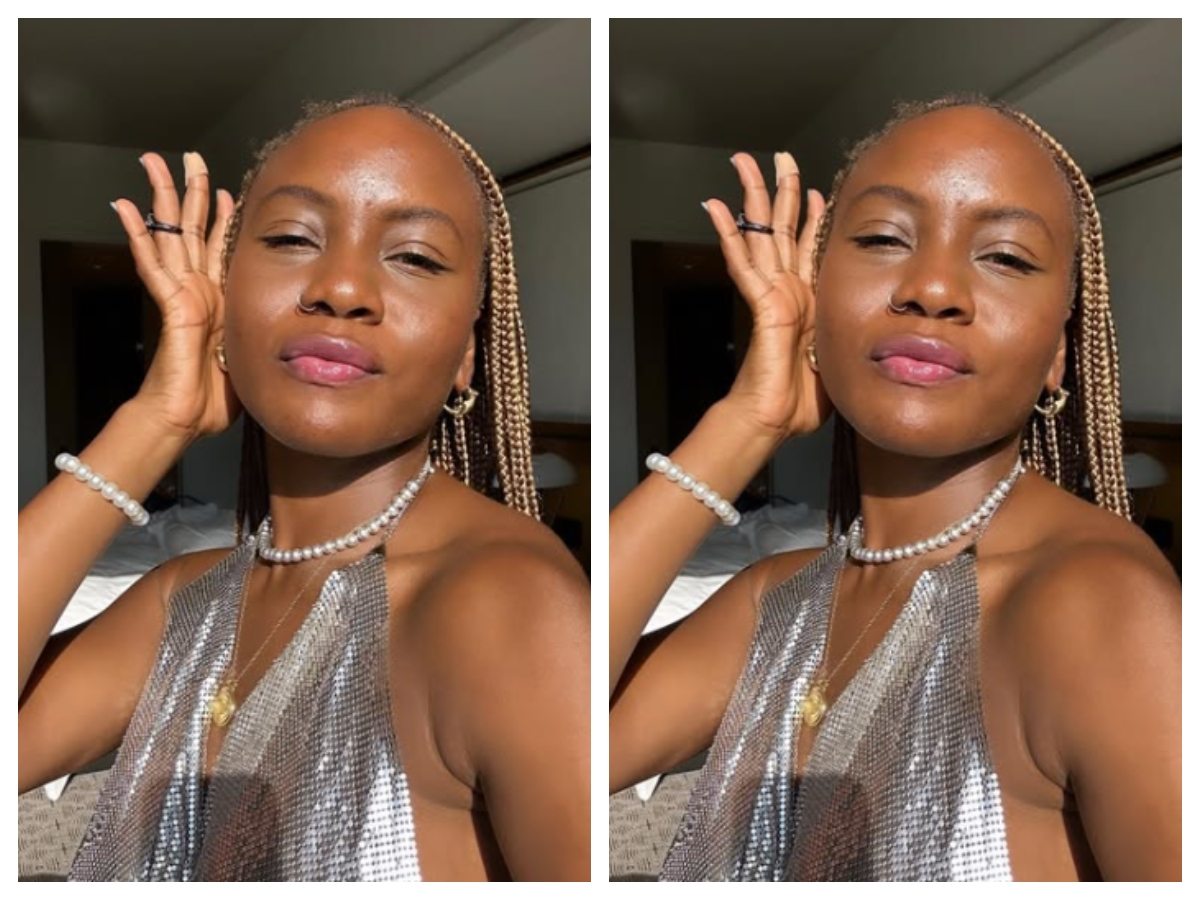
Gabonese artist Naila Opiangah is emerging as a notable figure in the international art scene, celebrated for her captivating paintings of Black female nudes that confront and redefine notions of identity, beauty, and freedom.
Currently splitting her time between Ghana and New York, the 31-year-old artist emphasizes that her creations are not only deeply personal but also carry a political message.
Opiangah said she views her artistic journey as a blend of personal expression and political commentary.
“When asked how I see my work, whether it’s personal, political, spiritual, or all of the above. Well, I see all of the above, but I would emphasise the fact that, I do find it political because, I think it’s quite rebellious, given where I’m from, how I was raised, who I represent, the community that I’m part of,” the artist told Africa News.
At the age of 18, Opiangah left Gabon to study architecture in the United States. Later, she turned her passion for painting, which she had learned on her own, into a full-time career. She believes that recognition from North America or Europe shouldn’t be the only factor in determining success.
READ ALSO: Meet the Nigerian biologist who found rare tiny bat species thought to be extinct
“Yes, our work is recognised, celebrated, accessed by the West, but it’s equally recognised, celebrated and accessed by our people. We need to have markets that are not just Western markets. We need to have markets that are local so that the development can be sustained,” she stated.
Opiangah hopes that her journey will encourage more African women to pursue creative careers and take advantage of opportunities that may have previously seemed unattainable as her work reaches audiences around the world.
Her figurative and abstract paintings, which she believes have their roots in colonial history, examine themes of womanhood and challenge attitudes toward the nude body.
Her work has attracted many famous personalities, including Hollywood stylist Law Roach, who has showcased her work on one of fashion’s biggest stages, the Met Gala.
Roach said of her, “My suit is in collaboration with a Ghanaian artist, Naila Opiangah. She flew to Paris from Ghana to paint and create her works on this suit, and I’m so grateful.”
Additionally, in 2022, Opiangah was featured in a single by Grammy-winning Chicago native and rapper Chance The Rapper, who ventured into uncharted territory by fusing music, art, and cinematography in an exhibit at the Museum of Contemporary Art.
The Chicago rapper told ABC7 Chicago at the time, “I had an idea years back to try to do individual works of art, to represent each song instead of doing an album cover,” Chance said. “And when I went to Ghana this year, I met this amazing artist, Naila Opiangah.”
Opiangah and Chance respected each other’s artistry, and she felt inspired after hearing his new song.
“I just felt, mentally and spiritually, I saw something that had to do with ascension, and it was only when I got on my flight here that it started revealing itself to me in its visual form,” she said.
After working together for weeks, with Opiangah producing the artwork and Chance concentrating on writing and vocals, they created the music video for “Child of God” and had Opiangah’s painting displayed at the Museum of Contemporary Art.
“This is one of the most respected museums in the world,” Chance said. “And the fact that people in Chicago will come and see our work, and it be held in such a prestigious space, it’s crazy.”
The painter said she made images of female Black bodies to fight against a narrative of over-sexualization.
“Look at the body for what it is, just a human being,” Opiangah remarked.
The artist has also been bold and vocal about racial inequalities in the art and architecture space.
She wrote in a DeZeen 2020 issue, “Architecture has never been a haven for genuine racial discourse in my experience. In my opinion, it has been a petri dish for blatant racism. When I moved to the US from my home country of Gabon to study it and later to practice it, I did not expect that my success would be defined by how well I managed to suppress my Black and African identity.
I learned early in the process that assimilation was a must in order for me to fit in a field where black people only account for a sliver of its members. This awareness came after direct and indirect forms of discrimination and microaggressions in school, from the studio workshops to the midterm and final reviews.”
She added, “Although a very few of us manage to make it as far as possible, the treatment of the majority of us remains increasingly appalling. As society tackles once again the issue of race and policing, I can’t help but wish for architecture to address its own issues of policing of the black people who practice it. I long for the day where suppressing my identity is no longer part of the job. Until then, I weave my way through the spaces, enduring one gaslighting at a time.”
READ ALSO: Meet the Nigerian entrepreneur teaching AI to sing in African languages
Credit: Source link