

Mali Is the Linchpin of West Africa—Now It’s Under Jihadist Siege
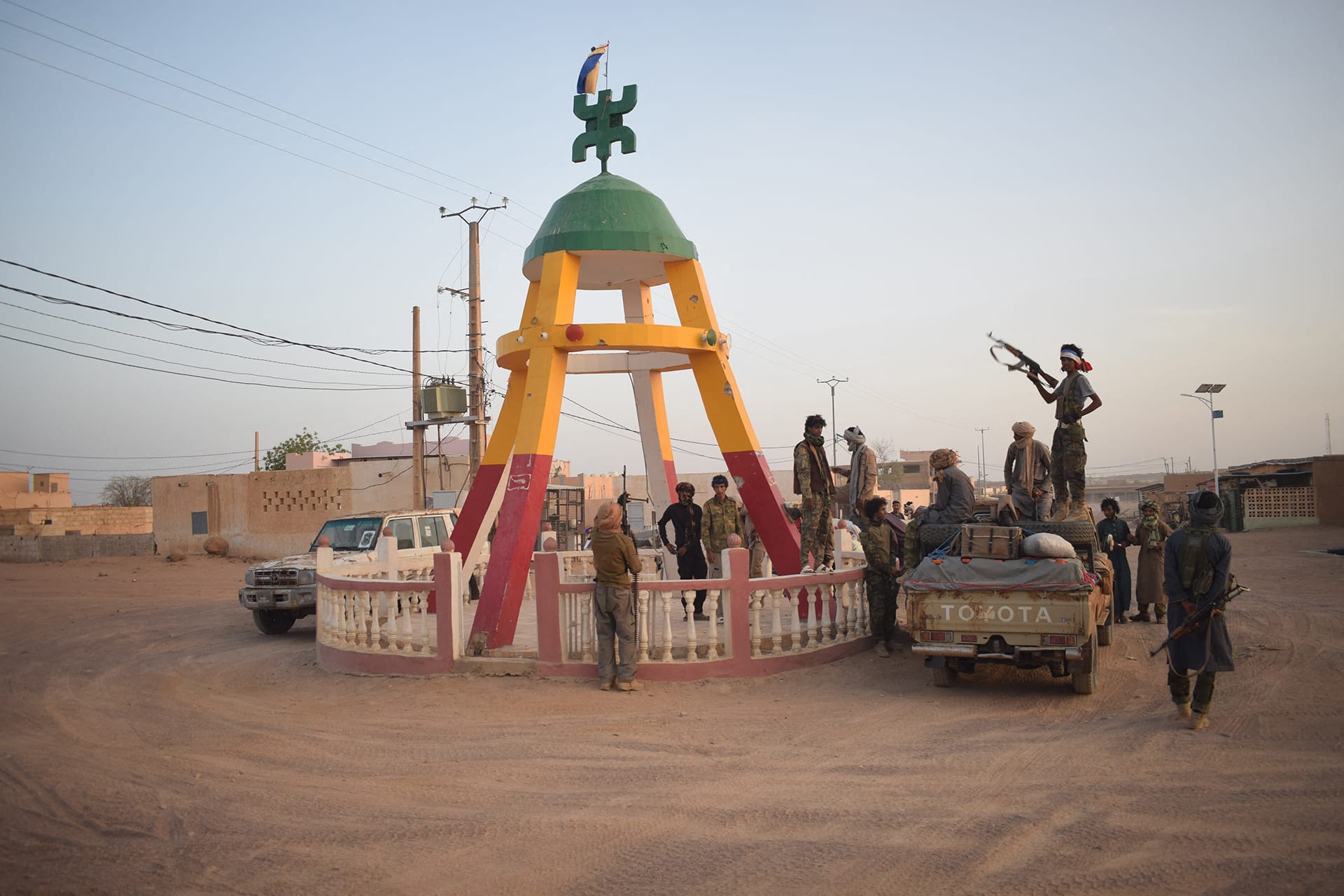
In the wake of these attacks, the continued coordination by jihadist and separatist forces could threaten the status of Mali as one of the three military-led states that exited the Economic Community of West African States in September 2023 to form the Alliance of Sahel States (AES). Niger and Burkina Faso have teamed up with the Malian armed forces to carry out air strikes against jihadist targets on Malian territory since the April attacks.
A clouded picture of public opinions
While the government has sought to reassure the public that the situation is “under control,” there is still a lot of uncertainty about what happens next. Significantly, the fact that Mali is under the thumb of a military government that has shown no inhibitions in cracking down on civil society makes any assessment of the current public mood practically impossible.
Since taking power, Goïta has moved to dissolve political parties and suspend civil society and media organizations, while human rights groups have credibly accused the government of human rights abuses. Following the attacks, the junta appears to be intensifying its clampdown on civil society. For example, prominent lawyer and critic of the military government, Mountaga Tall, was abducted from his home in Bamako on the night of May 2.
In Niamey, the capital of neighboring Niger, demonstrators shouting slogans such as “down with the imperialists,” “down with the terrorists and their sponsors,” and “long live the AES” have organized rallies ostensibly “in solidarity with the Malian people.”
Mali’s relationship with Russia under strain
Russia has been scrambling to repair its image following its humiliation in Kidal, where it was outmatched by the JNIM-FLA fighters even though it reportedly had warning of the coalition’s movements. In the days following the attacks, Russian state-owned media agency Sputnik has sought to put the blame on Ukraine and its Western allies, accusing them, with little evidence, of “practicing state terrorism by proxy.”
All told, Moscow’s operations in Mali and across the Sahel have not gone as planned—the killing of Defense Minister Camara, a trusted ally in the administration, is a huge blow—and it remains to be seen whether the military government will continue to invest in a partnership that has brought it slender gains and much acrimony. For its part, Moscow will have a decision to make if its military assistance continues to be largely ineffective. Given Mali’s location and resources, it would not be a surprise if the Kremlin decided to tough it out.
The future of U.S. ties, regionwide
Under the Trump administration, the United States has sought to close ranks with the Malian junta. In February, the White House lifted sanctions previously imposed on senior Malian government officials accused of having “ties with Russian mercenaries” and has been working on a deal “that will allow Washington to resume flying aircraft and drones over the West African country’s airspace to gather intelligence on jihadist groups linked to al-Qaeda.”
The recent attacks give credence to the administration’s concerns captured in the National Security Strategy [PDF] about “resurgent Islamist terrorist activity in parts of Africa.” Insofar as the attacks demonstrate the scale and seriousness of the jihadist threat across the Sahel, the situation in Mali in particular also highlights the potential difficulties in doing business with an unstable regime with questionable political legitimacy.
This work represents the views and opinions solely of the authors. The Council on Foreign Relations is an independent, nonpartisan membership organization, think tank, and publisher, and takes no institutional positions on matters of policy.
Credit: Source link