

Mali: Former Prime Minister Moussa Mara regains freedom after a year of detention
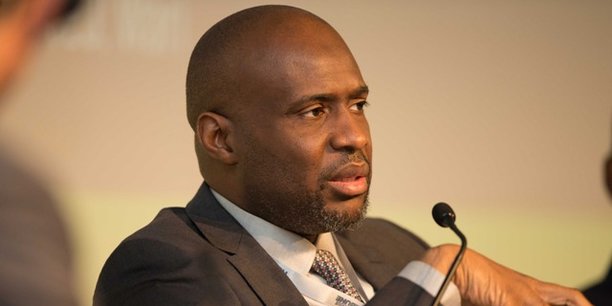
Former Malian Prime Minister Moussa Mara regained his freedom on Saturday, August 1, 2026, after serving a one-year prison sentence. The information was confirmed by a representative of his party, Yelema (The Change), as well as a judicial source. He had been held at the Central House of Arrest in Koulikoro, about sixty kilometers from Bamako, since his arrest.
As Prime Minister from April 2014 to January 2015 under the regime of Ibrahim Boubacar Keïta, Moussa Mara was arrested on August 1, 2025. He was charged for statements published on the social network X on July 4, 2025, in which he declared visiting several political and civil society detainees, whom he referred to as “prisoners of opinion”, and expressed his “unwavering solidarity” with them. The message concluded with: “As long as the night lasts, the sun will obviously appear! We will fight by all means to make it happen as soon as possible!”.
The initial arrest was based on three charges against him: “harming the credit of the State”, “incitement to disturb public order” and “opposition to legitimate authority”.
On October 27, 2025, the national cybercrime unit in Bamako sentenced him in the first instance to two years imprisonment, one of which was firm, and a fine of 500,000 CFA francs. On February 9, 2026, the Bamako Court of Appeal upheld this sentence in its entirety, rejecting the defense’s appeal. The former Prime Minister’s lawyers, led by Maîtres Mountaga Tall and Mamadou Ismaïla Konaté, announced an appeal to the Supreme Court.
Context:
This release comes in a political context still marked by a hardening of military power. After the coups d’état in August 2020 and May 2021, the transitional authorities have multiplied restrictions targeting opponents, media, and civil society. On May 7, 2025, a presidential decree suspended the activities of political parties, and then a second decree, signed on May 13, 2025 by General Assimi Goïta, dissolved all political parties and organizations, significantly reducing the space for public expression. In April 2025, the government also announced the indefinite postponement of elections and the extension of the transition.
On the security front, Mali continues to face attacks by armed groups linked to Al-Qaeda and the Islamic State organization, in addition to violence involving criminal groups and communal conflicts. This situation continues to weigh on an already fragile economy.
At the helm of the transition, General Assimi Goïta had pledged several times since 2022 to organize a return to civilian power before March 2024. This commitment was not kept. On July 3, 2025, the National Transition Council adopted a revision of the Transition Charter, promulgated on July 8, 2025, granting the head of state a five-year renewable presidential mandate “as many times as necessary”, without limitation on the number of terms and without holding elections.
Credit: Source link