

Looking East: Why China Could Be Morocco’s Next Great Tourism
There are moments when a destination can choose to anticipate the future rather than react to it. For Morocco, the next decade may be one of those moments.
As Chinese international travel continues to recover and evolve, the kingdom has an opportunity to position itself not simply as another long-haul destination, but as one of the most distinctive cultural and experiential choices for China’s next generation of travellers.
Morocco already has much of what the global traveller is seeking: a powerful cultural identity, exceptional hospitality, diverse landscapes, mature tourism infrastructure, political stability and an authenticity that cannot be manufactured. But assets alone do not create market leadership.
In this regard, the difference between making Morocco China-ready or China-relevant matters. Being ready is operational. Being relevant is strategic. It means understanding how the market is changing, how Chinese travellers discover destinations, what influences their decisions and what kind of experiences will create lasting preference.
Chinese travellers are changing and Morocco must evolve with them
The Chinese outbound traveller of tomorrow will not necessarily resemble the traveller of the previous decade. Large-group sightseeing will remain part of the market, but a more affluent, independent and digitally connected audience is growing in importance.
This traveller is more likely to value depth over volume: local culture rather than a checklist of landmarks, distinctive gastronomy rather than generic luxury, wellness and nature rather than constant movement, and experiences that feel personal enough to become stories worth sharing.
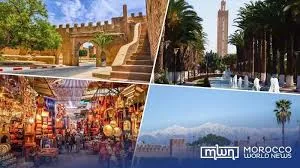
That shift plays directly to Morocco’s strengths. Few destinations can combine imperial cities, Atlantic and Mediterranean coastlines, mountains, desert landscapes, contemporary design, craftsmanship, gastronomy and a deeply rooted culture within one journey.
In a tourism economy where destinations risk becoming increasingly standardized, Morocco’s strongest competitive advantage may be precisely what cannot be copied: its sense of place.
The ambition must be Morocco not only Marrakech
Marrakech will remain a natural gateway. Its architecture, riads, souks, culinary culture and visual identity are exceptionally well aligned with travellers seeking cultural discovery and memorable experiences. But the national opportunity is much broader.
Casablanca can represent contemporary Morocco: business, architecture, design and urban energy. Rabat can strengthen its appeal as the kingdom’s cultural and institutional capital. Tangier can express Morocco’s Mediterranean and international character. Agadir can build on its strengths in leisure, wellness and longer stays. Fez, Essaouira, Chefchaouen, and Ouarzazate can offer the kind of discovery that increasingly appeals to experienced travellers looking beyond the obvious.
The strategic challenge is therefore not simply to promote more destinations. It is to connect them into coherent journeys, create stronger reasons to stay longer and tell a national story that is both easy to understand and rich enough to explore.
Digital influence will shape physical travel
The competition for the Chinese traveller will not be won only at tourism fairs or through traditional distribution. It will increasingly be won long before departure, on digital platforms where inspiration, social proof, planning and booking are becoming part of the same journey.
For Morocco, this requires a more deliberate presence across the Chinese digital ecosystem including platforms such as WeChat, Weibo, Ctrip, Mafengwo and Xiaohongshu. Such deliberate, targeted effort should be supported by content designed for the Chinese market rather than merely translated into Mandarin.
Translation is not localization. Morocco needs storytelling that reflects the interests, behaviors and cultural references of Chinese audiences. Chinese creators, journalists, opinion leaders and travel specialists should be invited to experience the country in depth: its hotels, cuisine, golf, wellness, fashion, craftsmanship, heritage and landscapes.
Their role should not be limited to promotion. The most effective voices can become cultural interpreters by helping travellers understand not only where Morocco is, but why it is worth crossing continents to experience it.
Connectivity as both infrastructure and strategy.
No destination can convert awareness into meaningful scale without accessibility. Morocco’s visa policy toward Chinese visitors was an important step in unlocking demand. The next frontier is air connectivity.
Stronger direct links between China and Morocco would fundamentally improve the proposition. Casablanca is the natural aviation gateway, while stronger onward access to Marrakech, Agadir, Tangier and other destinations can turn a point of arrival into a multi-destination journey.
Airline partnerships, destination marketing, tour operators and major travel platforms should therefore be viewed as one ecosystem. Connectivity does more than reduce travel time: it creates confidence, visibility and commercial momentum.
Far more than just a route or facilitating infrastructure, a direct route is a signal to a market that a destination is accessible, investable, and ready to matter.
Hospitality must lead from the front
Government policy can create the conditions for growth, but the experience itself will be delivered by the private sector. Hotels, restaurants, travel companies, retailers, golf resorts, wellness operators and cultural institutions all have a role to play.
That does not mean over-engineering the Moroccan experience for one nationality. It means removing friction while preserving identity: language support where useful, payment and digital convenience, culturally aware service, relevant food options, knowledgeable guides, and itineraries designed around how guests actually want to travel.
The objective is not to make Morocco Chinese. It is to make Morocco easier for Chinese travellers to understand, navigate and enjoy without compromising what makes the destination unmistakably Moroccan.
That balance is essential, particularly in luxury hospitality. The new luxury traveller is not travelling thousands of kilometres to find the same experience available everywhere else. They are travelling for difference, interpreted through excellent service.
Could Morocco welcome one million Chinese visitors by 2030?
Before the pandemic, Morocco had already demonstrated meaningful traction in the Chinese market, with arrivals approaching the 200,000 mark annually. Reaching one million Chinese visitors by 2030 would be a highly ambitious objective — but ambitious targets have value when they force an industry to think structurally.
Such growth would require coordination across aviation, destination marketing, distribution, technology, hospitality and investment. More importantly, it would require Morocco to define success more intelligently.
Visitor volume matters, but so do length of stay, average spend, geographic dispersion, seasonality, repeat visitation and guest advocacy. One million arrivals should never be treated as an end in itself. The real ambition should be one million opportunities to create future ambassadors for Morocco.
A strategic bridge between two ancient cultures
The opportunity also extends beyond tourism. Morocco and China are two ancient civilisations with strong cultural identities, long traditions of hospitality, and a deep respect for heritage. Travel can become one of the most human bridges between them.
Every visitor who discovers Moroccan craftsmanship, food, architecture, landscapes or hospitality participates in a wider exchange between Asia and Africa, tradition and modernity, commercial opportunity and cultural understanding.
This is why the most useful question is not simply: “How do we attract more Chinese tourists?”
The more strategic question is: “What kind of relationship does Morocco want to build with the Chinese traveller of the future?”
If Morocco answers that question now with clarity, coordination, and ambition it will not merely participate in the next phase of Chinese outbound tourism. It can earn a distinctive position within it.
The market is evolving. The opportunity is real. And Morocco possesses something that is becoming increasingly valuable in global tourism: a destination with a soul.
Credit: Source link