

Liberia’s Lone Climate Vote Sparks Outrage | News
The Liberian government’s decision to vote against a landmark United Nations General Assembly resolution supporting the International Court of Justice (ICJ) advisory opinion on climate change has triggered growing backlash from environmental and climate justice advocates, who say the move not only contradicts the country’s own climate commitments but also weakens Africa’s moral and diplomatic position in the global climate debate.
In an unusually strong and coordinated response, a consortium of environmental and land rights organizations—including Green Advocates International (GAI), the Alliance for Rural Democracy (ARD), and the Natural Resource Women Platform (NRWP)—described country’s vote as “deeply troubling,” warning that the country risks undermining years of international advocacy for climate financing, reparations, and protection for vulnerable communities already suffering the effects of climate change.
The resolution, overwhelmingly adopted by 141 UN member states, seeks to reinforce international legal obligations surrounding climate action, accountability, and the protection of vulnerable populations from the worsening impacts of global warming. Liberia, however, joined a small bloc of countries that voted against the measure, including Russia, Iran, Saudi Arabia, Belarus, Israel, Yemen, and the United States.
Notably, Liberia stood alone as the only African country to oppose the resolution. That singular position has become the center of growing criticism from civil society organizations, environmental experts, and governance advocates who argue that the vote contradicts both Liberia’s national interests and the realities confronting its people.
“We are deeply troubled by Liberia’s position on such a historic global climate justice initiative,” said Alfred Lahai Gbabai Brownell Sr., internationally renowned environmental activist, founder of Green Advocates International, lead campaigner at the African Climate Platform (ACP), and recipient of the 2019 Goldman Environmental Prize.
“It is unfortunate that Liberia, which currently holds a seat on the United Nations Security Council representing Africa, chose to isolate itself from the rest of the African continent by becoming the only African country to vote against the resolution,” Brownell added.
A Vote Against Climate Accountability?
At the heart of the controversy is the significance of the ICJ advisory opinion itself.
Though nonbinding, the advisory opinion is widely viewed as a potentially transformative legal instrument that could clarify the obligations of states regarding climate change under international law. Environmental advocates say it could strengthen accountability mechanisms against major polluters and help climate-vulnerable countries seek justice for loss and damage caused by rising temperatures, sea level rise, and environmental destruction.
For many developing countries—particularly in Africa and the Pacific Islands—the initiative represents a moral and legal breakthrough in the global struggle for climate justice.
That Liberia opposed it has left many observers puzzled.
The environmental coalition argues that Liberia’s position fundamentally contradicts its repeated international appeals for climate financing, adaptation support, green investment, and compensation for climate-related losses.
“How can a climate-vulnerable nation demand international solidarity and financial support for climate resilience while simultaneously voting against a resolution aimed at strengthening global accountability and climate justice?” asked Radiatu Sherif-Kahnplaye, Policy Advisor at the Natural Resource Women Platform.
Her question reflects a broader concern increasingly being raised across environmental policy circles: whether Liberia’s diplomatic posture is aligned with its own long-term environmental and developmental interests.
Liberia’s vulnerability to climate change is not theoretical—it is already visible across coastal communities, agricultural zones, and urban settlements. A 2024 World Bank Country Climate and Development Report ranked Liberia among the countries most vulnerable to climate impacts globally. According to the report, climate change could reduce Liberia’s GDP by as much as 15 percent and push approximately 1.3 million people into extreme poverty by 2050 if adaptation measures are not urgently strengthened.
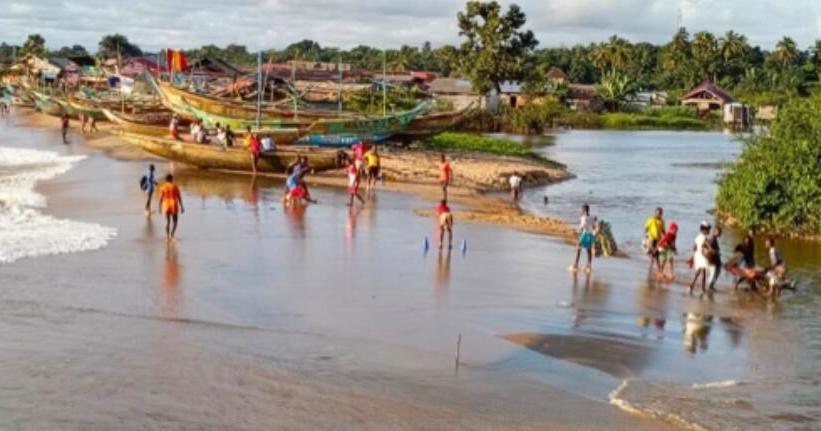
The country’s coastline, stretching over 560 kilometers along the Atlantic Ocean, is increasingly threatened by severe coastal erosion, sea level rise, and flooding. Entire communities in Buchanan, New Kru Town, West Point, River Cess, and Robertsport have experienced recurring displacement and infrastructure destruction. In some coastal areas, homes, roads, schools, and recreational spaces have literally disappeared into the sea.
Reflecting on conditions in Grand Bassa County, Francis K. Colee, Acting Executive Director of Green Advocates International, painted a vivid picture of the human cost of climate change.
“Children in Balawles no longer have a football field because it has been swallowed by coastal erosion, yet they still gather there to play,” Colee said. “Nearby, sellers and other residents now walk through floodwaters because the road connecting neighboring communities has been lost to the sea.”
Beyond coastal threats, Liberia’s agricultural sector—on which a large majority of the population depends—is facing mounting pressure from irregular rainfall, flooding, and rising temperatures. Rice production, the country’s staple food source, is projected to decline significantly under worsening climate conditions.
Public health risks are also increasing, with environmental experts warning about growing outbreaks of waterborne diseases, sanitation crises, and heat-related illnesses linked to climate instability.
Liberia’s Global Importance in Climate Protection
Ironically, environmental groups say Liberia should be at the forefront of global climate diplomacy because of its immense ecological importance.
Liberia is home to a significant portion of the Upper Guinean Forest, one of the world’s most critical biodiversity hotspots and among the last remaining tropical rainforests in West Africa. These forests serve as vital carbon sinks that absorb greenhouse gases and help regulate the global climate.
Environmental advocates argue that Liberia’s forests are not only national assets but globally strategic ecological resources essential to combating climate change.
“Liberia has also committed to protecting the Upper Guinean rainforest through community-led conservation, reducing deforestation, strengthening climate resilience, and advancing a just transition that prioritizes women and vulnerable communities,” noted Windor B. Smith, Head of Secretariat at the Alliance for Rural Democracy.
Liberia has repeatedly positioned itself internationally as a forest conservation leader and climate-vulnerable nation deserving support through mechanisms such as REDD+, climate adaptation financing, and loss-and-damage compensation.
The government’s own Enhanced Nationally Determined Contributions (NDCs) under the Paris Agreement commit Liberia to reducing greenhouse gas emissions by 64 percent below business-as-usual levels by 2030, largely dependent on international support and financing.
Critics argue that voting against a climate justice resolution weakens the country’s credibility in pursuing those commitments.
“The vote risks undermining Liberia’s credibility in international climate negotiations, weakening Africa’s collective voice on climate justice,” warned Atty. AL Varney Rogers, Green Advocates’ Staff Lawyer and focal person for the African Climate Platform.
Many say the strong reaction from environmental organizations highlights the increasingly important role of civil society in holding governments accountable on climate governance and international policy decisions.
In many African countries, environmental groups have become crucial watchdogs monitoring extractive industries, forest governance, climate financing, and international environmental commitments.
Their role is particularly critical in contexts where climate decisions are often made without broad public consultation or parliamentary scrutiny.
Experts note that accountability on climate policy is no longer simply an environmental issue—it is directly tied to economic survival, national security, public health, and future development prospects.
Liberia’s vote has therefore raised broader governance questions: Who authorized the position? What national interest was being protected? And why did Liberia diverge so sharply from the rest of Africa?
The consortium is now calling on the government to publicly explain the rationale behind the vote.
“At this defining moment in global climate and environmental governance challenges, Liberia must never stand against the very principles of justice, environmental protection, and international cooperation,” said Peter Quaqua, Head of Secretariat of Environmental Rights Africa (ERA).
“The ICJ advisory opinion represented an opportunity for vulnerable nations, particularly African countries, to strengthen international legal frameworks on climate responsibility and justice. Liberia should have stood firmly with affected communities and vulnerable nations because its vote does not reflect the realities on the ground,” Quaqua added.
The controversy, however, arrives at a sensitive moment for Liberia internationally.
Having recently secured a non-permanent seat on the United Nations Security Council, Liberia has sought to project itself as a responsible advocate for peace, democracy, sustainable development, and African solidarity.
Environmental groups now warn that the climate vote risks complicating that image.
For many observers, the issue extends beyond a single UN resolution. It touches on a deeper question about Liberia’s diplomatic identity in an era increasingly defined by climate politics.
Will Liberia align itself with vulnerable nations demanding climate accountability and environmental justice? Or will it drift toward positions perceived as weakening global climate action?
For climate advocates, the answer carries consequences far beyond diplomacy. It could shape future climate financing, international partnerships, environmental credibility, and ultimately the survival of communities already confronting the harsh realities of climate change on the frontlines.
Credit: Source link