

Liberia’s Health System Gets Boost | News
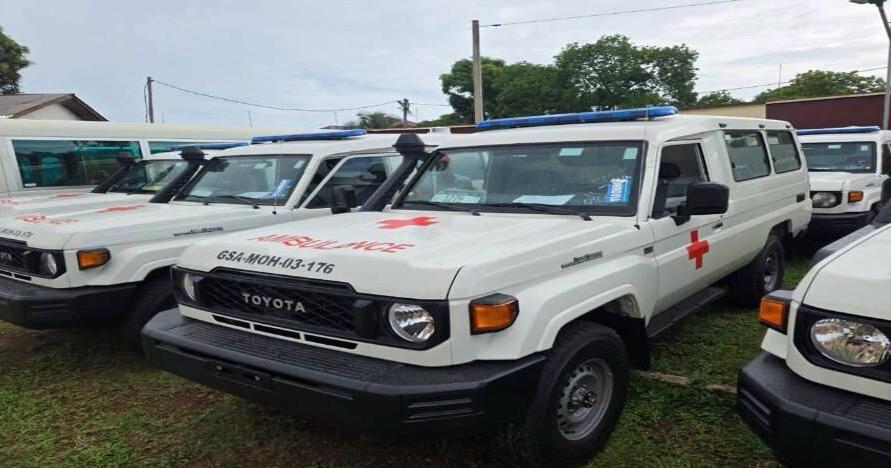
Liberia’s health system has received a major boost following the government’s delivery of 25 new ambulances to the Ministry of Health, in what officials describe as one of the most significant expansions of the national emergency transport fleet in recent years.
The handover, carried out on May 27, 2026, is intended to close long-standing gaps in emergency response and maternal healthcare delivery, particularly in counties where poor road conditions and long distances between health facilities continue to delay access to lifesaving treatment.
The ambulances will be distributed nationwide to support hospitals, clinics, and emergency response teams managing road accidents, obstetric emergencies, disease outbreaks, and other critical medical cases.
For years, health authorities say, transport delays have contributed to preventable deaths across Liberia. In rural communities especially, patients often endure hours of waiting before reaching facilities capable of providing surgery, blood transfusion, or emergency obstetric care. By the time they arrive, conditions that could have been managed with early intervention are often already critical.
“These ambulances will play a vital role in reducing delays in emergency response and improving lifesaving interventions across the country,” the Ministry of Health stated during the handover ceremony.
A significant portion of the expected impact is centered on maternal and child health. Liberia continues to record one of the highest maternal mortality ratios in the sub-region, with access to emergency transport identified as a major contributing factor. In many remote areas, survival during complicated childbirth depends largely on the availability of transport to referral facilities.
Health officials explained that strengthening referral systems through the deployment of ambulances will help reduce delays in reaching care and improve survival outcomes for both mothers and newborns. County health teams will also use the vehicles to support outbreak response activities, including patient transport, sample movement, and rapid deployment of health workers to affected areas.
The Ministry said the initiative reflects a broader government commitment to reducing preventable deaths associated with pregnancy and childbirth. Ambulances, it added, will be deployed strategically based on data, prioritizing high-burden counties with limited emergency transport coverage and elevated maternal mortality rates.
Officials emphasized that the delivery is part of a wider effort to modernize Liberia’s health infrastructure in the aftermath of major public health emergencies, including the Ebola virus outbreak and the COVID-19 pandemic. Both crises exposed weaknesses in emergency transport systems, referral coordination, and inter-facility response capacity.
Since then, the Ministry of Health has prioritized investments aimed at strengthening both routine healthcare delivery and emergency preparedness systems. The addition of 25 ambulances is expected to enhance daily patient referrals while also increasing surge capacity during outbreaks and mass casualty incidents.
Health authorities, however, cautioned that the effectiveness of the fleet will depend on proper management and support systems. They noted that vehicles alone are not sufficient without adequate maintenance, fuel supply, trained drivers, and reliable communication networks to coordinate emergency responses.
“Effective coordination between hospitals, clinics, and emergency units will be key to keeping the fleet available where demand is highest,” a senior Ministry official said.
The Ministry also warned against misuse of the ambulances for non-emergency purposes, stressing the need for strict adherence to operational guidelines and maintenance schedules to ensure sustainability.
Distribution of the ambulances will prioritize underserved counties with high maternal mortality rates and weak emergency transport infrastructure, with further details on deployment expected after final coordination with county health authorities. Officials said the goal is to avoid concentration in urban centers while ensuring rural communities receive adequate coverage.
While welcoming the development, health officials acknowledged that 25 ambulances cannot fully bridge Liberia’s national emergency transport gap. The country’s challenging terrain, dispersed settlements, and recurring health emergencies mean that continued investment will be necessary to build a fully responsive system.
Nonetheless, the Ministry described the delivery as a meaningful step toward improving equity in healthcare access and strengthening the country’s emergency response capacity. Officials said even a single functional ambulance in remote areas can significantly improve survival chances in critical situations.
As deployment begins, the Ministry has indicated that detailed rollout plans and community-level impact assessments will be shared in the coming weeks, as the vehicles are integrated into Liberia’s broader emergency health response framework across all 15 counties.
Credit: Source link