

Liberian Government Deploys 25 Rapid-Response Ambulances to Combat Rural Medical Emergency Crisis
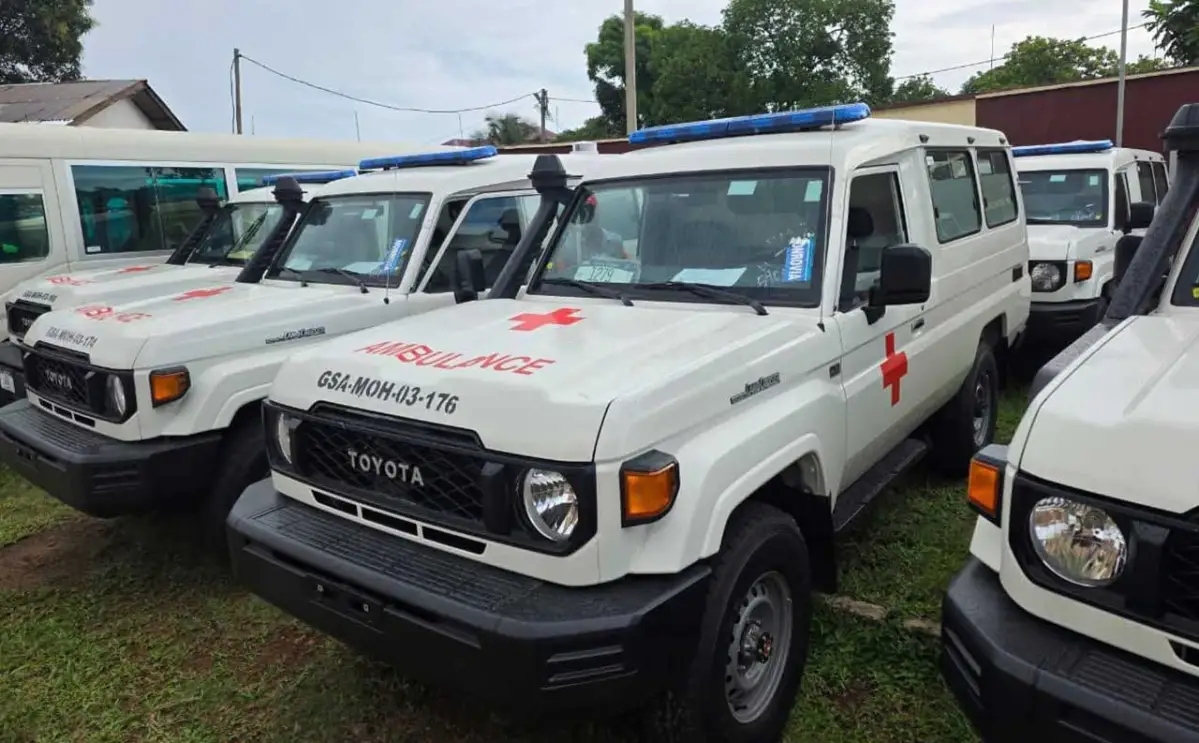
In a decisive intervention targeting one of the nation’s most critical vulnerabilities, the Government of Liberia has deployed a fleet of 25 highly equipped, brand-new Toyota ambulances to the Ministry of Health, fundamentally overhauling emergency medical logistics across the country.
The strategic handover marks a pivotal escalation in President Joseph Boakai’s mandate to decentralize healthcare delivery and combat maternal and child mortality in deeply rural sectors. For remote communities where a medical emergency is often an automatic death sentence due to impassable roads and absent transport, this multi-million-dollar fleet represents the absolute difference between life and death. The initiative strikes at the core of Liberia’s post-Ebola public health reconstruction, proving that systemic resilience begins with the capacity for rapid response.
Bridging the Last Mile of Healthcare
The fundamental breakdown in Liberia’s healthcare architecture has rarely been a total lack of medical facilities, but rather the insurmountable logistical barrier of reaching them. Patients suffering from catastrophic hemorrhages, severe infectious diseases, or complicated labor frequently expire while being transported on the backs of motorcycles or in the beds of unequipped commercial pickup trucks. The deployment of 25 purpose-built Toyota ambulances is explicitly designed to streamline patient referrals and drastically reduce fatal delays in emergency transit.
During the official handover ceremony in Monrovia, the Ministry of Information confirmed that the fleet will not be clustered in the capital. Instead, the vehicles are slated for immediate allocation to remote government hospitals, rural community clinics, and decentralized county health teams. By pushing these vital assets to the periphery of the country, the Boakai administration is attempting to guarantee that geography no longer determines a citizen’s right to survive a medical emergency.
The Arithmetic of Survival
The operational mandate for the new fleet is highly specific, targeting the leading causes of preventable mortality in the West African republic. Ministry of Health directives mandate that the vehicles will be heavily prioritized for maternal and child health crises. Liberia currently battles one of the highest maternal mortality ratios globally; rapid transit for women experiencing obstructed labor to facilities equipped with surgical theaters will yield immediate, measurable reductions in death rates.
Additionally, the ambulances are tasked with responding to severe road traffic accidents and intercepting localized disease outbreaks before they can metastasize. Given the persistent threat of hemorrhagic fevers in the region, the ability to rapidly and safely transport highly infectious patients in sanitized, isolated medical vehicles is a cornerstone of national epidemiological security.
A Pan-African Public Health Imperative
The logistical nightmare of rural healthcare is a ubiquitous challenge across the African continent. In East Africa, for example, the Kenyan government utilized devolution to transfer healthcare logistics directly to county governments. Initiatives in vast, arid regions like Turkana and Mandera have mirrored Liberia’s strategy, investing hundreds of millions of shillings (where 1 USD equals approximately KES 130) into ruggedized ambulance fleets to traverse unpaved terrain. The empirical data from Kenya demonstrates that when rural clinics are connected to central referral hospitals via dedicated ambulance networks, maternal mortality drops precipitously.
Liberia’s adoption of this model signals a maturation of its public health strategy, moving away from relying solely on static clinics toward establishing dynamic, mobile healthcare corridors.
Sustaining the Lifeline
Despite the initial triumph of the procurement, healthcare economists caution that the true test lies in long-term sustainability. Historically, donated or newly procured government vehicles across Africa frequently fall into disrepair within two years due to absent maintenance budgets and rampant fuel theft. The Ministry of Health must now implement rigorous fleet management protocols, ensuring constant fuel supply, specialized mechanic support for the Toyota chassis, and strict prohibitions against utilizing the ambulances for non-medical transport.
- Targeted Deployment: 25 brand-new Toyota ambulances allocated directly to rural hospitals, clinics, and county health teams.
- Maternal Focus: Vehicles prioritized for expediting complex maternal and child health emergencies to surgical centers.
- Epidemic Control: Enhanced capacity to rapidly isolate and transport patients during suspected infectious disease outbreaks.
- Trauma Response: Immediate deployment for severe road traffic accidents across the national highway network.
As these 25 vehicles navigate the rugged terrain of rural Liberia, they carry far more than medical supplies and trained personnel; they carry the solemn promise of a government finally arriving at the doorstep of its most vulnerable citizens in their hour of greatest need.
Credit: Source link