

Liberia: Senators Demand Arrests in U.S.$19m Cocaine Probe
One of the country’s largest cocaine investigations entered a critical new phase Wednesday as senior members of the Senate demanded immediate arrests and prosecutions, while Joint Security officials disclosed that investigators have progressed from identifying persons of interest to preparing criminal charges against potential suspects.
The tense hearing before the Liberian Senate came nearly three weeks after authorities intercepted approximately 237.6 kilograms of cocaine–valued at an estimated US$19.2 million–at the GLS-Menzies cargo terminal at Roberts International Airport (RIA), a seizure that has since evolved into one of the country’s most far-reaching criminal investigations in recent memory.
What initially appeared to be a routine narcotics interdiction has expanded into an investigation stretching across airport security, cargo handling, freight forwarding, shipping documentation, financial records, electronic communications and alleged international trafficking networks.
The Ministry of Justice has previously stated that investigators are examining not only the June 8 seizure itself but also whether previous shipments connected to the same actors formed part of a broader transnational criminal enterprise operating through Liberia.
Keep up with the latest headlines on WhatsApp | LinkedIn
That broader objective formed the backdrop to Wednesday’s Senate hearing.
Montserrado County Senator Abraham Darius Dillon questioned why arrests had not yet been made, arguing that investigators already possessed sufficient evidence to begin prosecutions.
“You have the drugs; you have the person who kept them; you have the location where they were kept, and the warehouse, so why have you not arrested them?” Dillon asked Joint Security officials.
He argued that investigators should proceed against individuals already linked to the shipment even as efforts continue to identify those who allegedly introduced the cocaine into the cargo chain.
“So, if you cannot find those who gave the drugs to GLS, then the drugs are for them. Arrest them, take them to court and prosecute them,” Dillon declared.
The comments reflected growing frustration among lawmakers over what some perceive as the slow pace of the investigation.
Nimba County Senator Samuel Kogar went further, calling on President Joseph Nyuma Boakai to suspend senior officials of the Liberia Drug Enforcement Agency, Liberia National Police and other Joint Security institutions, arguing that such action would restore public confidence and expose those ultimately responsible for the shipment.
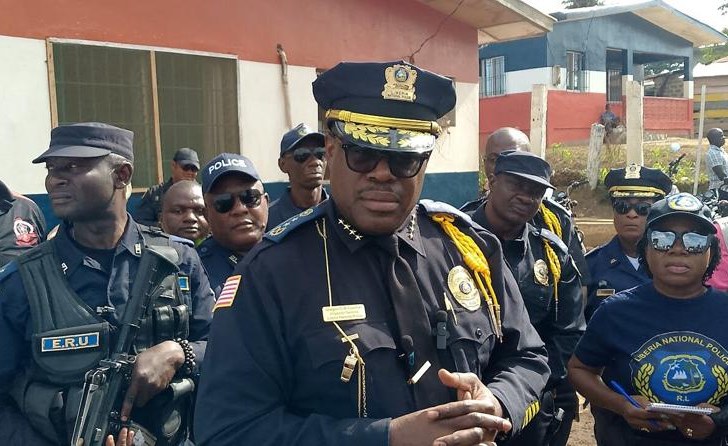
Responding to the criticism, Liberia National Police Inspector General Gregory Coleman insisted that investigators had made significant progress and suggested that the case was approaching a decisive stage.
“At this point in time, the only thing I can say is that we’ve made significant progress. We are at the stage where we have moved people from being persons of interest to potential suspects who could be charged within a few days,” Coleman told senators.
He cautioned, however, that the investigation’s complexity required careful forensic analysis, documentary review and coordination with international partners.
“This investigation is complex. We have to analyze documentary evidence, forensic evidence, and everything connected to it. We do not have all the capacity ourselves, so we have to rely on other partners at different times, while working around the clock to coordinate and put everything together,” Coleman said.
The Inspector General also rejected suggestions that investigators were withholding information.
“We can assure you that there’s nothing we’re hiding. The chips will fall where they may because this investigation concerns the future of this country,” he said, while noting that some aspects of the inquiry remain confidential to protect ongoing operations.
The Government’s latest position represents an evolution from its earlier public messaging.
When Justice Minister and Attorney General Cllr. N. Oswald Tweh first briefed the nation on June 19, he emphasized that investigators were seeking not merely to prosecute individuals connected to the shipment but to identify and dismantle what he described as a broader criminal network that financed, coordinated, facilitated and protected the operation.
More recently, the Witness Protection Agency publicly encouraged witnesses and cooperating persons to come forward under the protection of Liberia’s Witness Protection Act, signaling that investigators may now be placing greater emphasis on insider cooperation as they work to establish the full chain of criminal responsibility.
Wednesday’s hearing also underscored the continuing debate over where responsibility ultimately lies.
While the cocaine was discovered at the GLS-Menzies cargo terminal, investigators continue examining each stage of the shipment’s movement–from freight forwarding and airport security screening to cargo handling, documentation, storage and attempted export–to determine how the shipment progressed through multiple layers of the aviation system before it was intercepted.
Authorities have repeatedly stressed that individuals identified as persons of interest remain entitled to the presumption of innocence and that no conclusions have been reached regarding their criminal liability.
The hearing briefly grew heated when Inspector General Coleman challenged Senator Kogar to substantiate allegations that security officials were shielding suspects. After Senate leadership intervened, Coleman apologized to the senator before proceedings continued.
The Senate also announced a separate inquiry into the reported release of Michael Browne, who is alleged to have previously served a prison sentence on drug-related charges and whose name has resurfaced during the current investigation.
As lawmakers intensify pressure for arrests and Joint Security signals that criminal charges may soon be filed, the investigation appears to be entering what could become its most consequential phase.
The central question is no longer simply who handled the shipment, but whether investigators can identify and prosecute the individuals who financed, organized and directed what the Government believes may have been a sophisticated transnational trafficking operation.
Credit: Source link