

Liberia Pushes for Sweeping UN Reform | News
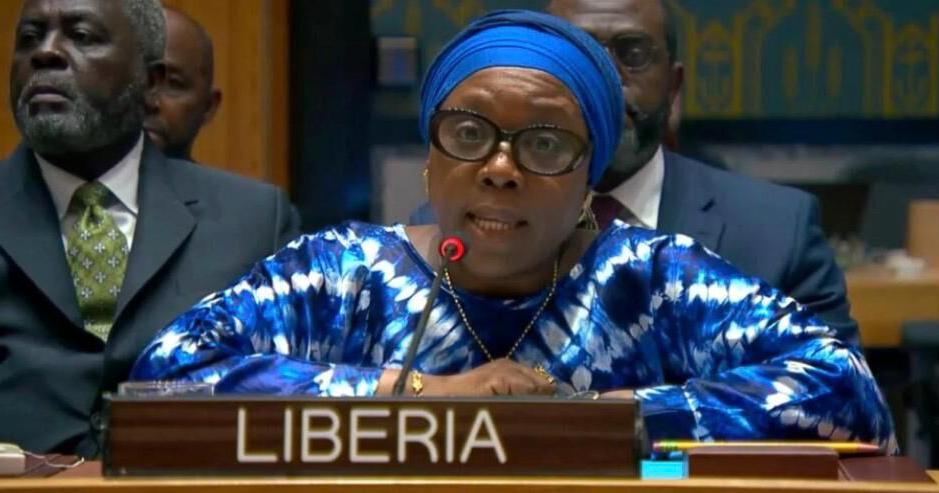
Liberia has issued one of its strongest diplomatic calls in recent years for far-reaching reforms at the United Nations, warning that the world body risks losing credibility and moral authority if it fails to confront growing global divisions, selective multilateralism, and structural inequities within the Security Council.
Addressing the 10159th Meeting of the United Nations Security Council on May 26, 2026, Minister of Foreign Affairs, Sara Beysolow Nyanti delivered a sweeping and deeply reflective intervention that combined historical memory, geopolitical critique, and an urgent appeal for institutional transformation within the UN system.
Speaking before the Council under the presidency of the People’s Republic of China, Minister Nyanti framed Liberia’s position not merely as that of a member state, but as one of only four original African signatories to the United Nations Charter—a historical status she argued places Liberia in a unique moral position to speak about the future of global governance.
“No nation, however powerful, has the right to unilaterally render the world unsafe,” Nyanti declared.
Her remarks come at a time of mounting global instability, with conflicts in Gaza, Ukraine, Sudan, the Sahel, and the Great Lakes region exposing widening fractures within the international order and deepening criticism of the Security Council’s effectiveness.
Throughout her address, Nyanti repeatedly invoked Liberia’s own painful civil war experience as evidence of both the failures and potential of international cooperation.
“Liberia knows the value of a united and decisive Council,” she told delegates, recalling how United Nations peacekeeping operations helped create the conditions for peace, reconciliation, and institutional rebuilding after the country’s devastating civil conflicts.
The historical reference carried significant symbolic weight.
For many Liberians, the UN mission in Liberia — first through ECOWAS peacekeepers under ECOMOG and later the United Nations Mission in Liberia (UNMIL) — represented one of the largest and most consequential international stabilization interventions in modern African history.
At the height of Liberia’s civil wars between 1989 and 2003, the country experienced state collapse, mass displacement, economic ruin, and the deaths of hundreds of thousands of people across the Mano River Basin. The intervention of regional and international bodies eventually paved the way for democratic recovery.
Nyanti’s speech therefore reflected not only diplomatic positioning but also Liberia’s lived experience with the consequences of international inaction and delayed multilateral response.
Political analysts say that historical perspective gave Liberia’s intervention unusual credibility during the debate.
“Liberia is speaking from experience,” one regional governance analyst observed. “This is a country that understands both the failures and the life-saving potential of international institutions.”
Warning Against “Selective Multilateralism”
A major theme of the Minister’s address was her criticism of what she described as inconsistent application of international law and global standards.
“Selective multilateralism — where rules are invoked when convenient and bypassed when inconvenient — undermines the credibility of the entire system,” she warned.
The statement appeared to reflect growing frustrations among developing nations over perceived double standards in how powerful countries approach international conflicts, humanitarian crises, and Security Council decisions.
Nyanti argued that the world body increasingly suffers not from a lack of rules or principles, but from insufficient political will to apply them fairly and consistently. Her comments also referenced the growing paralysis caused by veto politics within the Security Council, particularly regarding the wars in Gaza and Ukraine.
“Crises from Gaza to Ukraine have exposed persistent divisions, including vetoes that have hindered necessary interventions,” she said.
The remarks align Liberia with a growing bloc of countries calling for restrictions on veto use in situations involving mass atrocities, humanitarian disasters, and large-scale civilian suffering.
Africa’s Longstanding Demand for Representation
One of the strongest sections of Liberia’s intervention centered on Security Council reform and Africa’s longstanding demand for permanent representation.
Nyanti reiterated Africa’s position under the Ezulwini Consensus, which calls for At least two permanent African seats on the Security Council, full veto powers for African permanent members, and additional non-permanent seats for the continent.
“Effectiveness cannot be sustained without legitimacy, and legitimacy cannot endure without representation,” she emphasized.
The issue remains one of the most contentious debates within UN reform discussions.
When the United Nations was founded in 1945, most African nations were still under colonial rule and therefore absent from the drafting of the Charter and the design of global governance institutions.
Today, Africa constitutes more than a quarter of UN member states and dominates much of the Security Council’s agenda, yet the continent still lacks permanent representation.
Nyanti described this imbalance as a historical injustice requiring urgent correction.
“The situation of injustice to Africa needs to be dealt with separately,” she stressed.
Diplomatic observers say Liberia’s strong articulation of the African position may strengthen Monrovia’s growing profile within continental and international diplomacy, particularly as Liberia currently serves on the UN Security Council.
Liberia’s Emerging Diplomatic Voice
Nyanti’s address also signals Liberia’s increasing willingness to play a more assertive role in international affairs under President Joseph Boakai.
Historically, Liberia has occupied a unique place in African diplomacy. Founded in the 19th century by freed African Americans, Liberia became one of Africa’s earliest independent republics and later helped champion Pan-Africanism and African decolonization movements.
However, decades of civil conflict significantly diminished the country’s diplomatic influence.
In recent years, Monrovia has sought to rebuild that standing through greater engagement in regional security, democratic governance, and international diplomacy.
Nyanti’s speech appears to reflect that broader ambition. “Liberia is increasingly positioning itself as a moral voice on governance and institutional reform,” a West African political observer noted. “The speech was not just about the UN. It was about Liberia projecting itself as a serious diplomatic actor again.”
Another major dimension of the Minister’s remarks was her insistence that global peace cannot be separated from development, justice, and economic equity. “Insecurity emerges from poverty, inequality, exclusion, and the mismanagement of our natural resources,” she argued.
The comments reflected longstanding African concerns that international security debates often overlook structural economic conditions driving instability. Nyanti emphasized that the UN Charter’s provisions on development and human rights are not secondary issues but foundational pillars of global peace.
This framing mirrors broader debates within Africa and the Global South over reforming international institutions to better address development financing, climate vulnerability, debt burdens, and economic inequality.
As Secretary-General António Guterres approaches the end of his tenure later this year, Liberia’s intervention arrives at a particularly sensitive moment for the United Nations.
The organization faces simultaneous crises, rising geopolitical rivalries, wars across multiple regions, climate emergencies, democratic backsliding, humanitarian catastrophes, and increasing skepticism about multilateral institutions.
Nyanti acknowledged these global anxieties directly.
“The UN is at a crossroads,” she declared.
In one of the speech’s most emotional moments, she personalized the consequences of institutional failure by referencing civilians trapped in conflict zones across the world.
“When we debate the purposes and principles of this Charter, we are debating the conditions of human lives,” she said.
By the close of her address, Liberia’s message had evolved into a broader warning that the international system cannot continue operating under outdated political realities.
“If it’s not done now, then when? And if it’s not done by us, then by who?” Nyanti concluded.
Credit: Source link
Comments are closed.