

Liberia Closes In On Full WAMZ Convergence | Business
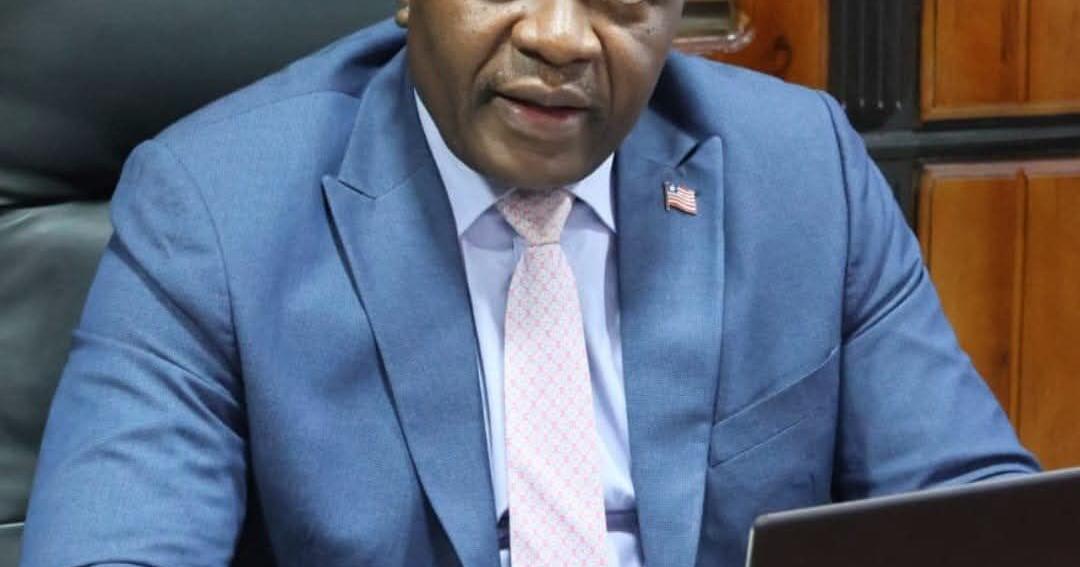
Liberia has strengthened its position toward full macroeconomic convergence within the West African Monetary Zone (WAMZ), meeting three of the four primary convergence criteria for the second consecutive year, Finance and Development Planning Minister Augustine Kpehe Ngafuan has disclosed.
Ngafuan said Liberia met the requirements for the fiscal deficit, central bank financing of the budget deficit and gross external reserves, while average inflation remains the only primary criterion yet to be satisfied.
He made the disclosure Monday, September 7, 2026, while delivering the opening remarks at the 56th Meeting of the WAMZ Convergence Council, which Liberia chaired virtually.
The Minister said Liberia’s external reserves position was recently revised upward to 3.2 months of import cover, further strengthening the country’s convergence performance.
“Average inflation, though it declined markedly, remains the sole primary criterion still outside the threshold, and we are on track to close this gap by the end of 2026,” Ngafuan said.
Liberia has also met both WAMZ secondary convergence criteria for two consecutive years, according to the Finance Minister.
Public debt stood at 54.9 percent of GDP in 2025, significantly below the WAMZ ceiling of 70 percent, while exchange-rate variation against the West African Unit of Account remained within the prescribed plus-or-minus 10 percent band.
Ngafuan said the sustained performance demonstrates Liberia’s progress in strengthening macroeconomic stability and preparing for deeper monetary integration within the region.
The disclosure comes against the backdrop of stronger economic performance in Liberia, with real GDP growth increasing from 4.0 percent in 2024 to an estimated 5.1 percent in 2025. Growth is projected to reach approximately 5.5 percent in 2026.
The mining sector, particularly iron ore production, is expected to remain the principal driver of growth, with iron ore output projected to more than double this year.
The secondary sector is also expected to rebound strongly, moving from a 2.8 percent contraction to 5.9 percent growth, supported by increased cement and beverage production.
The tertiary sector is projected to expand by 3.7 percent, aided by electricity expansion and increased construction activity.
Liberia has also recorded significant improvement in inflation, although the indicator remains outside the WAMZ primary threshold.
Ngafuan said end-period inflation fell sharply from 10.7 percent in December 2024 to 4.0 percent in December 2025.
However, rising imported fuel costs pushed headline inflation to 5.0 percent by June 2026. Despite the increase, average inflation for the first half of 2026 fell to 4.5 percent, compared with 12.2 percent during the corresponding period in 2025.
The government projects average inflation to decline further to 6.3 percent in 2026 and 5.3 percent in 2027, bringing Liberia closer to the regional convergence threshold.
Ngafuan said Liberia’s improved fiscal performance has also contributed to the country’s stronger macroeconomic position.
Total revenue and grants increased by 18.6 percent to US$887.6 million in 2025, compared with US$748.2 million in 2024.
Tax revenue alone increased by 23.7 percent, contributing to what the Minister described as the highest domestic revenue collection in Liberia’s history.
He attributed the improvement to stronger compliance and increased digitalization of the revenue system.
The improved fiscal performance helped reduce Liberia’s overall public debt-to-GDP ratio from 56.4 percent in 2024 to 54.9 percent in 2025, even as government expenditure increased by 10.2 percent.
The improved fiscal position has provided the government with greater capacity to finance its development priorities, with the National Legislature approving a US$1.3 billion national budget for Fiscal Year 2026, the largest budget in Liberia’s history.
The budget is being used to support the government’s ARREST Agenda for Inclusive Development, which prioritizes Agriculture, Roads, Rule of Law, Education, Sanitation and Tourism.
Ngafuan said government is accelerating investments in strategic road infrastructure, including the Monrovia-Freetown highway, the southeastern road corridor and the Bong-Lofa road.
He said the projects are expected to reduce transportation and logistics costs, expand domestic trade and strengthen Liberia’s connections with neighboring countries.
The government is also expanding hydropower generation and extending the national electricity grid, particularly in Grand Bassa County and southeastern Liberia.
According to Ngafuan, these investments are intended to provide a stronger foundation for industrial expansion and household electricity access.
Liberia is also moving ahead with reforms to its indirect tax system as part of its commitments to ECOWAS.
Ngafuan said the government increased the Goods and Services Tax from 10 percent to 12 percent in 2024 as a transitional measure toward the introduction of a full Value Added Tax regime.
Taxpayer registration began in mid-2026 ahead of the planned January 2027 VAT rollout.
He said the government has continued to finance the transition from domestic resources despite delays caused by the suspension of USAID-supported technical assistance in 2025.
The Minister also highlighted ongoing financial-sector and digitalization reforms, including the Liberia Integrated Tax Administration System, the Inclusive Instant Payment System and the full operationalization of the Pan-African Payment and Settlement System.
He also cited the Banking and Financial Institutions Act of 2025 and a new Crisis Management Framework as measures aimed at strengthening financial stability.
Beyond Liberia, Ngafuan reported that the wider WAMZ economies have continued to demonstrate resilience despite global economic uncertainty.
Economic growth across the Zone strengthened to 4.7 percent in 2025, from 4.2 percent in 2024, and is projected to reach 5.3 percent in 2026.
Compliance with the primary convergence criteria increased from 41.7 percent in 2024 to 45.8 percent in 2025, while compliance with the secondary criteria rose to 91.7 percent.
The overall WAMZ convergence score increased from 52.8 percent to 61.1 percent.
Ngafuan noted, however, that no member state met all four primary criteria in 2025.
With the region continuing preparations for the proposed launch of the Eco single currency in 2027, Ngafuan urged WAMZ member states to maintain the pace of monetary, fiscal and structural reforms.
He warned that geopolitical tensions, commodity price volatility, global trade disruptions and structural weaknesses could undermine progress toward monetary integration.
For Liberia, he said the government remains committed to closing the remaining inflation gap and achieving full compliance with the WAMZ primary convergence criteria.
“Notwithstanding these risks, the Government of Liberia remains fully committed to the reforms necessary to consolidate full compliance with the WAMZ primary convergence criteria over the medium term,” he said.
The 56th Convergence Council meeting followed the 59th Meeting of the WAMZ Technical Committee, held August 27–29, and the 53rd Meeting of the Committee of Governors, held September 3–4.
Those meetings reviewed WAMZ macroeconomic developments, convergence performance, currency-crisis vulnerabilities, inflation-targeting frameworks, regional debt and capital-market integration, the Pan-African Payment and Settlement System and financial-sector supervision.
Ngafuan, who chairs the Convergence Council, reaffirmed Liberia’s commitment to the WAMZ work programs and the ECOWAS Single Currency Program as member states work toward the 2027 Eco target.
Credit: Source link