

Liberia advances climate mobility policy as Coastal erosion, flooding and livelihood risks drive population movement
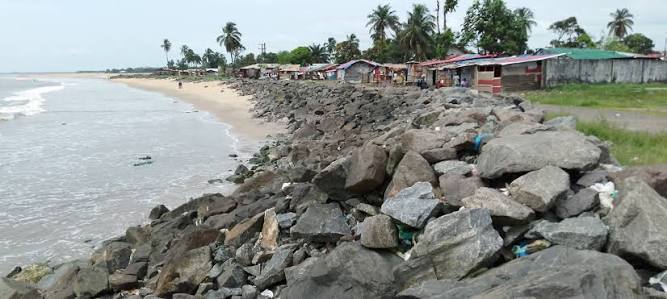
Liberia is moving to integrate climate-related population movement into national development planning as coastal erosion, flooding, changing rainfall patterns and pressure on climate-sensitive livelihoods increasingly influence where people can live and work. A High-Level Consultative Dialogue on Climate Mobility held in Monrovia on August 12, 2026, brought together government institutions, legislators, local authorities, development partners, international organisations, civil society, youth and women’s groups and academia to review evidence from the Liberia Climate Mobility Deep Dive and identify priorities for national action.
The consultation, convened by the Environmental Protection Agency of Liberia in partnership with the Global Centre for Climate Mobility, marks an effort to move climate mobility from a largely emerging policy issue into mainstream development planning. It follows a memorandum of understanding signed between Liberia and the Global Centre for Climate Mobility in 2025 and consultations conducted across 12 counties. The significance of the exercise lies in the fact that climate change is increasingly affecting not only ecosystems and physical infrastructure but also decisions about where households live, whether people remain in vulnerable locations and how communities adapt when livelihoods become less reliable. For Liberia, a country with a long Atlantic coastline and an economy heavily dependent on climate-sensitive sectors, those decisions can have implications for urbanisation, public services, infrastructure investment and household incomes.
Liberia’s latest climate commitments already recognise the scale of that exposure. Its 2035 Nationally Determined Contribution says approximately 60% of the population lives near the coast and identifies sea-level rise, coastal erosion, storm surges, flooding and unpredictable rainfall as major threats. Agriculture, which contributes about 38% of GDP and employs nearly 70% of the population, is particularly vulnerable to changes in temperature and rainfall. The NDC also notes that intense rainfall and flooding regularly damage Liberia’s road network, about 85% of which is unpaved.
Those conditions create multiple forms of mobility. Some households may move temporarily after floods or other shocks, while others may migrate towards urban centres in search of safer locations or alternative livelihoods. In some cases, people may remain in exposed areas because they lack the resources to move. Climate mobility is therefore not synonymous with permanent displacement; it can include temporary migration, seasonal movement, relocation and situations in which vulnerable households are unable to move despite deteriorating conditions.
Research on climate mobility in African coastal cities, including Monrovia, has highlighted the complexity of these movements. The At Risk Environmental Mobility in African Coastal Cities study found that low-income neighbourhoods can become hotspots for in-migration while simultaneously facing recurring environmental risks. In Monrovia, the interaction between migration, urban poverty and environmental exposure means that movement does not necessarily eliminate vulnerability; people may simply move from one form of climate risk to another.
This has important implications for Liberia’s urban planning. Monrovia and other urban centres may face additional demand for housing, drainage, water, sanitation, roads, electricity and health services as people move away from increasingly exposed rural or coastal areas. If those movements occur without adequate planning, they can increase pressure on informal settlements and public infrastructure. The climate mobility dialogue is therefore also a discussion about the future shape of Liberia’s cities. Anticipating where population movement may occur can allow government and development partners to incorporate demographic pressures into infrastructure planning rather than responding only after communities have already been displaced or services have become overstretched.
The country’s National Adaptation Plan already recognises the need for climate considerations to be integrated into national development planning. Liberia’s NAP identifies increasing temperatures, changing rainfall and more frequent heavy rainfall events as climate risks and calls for coordinated adaptation across sectors including agriculture, forestry, fisheries, coastal zones, waste management and infrastructure. The latest climate mobility initiative adds another layer to that framework by focusing on the human consequences of those environmental changes. Its policy relevance is particularly strong because Liberia’s climate strategy is already moving towards greater integration of adaptation with national development.
Liberia’s NDC 3.0, submitted in 2025, explicitly links climate action with the country’s ARREST Agenda for Inclusive Development. It calls for stronger resilience across agriculture, water resources, coastal areas, health, infrastructure and urban systems, while emphasising gender-responsive and socially inclusive climate action. The document also sets a conditional long-term goal of reaching net-zero emissions by 2050. The emphasis on inclusion is relevant to climate mobility because the ability to move safely is not distributed equally. Households with savings, transport, social networks and access to information may be able to relocate temporarily or permanently when risks increase. Poorer households can be more constrained, leaving them exposed to repeated floods, erosion or livelihood losses.
Women, young people and children can also experience mobility differently from other groups. Liberia’s NDC 3.0 specifically incorporates gender and social inclusion into climate action and proposes measures such as dedicated climate-finance mechanisms for women-led initiatives, youth employment opportunities and improved gender-disaggregated data. For policymakers, this means that climate mobility cannot be addressed solely through relocation programmes. It also requires investment in livelihoods, social protection, early-warning systems, resilient infrastructure and local economic opportunities that can reduce the need for distress migration.
The consultation’s focus on practical, measurable and adequately financed recommendations is therefore significant. Anthony S. Kollie, Deputy Executive Director for Administration at the Environmental Protection Agency, said the evidence generated through the Climate Mobility Deep Dive should lead to recommendations that can be implemented and aligned with national development priorities. That emphasis reflects a broader challenge in African climate policy: translating vulnerability assessments and national strategies into financed programmes. Liberia has several established climate-policy instruments, including its National Adaptation Plan, National Climate Change Policy and Response Strategy and NDC. The challenge is increasingly one of coordination, financing and implementation.
The National Climate Change Policy and Response Strategy, adopted in 2018, already calls for climate considerations to be integrated into development planning at national, county, district and local levels. It also stresses broad cooperation among government institutions and other stakeholders. The climate mobility process could help operationalise that approach by linking environmental risk to specific planning decisions over settlements, infrastructure, livelihoods and public services.
Liberia’s county-level climate assessments provide another potential foundation. In 2025, the Environmental Protection Agency published an integrated summary of climate-change baseline reports covering all 15 counties. The assessments examine county-specific vulnerabilities, climate impacts, institutional arrangements and opportunities for adaptation and mitigation, with an emphasis on how climate change affects development and livelihoods at grassroots level. This geographic detail matters because climate mobility is inherently local. Coastal erosion may drive movement in one area, flooding may be the dominant pressure elsewhere, while agricultural losses or water scarcity may influence migration in another location. A national strategy that does not account for these differences could struggle to direct resources effectively.
The financing question is likely to become one of the most important tests of the emerging policy. Liberia contributes a negligible share of global greenhouse gas emissions but faces significant adaptation needs. Its NDC identifies international finance, technology transfer and capacity building as important to implementation, reflecting the wider challenge faced by climate-vulnerable African countries with limited fiscal space. Climate mobility adds potential financing needs in areas that are already expensive for governments: resilient roads and drainage, coastal protection, housing, water systems, livelihood diversification, social protection, data systems and local government capacity. Without adequate resources, a climate mobility blueprint could remain an important policy document without substantially changing conditions on the ground.
There is also a fiscal dimension to acting early. Planned adaptation and orderly relocation can be less disruptive than repeated emergency responses after floods, coastal erosion or infrastructure failures. Where relocation is necessary, governments need land-use planning, compensation mechanisms, basic services and livelihood support to avoid transferring vulnerable populations into new areas of risk.
The issue is particularly relevant to Monrovia. Liberia’s capital is already exposed to flooding and coastal hazards, while rapid urban growth and infrastructure constraints can increase the consequences of extreme weather. Managing climate mobility will therefore require coordination between national environmental authorities and institutions responsible for housing, land, transport, water, health, local government and economic development.
The involvement of local authorities, civil society, youth and women’s groups in the consultation is important for that reason. National climate assessments can identify broad risks, but local communities often have more detailed knowledge of seasonal flooding, shoreline changes, water availability, informal migration patterns and livelihood disruptions. Bringing that evidence into planning can improve the design of interventions and reduce the risk of policies being disconnected from local realities.
The approach also reflects a broader shift in how climate adaptation is understood in Africa. Adaptation is increasingly being treated not simply as protection against environmental damage but as a question of economic planning and social resilience. Decisions about where roads are built, where housing is permitted, where schools and health facilities are located and how agricultural economies are supported can all influence future patterns of climate-related mobility.
For Liberia, the opportunity is to integrate those decisions before climate pressures become more disruptive. Its NDC 3.0 already calls for resilient urban and infrastructure planning, stronger flood-control systems, improved water management and coastal protection. Connecting those investments with mobility data could help government identify areas where adaptation in place is feasible and locations where longer-term relocation or managed movement may eventually become necessary.
The policy debate also carries implications for private investment. Businesses operating in agriculture, fisheries, construction, transport, housing and tourism depend on predictable infrastructure and stable communities. Climate-driven movement can affect labour availability, demand for housing and services, supply chains and the location of economic activity. Incorporating mobility risks into investment planning could therefore become relevant to both public and private-sector decision-making.
For development partners, the climate mobility process offers a framework for coordinating support around nationally identified priorities. Rather than financing isolated projects, partners could potentially align investments in resilient infrastructure, livelihoods, social protection and urban development around areas experiencing significant climate-related pressures.
The immediate task is now to turn the findings of the Climate Mobility Deep Dive into a policy blueprint that can be implemented at national and local levels. The quality of that process will depend on whether recommendations are linked to responsible institutions, measurable indicators, financing sources and clear timelines.
Liberia’s experience also carries lessons for other African countries facing similar pressures. Across the continent, coastal erosion, floods, droughts, rising temperatures and changing rainfall patterns are reshaping agricultural and urban economies. The resulting movement of people is likely to intersect with existing migration, urbanisation and poverty trends, making climate mobility increasingly relevant to development planning.
For Liberia, the stakes are particularly clear. The country has contributed little to global emissions but faces significant exposure to climate impacts, while its economy depends heavily on sectors sensitive to weather and environmental conditions. Its challenge is therefore to ensure that climate mobility is treated neither solely as a humanitarian problem nor simply as a migration issue, but as part of a wider economic and development-planning challenge.
The Monrovia consultation represents an important step in that direction. Whether it ultimately improves resilience will depend on what follows: whether the evidence gathered across counties shapes investment decisions, whether vulnerable communities receive meaningful support, and whether climate mobility becomes embedded in budgets and development plans rather than remaining a standalone policy discussion.
For Liberia, anticipating movement may ultimately be as important as responding to it. As climate risks affect coastlines, agriculture, infrastructure and livelihoods, the ability to plan where people can safely live, work and access services will increasingly form part of the country’s broader strategy for climate-resilient and inclusive development.
Was this article helpful?
Credit: Source link