

LERC Strengthens Media Partnership | News
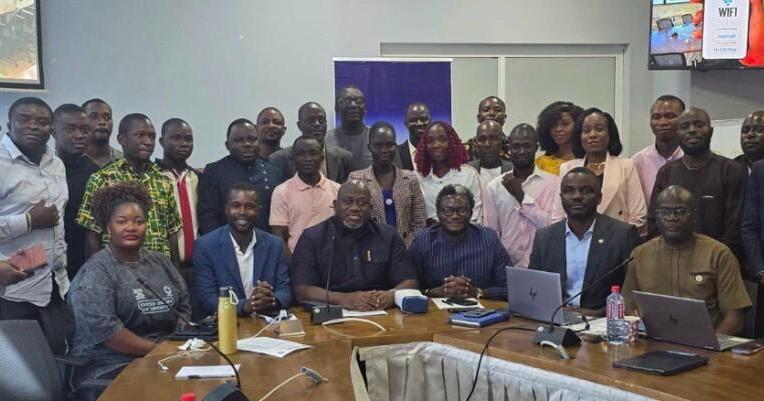
The Liberia Electricity Regulatory Commission (LERC) has reaffirmed its commitment to transparency, public awareness, and collaboration with the media through a Media Engagement Workshop aimed at tracking the implementation of Liberia’s electricity regulatory framework.
Speaking at the opening of the workshop, LERC Board Chairman, Claude J. Katta described the media as a critical partner in informing the public, promoting consumer awareness, and building confidence in ongoing reforms within Liberia’s electricity sector. “Today’s engagement reflects the Commission’s commitment to strengthening collaboration between the Liberia Electricity Regulatory Commission and the media,” Katta said. “Informed media is essential to ensure that accurate and balanced information reaches the public.”
The workshop brought together journalists and stakeholders to deepen understanding of the Commission’s mandate, Liberia’s evolving electricity sector, and the remedies available to consumers dissatisfied with electricity services.
Katta emphasized that the workshop was designed not only to educate journalists about the Commission’s operating framework, but also to foster stronger public engagement on electricity policies, tariffs, customer rights, and dispute resolution mechanisms.
He praised the media community for its continued support over the years, noting that media coverage and public education efforts have significantly increased awareness about developments in Liberia’s electricity sector.
The LERC Chairman also expressed gratitude to President Joseph N. Boakai Sr. for supporting efforts aimed at strengthening and liberalizing the country’s electricity sector to improve access nationwide. “As we work together, let us remain committed to advancing a transparent, reliable, and sustainable electricity sector for the benefit of all Liberians,” Katta stated.
During the workshop, LERC Managing Director Augustine V. Goanue delivered a comprehensive presentation on the evolution of Liberia’s electricity sector, tracing government investment in electricity generation back to the early 1940s.
Goanue explained that Liberia’s electricity infrastructure initially developed through diesel thermal plants in Monrovia before expanding with the construction of the 64-megawatt Mount Coffee Hydropower Plant in the 1960s. At the same time, concession companies involved in mining, rubber production, and logging were granted rights to generate and distribute electricity within their operational areas.
He noted that the government established the Liberia Electricity Corporation (LEC) in 1973 to oversee national electricity generation, transmission, distribution, and sales.
According to Goanue, Liberia’s pre-war installed electricity capacity stood at 403 megawatts, with concessionaires contributing 212 megawatts while LEC generated 191 megawatts.
However, the country’s civil conflict between 1989 and 2003 devastated the entire electricity infrastructure.
“By the end of the Liberian Civil War in 2003, the entire electricity infrastructure of Liberia had been destroyed,” Goanue explained.
He highlighted several post-war recovery interventions undertaken by the Government of Liberia, including the Emergency Power Program launched in 2006, the rehabilitation of the Mount Coffee Hydropower Plant, the construction of the Bushrod thermal power facility, the expansion of regional electricity interconnections, and the enactment of the 2015 Electricity Law, which established LERC.
Goanue further outlined the major reforms and achievements made by the Commission in its operationalization in 2018. These include the publication of 16 regulatory instruments, the reduction of electricity tariffs from US$0.35 per kilowatt-hour to an average of US$0.21 per kilowatt-hour, and the issuance of licenses to several electricity operators and solar energy providers.
He also disclosed that LERC is now ranked ninth out of 43 electricity regulators in Africa according to the 2024 Electricity Regulatory Index conducted by the African Development Bank.
Additionally, the Commission has become a full member of the African Forum for Utility Regulators and is expected to host the organization’s Conference and Annual General Assembly in April 2027.
Despite the progress, Goanue acknowledged ongoing challenges facing Liberia’s electricity sector, including inadequate transmission infrastructure, seasonal power shortages, limited private investment incentives, and governance constraints.
He stressed the need for stronger coordination among sector institutions, including the Ministry of Mines and Energy, LERC, the Liberia Electricity Corporation, the Rural and Renewable Energy Agency, and private electricity operators.
Following the day-long training, the President of the Press Union of Liberia Mr. Julius Kanubah, encouraged both LERC Officials and Reporters to prioritize the Liberian people’s interest for the growth of Liberia’s electricity sector.
The workshop concluded with renewed calls for responsible and accurate media reporting to help educate consumers, encourage public participation, and combat misinformation surrounding electricity services and tariffs in Liberia.
Credit: Source link