

Lebanon, Israel conclude two days of ‘positive’ talks — US official
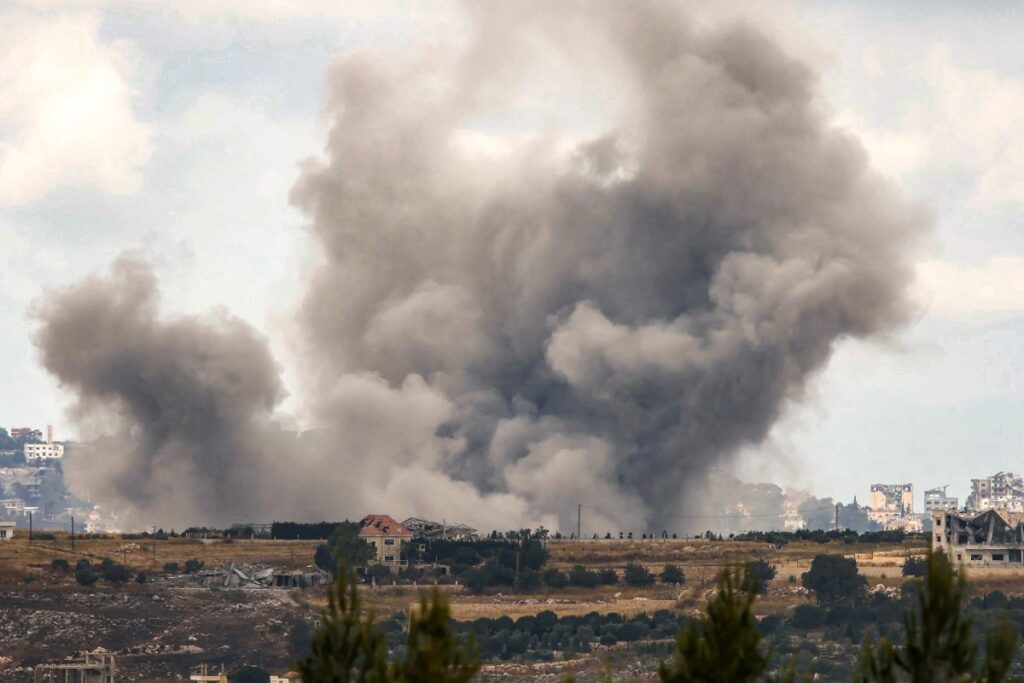
Smoke rises from Israeli bombardment near the village of Kfar Tibnit as seen from nearby Marjayoun (Marjeyoun) in southern Lebanon on June 14, 2026. Israel struck Beirut’s southern suburbs on June 14, killing three people, in response to what it said was Hezbollah fire at northern Israel, while its military also carried out broader strikes on southern Lebanon. The latest escalation came amid expectations that a deal between the US and Iran to end the Middle East war could be imminent, but Iranian chief negotiator Mohammad Bagher Ghalibaf said there was “no point” in continuing peace talks with Washington after the strike. (Photo by AFP)
July 15, 2026
BEIRUT, Lebanon (AFP) — Lebanon and Israel completed a new round of Washington-mediated negotiations in Rome on Wednesday, agreeing to implement the “pilot zones” in southern Lebanon agreed under a recent framework deal, a US official said.
“Talks concluded after two days of productive and positive discussions,” the official said in a statement shared by the US embassy in Beirut, adding that the participants “agreed on the structure and guidelines for the pilot zone process, to be finalised and implemented in the coming days”.
The US-brokered negotiations took place in the Italian capital over the framework agreement sealed last month after five rounds of talks in Washington, with Lebanese negotiators hoping for progress on an Israeli withdrawal from southern Lebanon.
The deal seeks an end to the state of war between Israel and Hezbollah in Lebanon, disarmament of the Iran-backed militant group, the deployment of Lebanese troops in the south and for Israeli forces to steadily withdraw from the country, starting with two “pilot zones”.
But the agreement, rejected by Hezbollah, does not set a timetable for Israel’s withdrawal.
Israeli officials have also vowed that their forces will remain in a “security zone” 10 kilometres (six miles) deep along the frontier for as long as Hezbollah remains armed.
On Tuesday, Israeli Foreign Minister Gideon Saar said his country was “ready to move forward implementing these two pilot zones”.
Lebanon and Israel, who have no formal relations, started negotiations after Hezbollah drew its country into the broader Middle East war by attacking Israel in March.
The official said they will now “move to expanded technical talks, which will focus on implementing all areas of the Trilateral Framework with the aim of reaching a comprehensive agreement between Israel and Lebanon”.
The framework agreement was reached following a fragile ceasefire in the Israel-Hezbollah war.
Israel still launches occasional strikes in southern Lebanon and carries out detonations in villages it occupies near the border.
The talks in Rome precede Lebanese President Joseph Aoun’s visit to Washington on June 21 at the invitation of his US counterpart Donald Trump.