

Lahore Chamber of Commerce president: Trade with Libya should exceed $1 billion
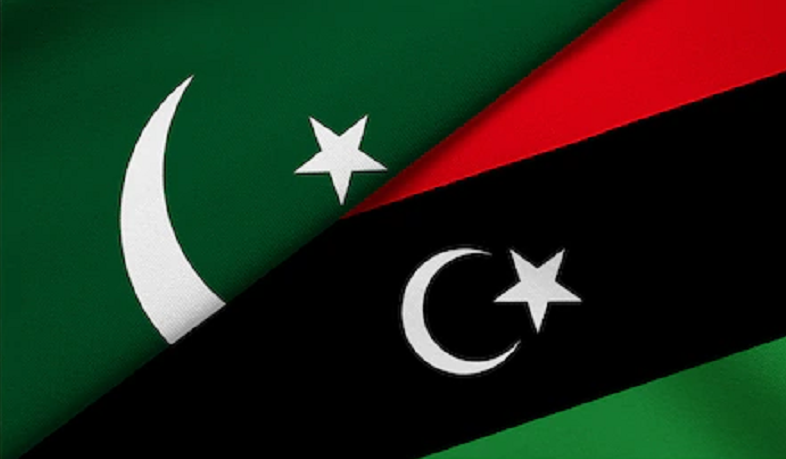
The Lahore Chamber of Commerce and Industry hosted a seminar on strengthening trade and economic cooperation with Libya, attended by Pakistan’s Ambassador to Libya, Mumtaz Hussain.
The seminar was chaired by Lahore Chamber President Faheem ur Rehman Saigol, who highlighted the long-standing friendly relations between Pakistan and Libya, stressing the need to translate the strong political ties between the two countries into solid economic partnerships. He noted that bilateral trade remains well below its true potential despite the significant opportunities available.
According to figures from the State Bank of Pakistan for the 2025–2026 fiscal year, Pakistan imported approximately $1.1 million worth of goods from Libya, while its exports to Libya reached $13.1 million. Saigol said that, given the size of both economies and the complementary nature of their markets, bilateral trade should easily exceed $1 billion.
Saigol identified significant opportunities for Pakistani exporters in sectors including value-added textiles, surgical instruments, processed food, sporting goods, engineering products, construction materials, and information technology services.
He also pointed to prospects for joint ventures in oil and gas services. He reaffirmed the chamber’s commitment to facilitating business-to-business contacts, organizing trade delegations and exhibitions, and promoting information exchange between the business communities of both countries.
Pakistan’s ambassador to Libya described his new assignment as a mission to serve Pakistan by reconnecting the country’s business community with a market offering substantial untapped opportunities.
He said his primary role would be to act as a facilitator and bridge between Pakistani and Libyan stakeholders, emphasizing the importance of cooperation between the chambers of commerce in both countries and encouraging organized trade missions and institutional collaboration to strengthen commercial ties.
The ambassador told participants that Libya offers considerable opportunities despite prevailing perceptions of instability, pointing to positive developments toward national reconciliation. He added that a market of more than seven million people, with significant purchasing power and major reconstruction needs, presents promising prospects for Pakistani companies.
The Pakistani diplomat also noted that the number of Pakistani workers in Libya has declined from around 80,000–90,000 in previous years to between 15,000 and 20,000 today, stressing the need to reverse this trend by increasing Pakistani workforce participation in the Libyan market.
He announced ambitious goals for his tenure, including doubling Pakistan’s exports to Libya over the next two years and increasing the number of Pakistani workers in Libya from around 20,000 to 40,000. He encouraged Pakistani businesses to explore opportunities in Libya before competitors capture emerging market shares, emphasizing that trade and business thrive through cooperation and partnership.
Credit: Source link