

Koung Orders Task Force to Resolve Liberia’s Bad Loans | Business
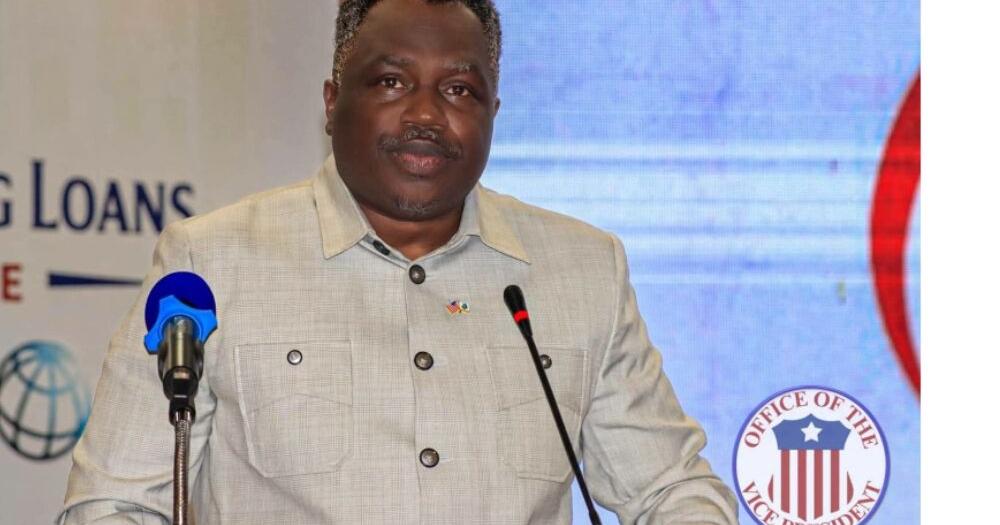
Vice President Jeremiah Kpan Koung has announced the establishment of a Non-Performing Loans Task Force to coordinate efforts to resolve Liberia’s bad-loan problem and strengthen the financial sector.
Koung said the Task Force will be established on the directive of President Joseph Nyuma Boakai and will bring together the Central Bank of Liberia, Ministry of Finance and Development Planning, Ministry of Justice, financial institutions, government agencies, development partners.
He made the announcement Friday while delivering closing remarks at the National Conference on the Resolution of Non-Performing Loans in the Liberian Financial Sector in Monrovia.
According to Koung, the Task Force will provide a coordinated framework for addressing non-performing loans, strengthening financial-sector resilience, promoting responsible lending and restoring confidence in Liberia’s banking system.
He said President Boakai has directed institutions to finalize the Task Force’s composition, terms of reference and implementation action plan, with clear responsibilities, timelines and monitoring mechanisms.
Koung said the President expects the Task Force to move beyond recommendations to concrete action, particularly in resolving legacy non-performing loans and preventing new bad loans.
“Resolving non-performing loans is not simply about improving commercial bank balance sheets; it is about unlocking economic opportunity, expanding access to finance, encouraging investment, supporting entrepreneurship, and creating jobs for the Liberian people,” Koung said.
He explained that elevated non-performing loans constrain lending, restrict private-sector expansion, increase costs and ultimately undermine economic growth.
The Vice President said conference discussions identified structural factors contributing to the problem, including weaknesses in credit infrastructure, legal and judicial bottlenecks, governance challenges, enforcement gaps and broader economic conditions.
Despite the challenges, Koung said Liberia has the expertise, institutional capacity and national resolve to address the problem.
“The policy options have been identified. The reform priorities have been articulated. The responsibilities of stakeholders have been clarified. What remains is implementation,” he emphasized.
Koung said a strong financial sector is essential to achieving the ARREST Agenda for Inclusive Development, noting that economic transformation cannot be sustained without affordable and sustainable financing.
He highlighted the need to improve financing for micro, small and medium-sized enterprises, women-owned businesses, young entrepreneurs, agricultural value chains and underserved communities.
He said government supports prudential supervision, credit-risk management and credit infrastructure, alongside reforms to improve debt recovery, insolvency administration, collateral enforcement and commercial dispute resolution.
Koung stressed that reforms must promote credit discipline while ensuring fairness, transparency and consumer protection.
He said government agencies must strengthen policies, the Legislature must support legal reforms, and the Judiciary must strengthen contract enforcement and commercial justice.
Financial institutions, he added, must improve governance, underwriting and risk management, while borrowers must honor their obligations. Development partners can provide technical expertise and financial support.
Koung urged stakeholders to ensure the conference commitments do not remain on paper.
“History will not judge this conference by the quality of the presentations delivered in this hall. History will judge it by the reforms implemented after we leave,” he said.
He reaffirmed the government’s commitment to working with stakeholders to implement the recommendations and strengthen Liberia’s banking system.
Credit: Source link