

Kenya’s fintech reforms promise clarity but could delay investment
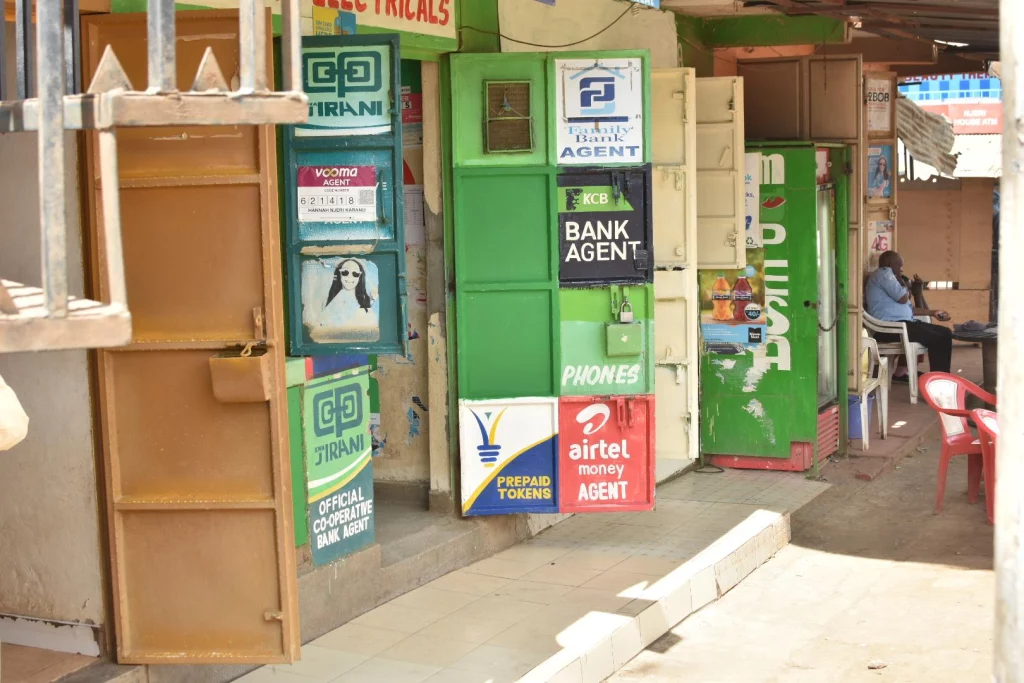
Kenya is proposing approval requirements for significant investments in payment companies, potentially lengthening fundraising for startups as the central bank strengthens its oversight of the industry.
The draft National Payment System Bill, 2026 would require investors acquiring at least 10% of a licensed payment service provider or payment system operator to obtain written approval from the Central Bank of Kenya (CBK). Incoming significant shareholders would also undergo regulatory vetting, a standard process at other financial institutions, such as banks.
The proposals would make approval a condition of completing investments. Fintech founders could face a longer time between securing an investor’s commitment and completing the transaction. A company running short of cash would have to account for a decision that neither its board nor its prospective backers could control.
“A significant change of ownership of a licensed payment service provider or a licensed payment system operator shall be subject to the prior written approval of the Central Bank,” clause 58 of the Bill states.
Repeal of old laws
The requirements are part of a proposed repeal of Kenya’s fintech law, which would establish separate licensing categories for businesses including electronic wallets, payment gateways, and money remittance providers. The overhaul introduces measures that the regulator says will encourage competition in a sector dominated by banks and telcos, and also bring tighter controls over capital, ownership and management.
Agnes Aistleitner, managing partner of First Circle Capital, tells me that the proposal adds complexity and costs to investing in Kenya, which is already very expensive and, so far, hasn’t been the most lucrative fintech market, apart from Safaricom and a few others. “Ultimately, I think it raises the bar for investment opportunities in Kenya,” she says.
While the draft sets a threshold for ownership approval, it does not specify how quickly CBK must decide on a transaction.
The uncertainty would concern the closing date. An investor could agree to fund a business but make the funding contingent on regulatory approval, leaving the company unable to count on the money until approval is granted. A provider with limited cash would need to begin raising earlier or arrange financing to cover the wait.
The timing could become particularly important for providers raising money to meet the bill’s capital requirements. The draft proposes a minimum capital requirement of KES 250 million ($1.9 million) for electronic money issuers and KES 50 million ($385,178) for wallet providers, with existing payment businesses given 1 year from the law’s commencement to comply. A company bringing in a significant shareholder to meet those requirements would need to complete both the investment and the ownership approval within its compliance timetable.
A temporary cash injection would not necessarily resolve the problem. Clause 10 excludes “shareholder loans or advances” and “unpaid, partly paid, or contingent capital commitments” from paid-up capital. A founder could therefore secure sufficient funds to keep the business operating without meeting the regulatory minimum.
Investor scrutiny is already part of Kenya’s fintech industry. The 2014 regulations require CBK to assess and approve significant shareholders, directors and senior managers. They set the threshold at 5% for unlisted providers and 10% for listed companies.
Therefore, the bill’s proposed 10% threshold would be higher for unlisted providers. The effect of the proposed changes would depend on how the approval process works alongside shareholder vetting, and whether it becomes predictable.
“The new significant shareholders shall undergo the same vetting as the existing shareholders,” clause 58 says.
Such assessments could cover matters including integrity, competence, business conduct, and bankruptcy, with investors subject to an examination of their suitability.
The requirements could also reach investments below the headline threshold. Clause 11 of the proposed law allows the CBK to vet smaller shareholders when it suspects that a holding has been reduced to avoid certification, or when an investor exercises control through associates.
“It’s not very attractive for investors. If we have to look at bridge financing or restructuring down the line, that would make it even more complicated. That would also factor into whether we would want to do a deal in the first place,” Aistleitner said.
Exit plans would face scrutiny too. The draft says “no merger or acquisition of a payment service provider or payment system operator shall be done without the prior written approval of the Central Bank”.
For a company unable to raise capital independently, a sale to a larger rival could thus require regulatory clearance as well. The same would apply to investors seeking an acquisition as their exit from the business, subject to any applicable competition review.
These requirements could favour investors able to commit time and resources to regulatory due diligence. They could also encourage companies to begin fundraising earlier, negotiate more time between signing, and completion, and prepare ownership and governance information before approaching CBK.
Bringing certainty
There is a benefit in some of these changes. Currently, Kenya’s fintech sector is regulated by the Central Bank of Kenya Act, the National Payment Systems Act, the National Payment Systems Regulations of 2014, and the e-money Regulations of 2013, all of which apply to fintechs.
This has put remittance and payment startups on a collision course with Kenyan authorities, with law enforcement agencies, including the Financial Reporting Centre (FRC) and the Asset Recovery Authority (ARA), freezing accounts and seizing assets of sector players on money-laundering charges.
In 2022, CBK ordered local financial institutions, including banks and mobile money service providers, to cut ties with fintechs, citing unspecified threats to the country’s financial systems. The regulator said at the time that the firms were operating without authorisation.
Clear licences and a consistent approval process could make payment businesses easier to assess and reduce uncertainty about their right to operate. The Treasury and CBK say the overhaul is intended to promote competition and innovation while protecting consumers and financial stability.
A well-run process could allow investor vetting to proceed alongside commercial negotiations. A slow or unpredictable one could leave a company with an agreed deal but insufficient certainty to plan hiring, expansion, or even its next few months of operations.
True scale demands moving beyond surface-level integrations to robust execution. We’ve filtered the noise out of Moonshot 2026, optimising the conference strictly for high-calibre connections between startup founders, global financial operators, enterprise leaders, and individuals rewiring Africa’s technical frameworks. Get 20% off Early Bird tickets for a limited time.

Crédito: Link de origem