

Kenneth Cooper recalls training Brazil’s 1970 World Cup champions – NBC 5 Dallas-Fort Worth
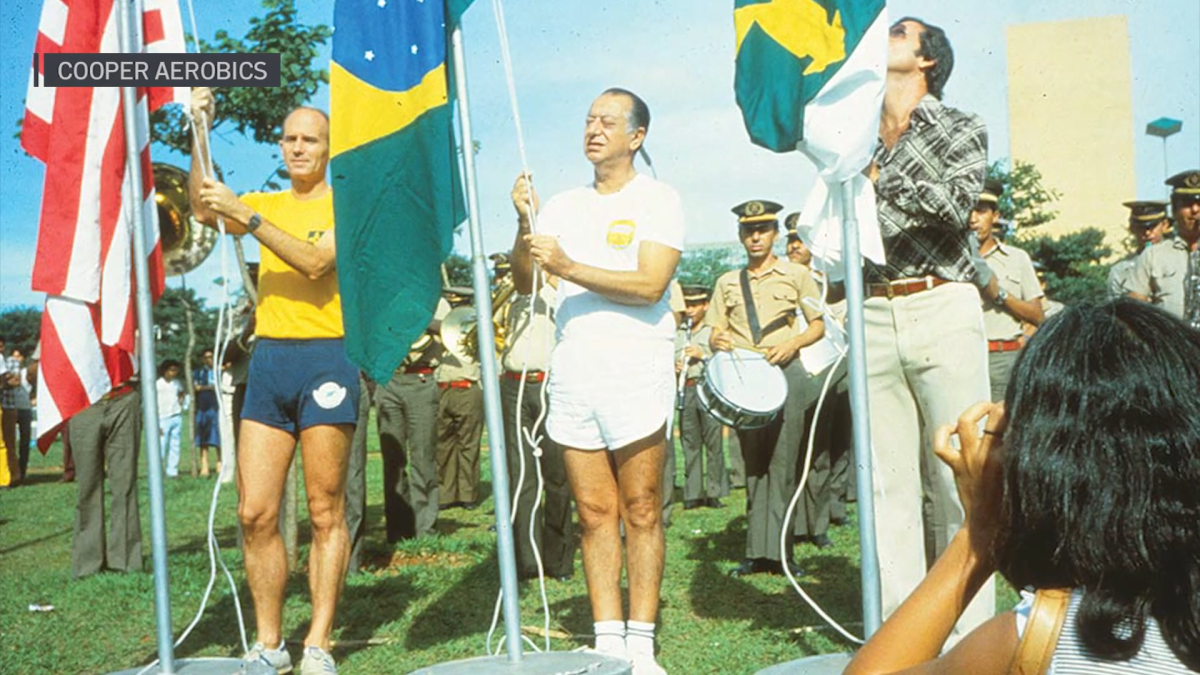
The Dallas doctor who is considered “the father of aerobics,” Kenneth Cooper, is looking back on 60 years of contributions to soccer and fitness.
Many will be familiar with the 12-minute run test Cooper developed to measure cardiovascular fitness in 1968 while he was a flight surgeon in the U.S. Air Force. It’s still used across multiple sports, and a version of it called “FitnessGram” is used in schools.
Cooper was speaking at a conference in France in 1968 when Brazilian soccer fitness coach Claudio Coutinho asked him to create an aerobic training program for his players. Depending on position, some players run between six and eight miles per match. That can be even more demanding in the summer heat.
Cooper developed a workout routine that included the run test to monitor improvements in the players’ fitness levels. Players logged 20 miles a week running at about a 7-minute pace, in addition to the running that happened in practice and matches.
“And the final test of the 12-minute test was 2.3 miles, and 12 minutes went from 1.86 miles to be able to run 2.3, almost 2.4 miles in 12 minutes. So they were endurance athletes,” Cooper said.
It’s important, Cooper said, because soccer is a sport of sprints. “When you sprint and then you rest, you sprint, and when you rest, and your ability to recover after sprinting is much better if you’re endurance trained, and you recover more rapidly.”
Cooper told the players that with his training, they’d play better in the second game of each match because of improved endurance, reduced injuries that occur when athletes are fatigued, and aerobic fitness would prolong their careers.
The Brazilian team racked up six wins in a row that year to beat Italy and win the 1970 World Cup in Mexico. Legendary soccer player Pele led them on the field.
Cooper says that victory made him a hero in Brazil and started an aerobic fitness craze.
In 1970, there was no word for “jogging” in Portuguese. So, Brazilians called it “doing the Cooper.” Brazilians saw his 12-minute test as synonymous with a regular workout. Dr. Cooper says even today there are signs on Brazilian streets and promenades that mark distances for the Cooper Test.
Cooper, 95, talked about his past with the FIFA World Cup and soccer training.
When Dallas hosted the World Cup in 1994, pro referees tested and trained at Cooper Aerobics Center. And years later, professional referees and linemen returned to Dallas to train and spend time with Dr. Cooper.
As the World Cup continues, Cooper believes the players on the pitch today are fitter than when he first got involved with soccer, and there’s pride in knowing he played a part.
“I think that all spurred from the results we have with the Brazilian team,” he said.
Cooper adds it does not take World Cup aspirations to get fit.
“You just want to get 30 minutes of exercise collective or sustained, most days a week. Why can’t you do that? You take a walk at lunch, maybe after dinner at night. But walk the dogs every once in a while,” Cooper said.If he has one word of advice for anyone, it’s discipline.
“Discipline because once you start it you keep it up. Fitness as a journey and not a destination, and keep up for the rest of your life