

Kalispell doctor returns to Ukraine as war with Russia intensifies
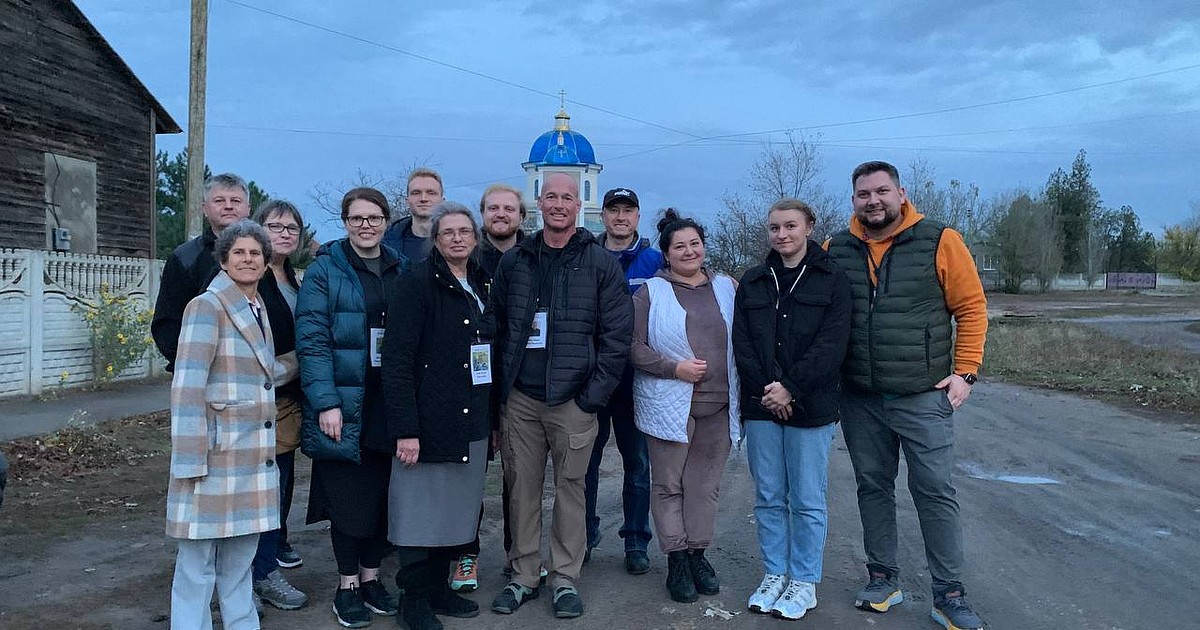
November in Ukraine reminds Dr. Lisa Fleischer of Montana.
When she thinks back to the time she spent in the country’s rural villages near the Black Sea in 2023, she remembers the familiar muddy backroads and perpetual grayness. She also recalls the people lining up outside a makeshift, one-room medical clinic on a dismally cold and wet morning, desperate for the chance to see a doctor.
In the packed room, Fleischer spoke with as many of the elderly civilian patients as she could, communicating through a translator, before her small team of foreign medical volunteers and local Ukrainians traveled across the war-scarred landscape to the next clinic.
“Out in the periphery, where we were doing clinics, you got nothing but bombed-out mud roads and people living with barely any heat,” Fleischer said, thinking back to that brutally cold winter. “They’re suffering a lot, and so people were so appreciative. We weren’t doing that much — I mean, we were giving them blood pressure pills and Tylenol — but they were very grateful to have healthcare providers in these small communities.”
The team spent two weeks driving from village to village as part of an ongoing effort coordinated by Global Care Force, a nonprofit organization that sends medical volunteers overseas to bolster primary care services in regions facing humanitarian crises. Fleischer is returning this month to those same Ukrainian villages to serve civilians who continue to suffer near the frontlines of the war with Russia.
Fleischer is no stranger to the unique demands of working abroad. She’s a veteran family medicine practitioner who recently capped off a 27-year career at Logan Health and has 40 years of experience in rural and international contexts.
“I became a doctor largely because I wanted to do international medical work,” Fleischer said. “I’ve gone to other places and have been going to Saint Lucia for 26 years, so it’s something I’ve been doing my whole career. I’m mostly retired now.”
Along with her decades of work in Saint Lucia, a small island nation in the Caribbean, Fleischer traveled to Guatemala and the former Soviet states of Tajikistan, Kyrgyzstan and Moldova. It was during one of those trips that Fleischer connected with Gary Morsch, the physician who would go on to found Global Care Force in 2020. When she learned about the group’s work in Ukraine, she knew she wanted to be involved.
Traveling to Ukraine is a challenge, and as a volunteer Fleischer is responsible for funding her own way. Her first trip required four days of travel because the Ukrainian airports were closed. Her team, composed of another doctor and two nurses, flew into Krakow, Poland, before spending a day on a train to Kyiv, the capital city of Ukraine. There was another full day of driving before they arrived in the region where they planned to hold medical clinics.
Working in Saint Lucia exposed Fleischer to levels of poverty she hadn’t experienced in the United States, but traveling through war-torn Ukraine stirred up an entirely new set of emotions.
“It’s humbling. Those people are so brave to just carry on through this. I mean, it’s incredible to me that they haven’t surrendered because they’re so outgunned, but they’re fighting for their country,” she said. “There were some profound moments over there. There’s this place in Kyiv where there’s this whole block that is plastered with photos of people, young men mostly, who have died in the last 12 years because of Russian invasions. It’s a city block, full of pictures, and yet they fight on.”
Global Care Force doesn’t work in active war zones, but the villages they serve were occupied by Russia at one point during the war before returning to Ukrainian control. Many are less than three miles from the frontlines, and Fleischer remembers seeing echoes of the conflict all around.
“There are bombs everywhere. We stopped somewhere, and there was a line for the bathroom, and like a typical Montana woman, I asked if I could just go off in the woods. And they told me that there are mines when you go off the road. There’s definitely evidence of war,” she said. “And we saw a lot of women who had lost sons and lost husbands, or their sons and husbands were off in the war. So there’s a lot of anxiety and depression going on, too. Lots of suffering.”
Ukraine is in its fifth year of full-scale war following the invasion Russian President Vladimir Putin launched in February 2022. When Fleischer was last in Ukraine, there was a lull in the fighting, she said. In recent months, though, Russia has ramped up its attacks, bombing Kyiv with increasing intensity, said Global Care Force Vice President of Programs Roxanne Alexander Jones.
Russian strikes on healthcare infrastructure and workers have increased, going up by nearly 20% in 2025 compared to the year prior, according to the World Health Organization. Since the start of the war, Russian attacks have damaged more than 2,400 healthcare facilities and destroyed more than 300, mostly in rural countryside areas.
This leaves civilians in those areas without access to any form of consistent healthcare. Most of the patients Fleischer works with are elderly and unable or unwilling to leave their homes. While Kyiv is a modern Western city, Fleischer said the rural villages feel like they’ve been transported from a different century. The hardy residents grow their own food and barter potatoes for carrots. Bicycles are the only mode of transportation, and the nearest hospital is often more than 30 miles away.
While most distant observers of war assume civilian casualties are a result of bombings, shrapnel or collapsed buildings, Global Care Force Executive Director Lauren David Seaman said civilian loss of life is more closely tied to untreated chronic conditions.
“With health issues related to chronic conditions, you need regular care. For people who need prescriptions, you need those every couple months,” he said. “We’re really responding to a hidden crisis that most people don’t fully understand.”
Cardiovascular disease has increasingly become a problem in rural areas as the war has dragged on, especially among the elderly who are often the only ones to remain in their villages. One in four Ukrainians is experiencing dangerously high blood pressure, and 80% are unable to access necessary medications, according to the World Health Organization. Each month, Global Care Force distributes $10,000 worth of medication during their clinics.
Fleischer’s upcoming team is the 38th sent by Global Care Force to Ukraine since the war began. The organization sends a team each month as part of its mission to provide continuity of care and ensure communities consistently have access to necessary primary healthcare services. According to Jones, Global Care Force is the only organization in Ukraine focused on continuity of care.
“The patients we serve, one of the biggest things they tell us is that they’re grateful we came, that we were able to do physician assessments. They’re grateful for all the medication,” Jones said. “But the most important thing they say we provided was hope that they haven’t been forgotten, and they just want to sit by you and tell you their story.”
As Fleischer prepared to return to Ukraine, in the face of an intensifying conflict that has inflicted so much suffering, she has drawn on her decades of experience abroad and the humility she’s learned over that time.
“I’m not changing the world,” Fleischer said. “In the big scheme of things, I have no illusion that I’m doing anything monumental. I think short term medical trips are probably as much about goodwill as anything. I feel even more committed to it for this purpose.”
Reporter Elsa Ericksen can be reached at 406-758-4459 or [email protected]. If you value local journalism, pledge your support at dailyinterlake.com/support.
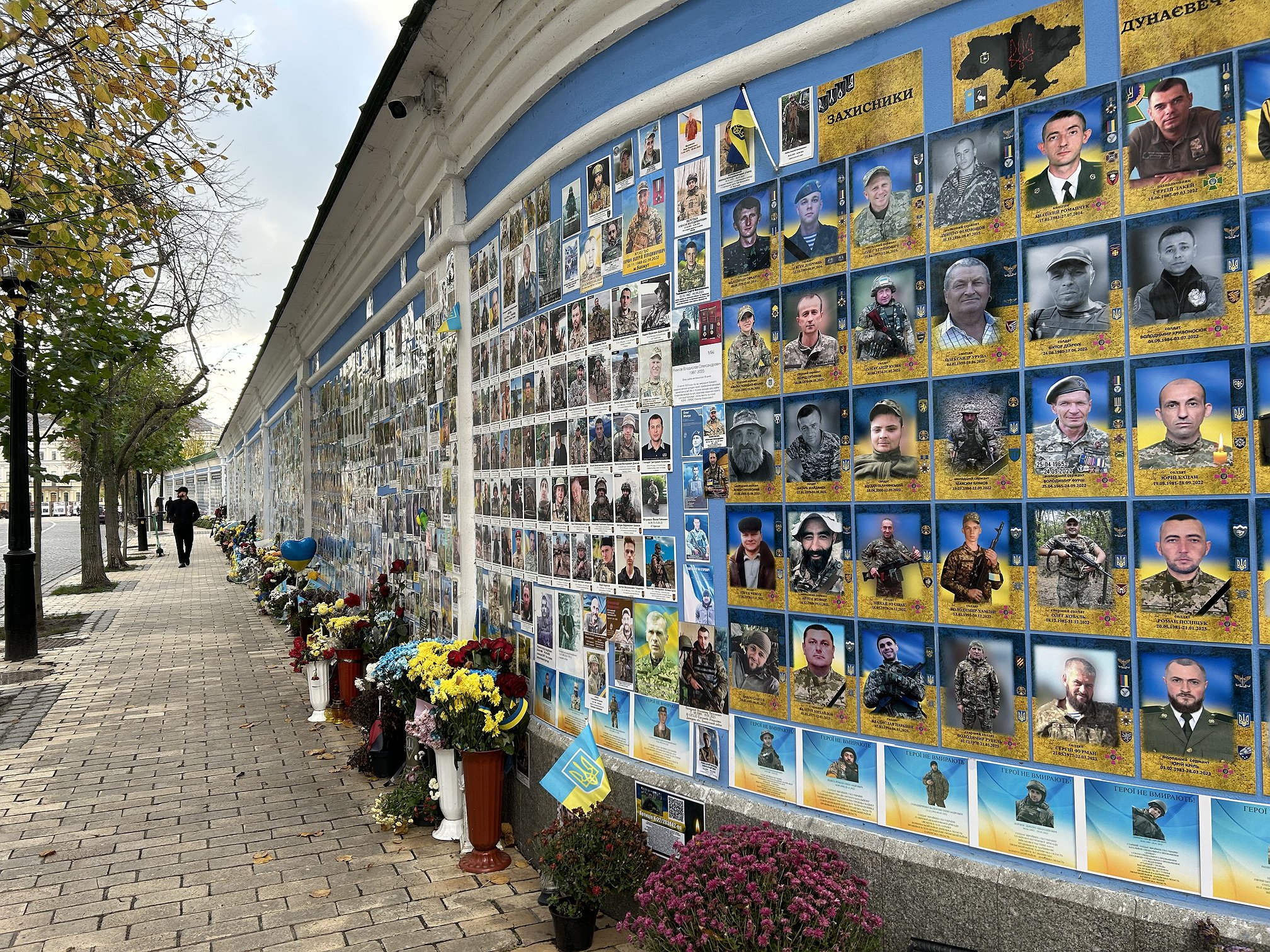 Photographs of soldiers killed during Ukraine’s war with Russia line a city block in Kyiv, Ukraine, in November 2023. (Courtesy Lisa Fleischer)