

It sings like a whale, climbs like a cat and was once thought extinct… meet one of the world’s strangest dogs
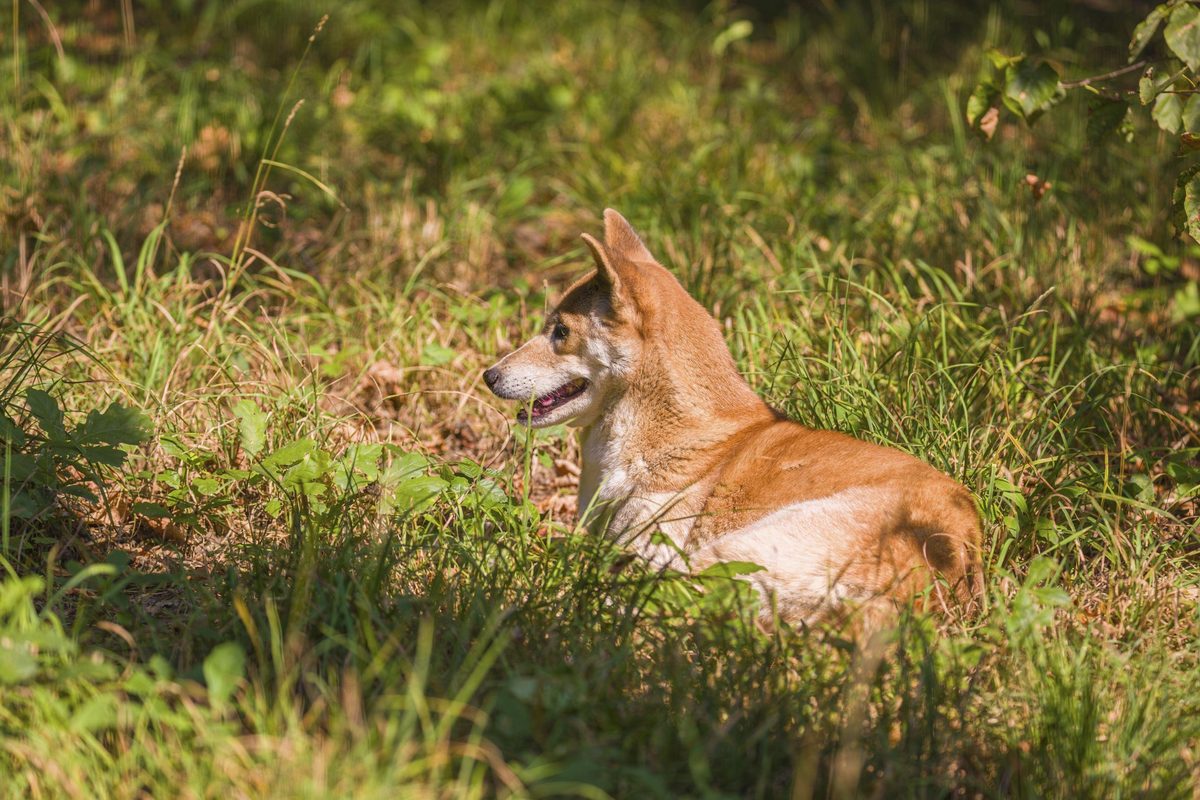
The New Guinea singing dog is one of the world’s most enigmatic and elusive canids, roaming the cloud forests of this tropical island at altitudes approaching 5,000m. Long thought to have vanished from the wild, it was rediscovered in 2016, but is mainly known from captive populations.
Is New Guinea singing dog a domestic, feral or wild dog?
This question has been hotly debated among scientists. When the New Guinea singing dog was first formally described by Australian mammalogist Ellis Troughton in 1957, it was classified as a new wild species, Canis hallstromi, named after Sir Edward Hallstrom, the benefactor who had first brought live specimens to Sydney’s Taronga Zoo.
By 1969, however, it had been reclassified as a feral subspecies of the dingo, Canis lupus familiaris dingo. A 2019 workshop hosted by the IUCN Canid Specialist Group concluded it should be treated as a feral domestic dog, Canis familiaris – a decision some researchers dispute, arguing the evidence supports recognition of the New Guinea singing dog as a distinct wild canid that deserves assessment and protection.
Where does it live?
It inhabits the remote, mist-covered cloud forests of the New Guinea highlands, at altitudes of 2,500–4,700m, spanning both Papua New Guinea and the Indonesian province of Papua. It is highly secretive and spends its life in some of the most inaccessible terrain on Earth, which goes a long way towards explaining why so little is known about its behaviour in the wild.
How big is it?
It is a small to medium-sized dog, weighing 9–14kg and standing 38–46cm at the shoulder and 71–91cm long.
What does it look like?
Its dense, rough coat is typically golden red or black and tan, often with white markings on the chin, feet and tail. Petal-shaped ears, a narrow muzzle and wide, prominent cheekbones give it a distinctive, fox-like expression. Its spine and joints are also unusually flexible for a dog – an adaptation that enables it to climb trees and navigate steep terrain with cat-like agility.
What does it eat?
Very little is known about the diet of the wild New Guinea singing dog. Evidence from food remains suggests it preys on small to medium-sized mammals – including marsupials such as cuscuses and wallabies – as well as birds and reptiles. In the highlands, it is the island’s largest native land predator, and it has been known to attempt to hunt dwarf cassowaries standing up to a metre tall.
How does it ‘sing’?
The New Guinea singing dog can produce a long, modulated howl in which the pitch rises and falls, sometimes giving the impression of a song. Sonograms have shown similarities between its howl and the song of a humpback whale. When several animals call together, one may begin and others join in at different pitches. It also barks, whines, yelps and screams.
How does it breed?
In captivity, the female has a gestation period of 63 days and gives birth to an average of four pups. Both parents participate in raising the young. Pups reach sexual maturity at around four years old. Almost nothing is known about wild reproduction, but the New Guinea singing dog is thought to live and defend territory in mated pairs rather than packs; wild sightings have consistently been of lone individuals or pairs.
Was it really thought to be extinct?
Yes, for half a century. None had been formally documented since the 1970s, and many feared the wild population had been wiped out by habitat loss and interbreeding with domestic dogs. Then, in 2016, an expedition led by the New Guinea Highland Wild Dog Foundation encountered 15 wild dogs near the Grasberg gold and copper mine in Papua, Indonesia, where conservation measures around the site had inadvertently created a refuge. A study published in the journal PNAS in 2020 confirmed through genetic analysis that these ‘highland wild dogs’ are the wild ancestors of today’s captive singing dog population.
How is it related to the Australian dingo?
The New Guinea singing dog and the Australian dingo are very closely related canids. Both are thought to descend from dogs brought from Asia by early human migrants, though which came first – or whether both derive from a now-extinct common ancestor – remains unclear. Rising sea levels around 6,000 years ago submerged the land bridge between New Guinea and Australia, separating the two populations.
How long does it live?
It lives up to about 15 years
Is it under threat?
The captive population consists of around 200–300 individuals, all descended from a small pool of just eight animals – making it severely inbred and genetically vulnerable. The true size of the wild population is unknown. Key threats include habitat loss, hunting and hybridisation with domestic and feral dogs encroaching into the highlands.
Credit: Source link