

Is the United States Considering a Ground Operation in Iran?

WANA (Jul 19) – In recent days, following reports in U.S. media about the consideration of options such as seizing some Iranian islands in the Persian Gulf, a familiar question has once again entered public debate:
Is Washington actually approaching a ground operation against Iran, or is this scenario less a real military plan and more a tool of psychological warfare and political pressure?
The central question is this: Could Washington move beyond air and missile strikes and take the next step toward a ground operation inside Iran?
The answer, however, cannot be explained in a few simple sentences, despite the emotional reactions often seen on social media.

A billboard depicting U.S. President Donald Trump laid in a coffin is displayed on a building in Tehran, Iran, July 18, 2026. Majid Asgaripour/WANA (West Asia News Agency)
In modern warfare, there is a significant gap between having an option on the table and having the ability to successfully carry it out.
A military may study a specific scenario, but turning that scenario into a real operation requires calculations involving dozens of factors — from military capability and geography to weather conditions, public opinion and political costs.
The same logic applies to Iran. A ground operation may exist as a military scenario, but transforming it into an actual campaign would be a far more complicated matter.
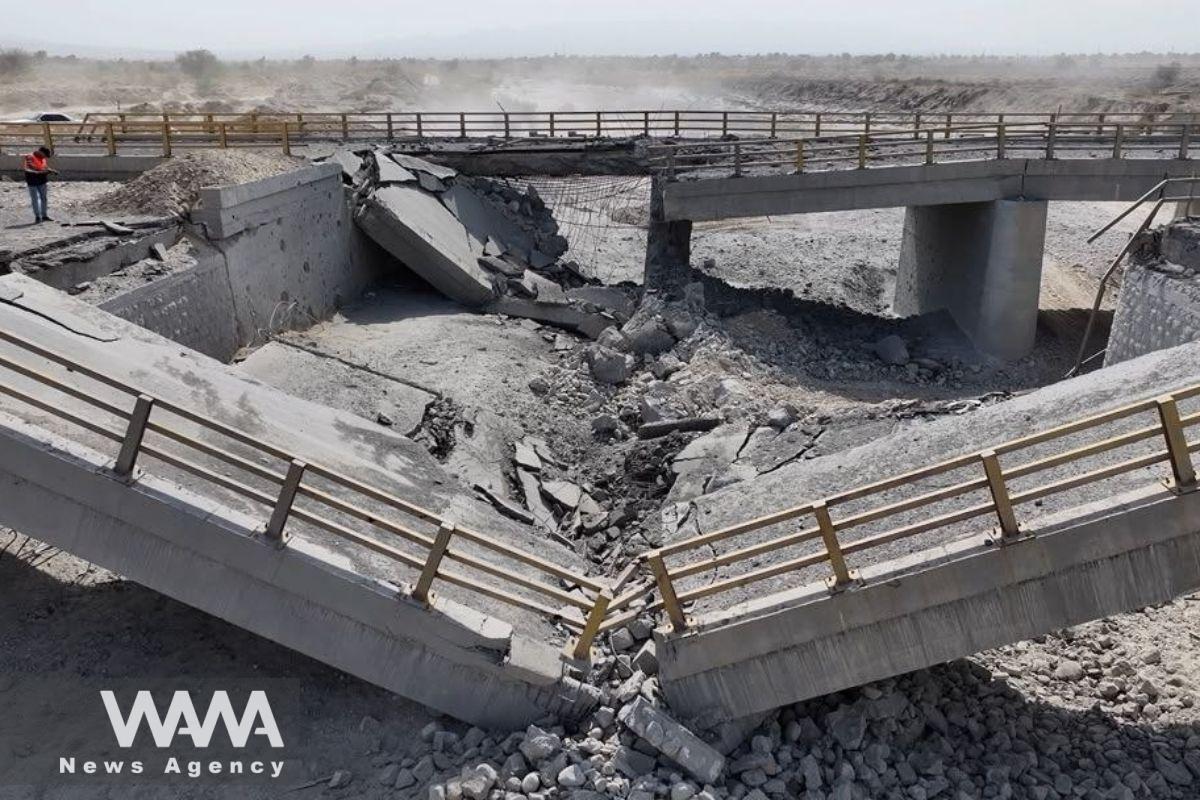
The Hidden Strategy Behind U.S. Strikes on Iran’s Bridges
WANA (Jul 18) – Until just a few days ago, U.S. strikes were largely focused on targets directly linked to Iran’s military capabilities, including naval facilities, military infrastructure, weapons systems, and logistical support sites. The recent attacks on bridges and transportation routes in southern Iran—particularly those connecting to Hormozgan Province—however, suggest a notable shift in […]
Is the U.S. objective to occupy Iran?
The first point that needs to be clarified is that a possible ground operation does not necessarily mean an attempt to fully occupy Iran.
Occupying a country like Iran — with its vast geography, large population, military structure and strategic position in the region — would be among the most difficult military operations a modern army could attempt.
Such an operation would require tens of thousands of combat troops, continuous air support, armored units, artillery, engineering capabilities, field hospitals, ammunition supplies, secure logistical routes and, most importantly, the ability to hold captured territory against counterattacks.
For this reason, many military analysts believe that if the United States were ever to seriously consider a ground option, the focus would likely not be a large-scale occupation of Iranian territory, but rather a limited operation designed to create strategic leverage.

People walk past a billboard with an image of Iran’s late Supreme Leader Ayatollah Ali Khamenei in Tehran, Iran, July 13, 2026. Majid Asgaripour/WANA (West Asia News Agency)
Why is the idea of seizing islands being discussed?
Some reports and statements from American circles have referred to the possibility of temporarily capturing sensitive locations, including islands near the Strait of Hormuz.
The logic behind such a scenario is that a strategically important location could become a bargaining chip in negotiations or a tool of political pressure.
In international politics, control of a strategic point can sometimes have political value beyond its direct military importance. Possessing such leverage could be intended to pressure the opposing side during negotiations or increase the cost of continuing the conflict.
But this is exactly where the main challenge begins:
In war, capturing a territory is only half the battle. Holding that territory is often the far more difficult task.

People walk on the beach, while vessels in the Strait of Hormuz near the beach of Bandar Abbas, Iran, May 21, 2026. Majid Asgaripour/WANA (West Asia News Agency)
Capturing an island is easier than holding it
At first glance, an island may appear to be a simpler target than mainland territory. The area is limited, operational boundaries are clearer and the number of forces required may be smaller than for a large-scale invasion.
But those same characteristics also create major vulnerabilities.
A force that enters an island environment becomes dependent on supply lines.
Fuel, ammunition, fresh troops, medical equipment and even the evacuation of wounded personnel must all be delivered through maritime or air routes.
If those supply lines come under pressure, an invading force could quickly find itself transformed from a strategic foothold into an isolated and vulnerable force.
The history of warfare shows that entering a territory is often easier than stabilizing and maintaining control over it.
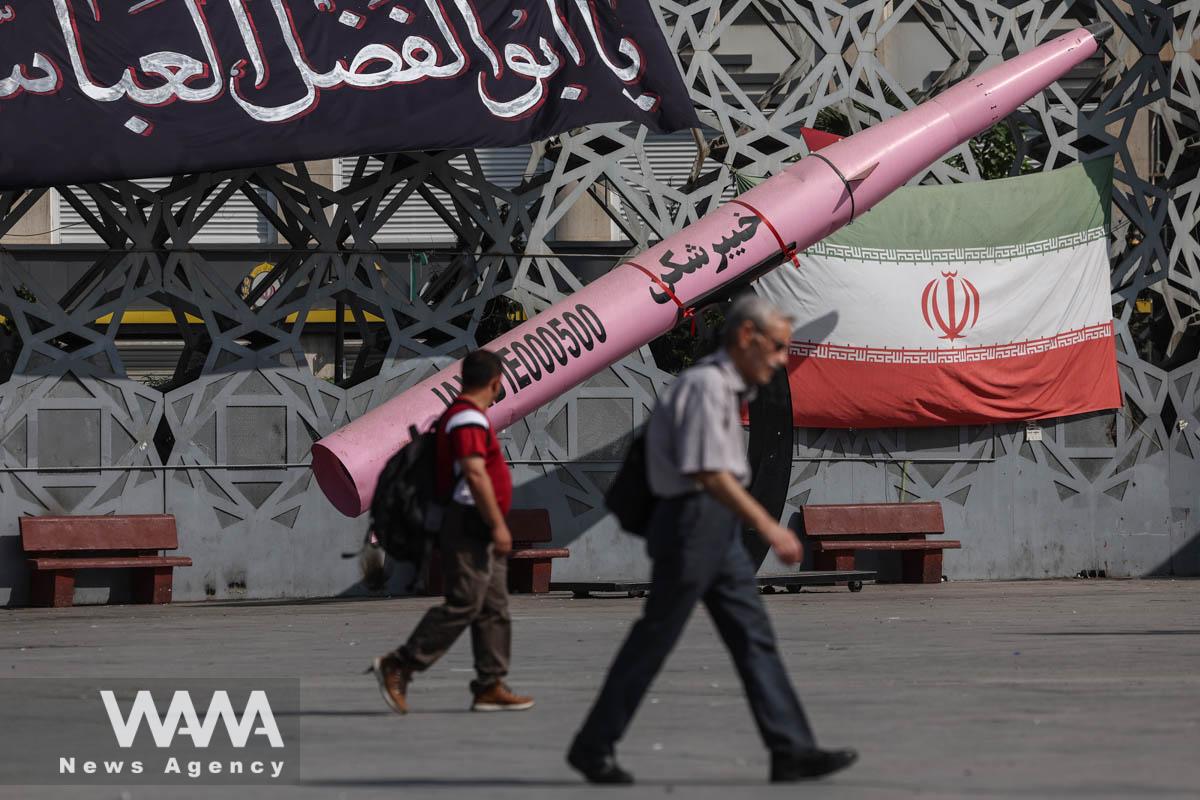
Behind the Scenes of Target Selection: What Locations is Iran Seeking to Destroy?
WANA (Jul 17) – An analysis of the locations targeted by Iran in the new waves of attacks reveals that a new military approach has been adopted. This approach prioritizes command and threat centers over mere equipment. One of the most important questions following the recent missile and drone operations of the Islamic Republic […]
Why Iranian islands are not easy targets
Iranian islands in the Persian Gulf present unique military challenges.
Unlike many coastal areas, these islands are geographically separated from the mainland. But that separation also means any invading force would need to establish and maintain a permanent support chain.
At the same time, the defensive importance of these locations has increased over the years, meaning that any operation against them would likely not benefit from complete surprise.
In amphibious warfare, surprise is one of the most important factors for success. Once the possibility of an attack becomes visible, the defending side gains time to prepare forces, equipment and defensive systems.
For this reason, any potential operation against Iranian islands would likely involve much higher risks and costs compared with similar operations conducted under normal conditions.

Iranian Army Rangers in Zulfiqar 99 exercise with units of Navy, Air Defense, Air Force, and Ground Force in an area of 2 million square kilometers near east of Hormuz Strait, Makran coasts, Sea of Oman, and north of Indian Ocean in south of Iran September 7, 2020. Picture taken September 7, 2020. WANA (West Asia News Agency)
America’s bigger problem: What happens after the attack?
One of the most important questions, often overlooked in public discussions, is this:
Assume an invading force succeeds in capturing a location. What happens next?
Can it hold that position for a long period?
Can it protect its supply lines against counterattacks?
Will the cost of maintaining that territory eventually exceed its political value?
This is where many military operations throughout history have faced serious difficulties.
In war, victory is not simply about taking ground. Victory depends on the ability to preserve and defend the gains that have been achieved.

Iranian Army Rangers in Zulfiqar 99 exercise with units of Navy, Air Defense, Air Force, and Ground Force in an area of 2 million square kilometers near east of Hormuz Strait, Makran coasts, Sea of Oman, and north of Indian Ocean in south of Iran September 8, 2020. Picture taken September 8, 2020. WANA (West Asia News Agency)
The Iraq experience: Why Iran presents a different challenge
The United States spent months preparing before launching its invasion of Iraq in 2003.
Large numbers of troops, equipment and logistical resources were moved into the region, and the operation began when Washington enjoyed overwhelming air superiority.
In addition, the Iraqi military had been weakened by years of sanctions and previous wars, creating a very different environment from a country preparing for a major defensive conflict.
Iran, however, presents a different challenge.
Its geographic size, defensive structure, decades of experience dealing with external threats and its geopolitical importance make any ground operation a far more complex undertaking.
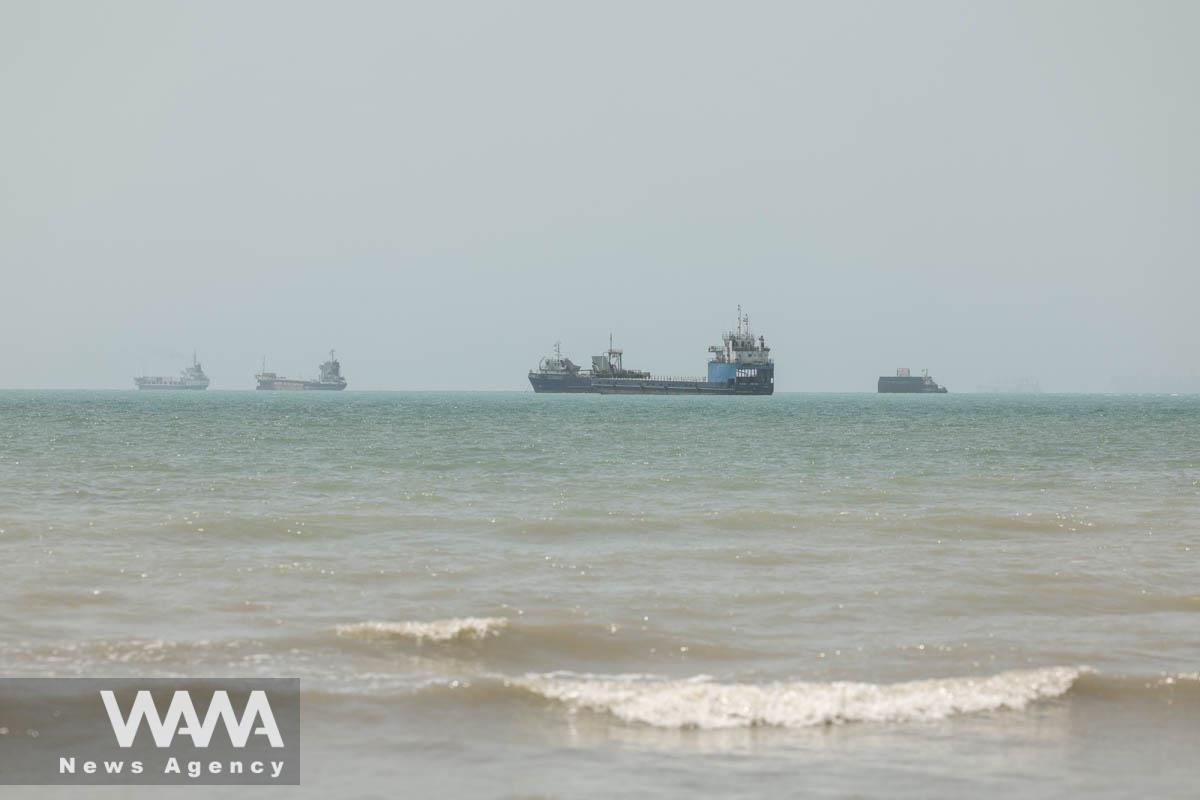
Who Controls the Rules? The Strategic Contest Over Hormuz
WANA (Jul 15) – If Washington’s objective were simply to reopen the Strait of Hormuz, this chapter would likely have ended long ago. What continues to draw the United States back to the Strait after months of confrontation is not merely the movement of oil tankers, but what it sees as a challenge to a […]
A factor often overlooked: weather conditions
One of the variables frequently ignored in public discussions is the environment.
The Persian Gulf and southern Iran are among the most demanding regions for military operations during the hottest months of the year.
Extreme heat, high humidity, pressure on equipment and reduced human endurance all make operational planning more difficult.
The history of major U.S. military campaigns in the region also shows that weather conditions have always been an important factor in deciding when and how operations are conducted.

The mural in Tehran’s Palestine Square, featuring the slogan “Watch Out for Your Soldiers”, was unveiled following Iran’s threats from Trump and Ali Larijani’s response. Larijani, Secretary of Iran’s Supreme National Security Council, had recently tweeted: “Watch out for your soldiers!”. Social media/ WANA News Agency
The political factor: Why casualties matter to Washington
Beyond military calculations, domestic politics in the United States also play an important role.
Unlike air strikes, ground operations create a much higher risk of casualties, captured personnel and a prolonged military commitment.
For any U.S. administration, entering a conflict that could become lengthy and costly represents a major political risk — especially if the war develops into a domestic crisis.
For this reason, many analysts believe Washington generally prefers options that can create maximum pressure while minimizing human costs.

A billboard depicting U.S. President Donald Trump and Israeli Prime Minister Benjamin Netanyahu is displayed on a building in Tehran, Iran, July 18, 2026. Majid Asgaripour/WANA (West Asia News Agency)
So is a ground operation completely off the table?
The most accurate answer is: no.
In politics and warfare, no option can be completely ruled out.
Some military and political circles may examine the possibility of a limited operation designed to create pressure or gain negotiating leverage.
However, there is a major difference between studying an option and successfully executing it.
Capturing a piece of Iranian territory could theoretically send a political message. But if maintaining that position leads to a prolonged conflict, rising casualties and unpredictable costs, that same bargaining chip could quickly become a heavy burden.

A billboard with a picture of U.S. President Donald Trump and his family is displayed on a building in Tehran, Iran, July 15, 2026. Majid Asgaripour/WANA (West Asia News Agency)
The real question is not only whether the U.S. can enter — but whether it can manage what comes after
The key question in analyzing a possible ground operation against Iran is not simply: Can the United States enter Iranian territory?
The deeper question is: Can the United States manage the situation after entering?
A ground operation against Iran, even if considered as a pressure tool or a negotiating instrument, would face a combination of military, political and logistical risks that make the decision extremely difficult.
Because wars are not defined only by how forces enter a battlefield.
They are ultimately defined by whether those forces can sustain their position — and whether they have a realistic path to leave.