

Iraqi militia rejects disarmament as Baghdad moves to curb arms proliferation
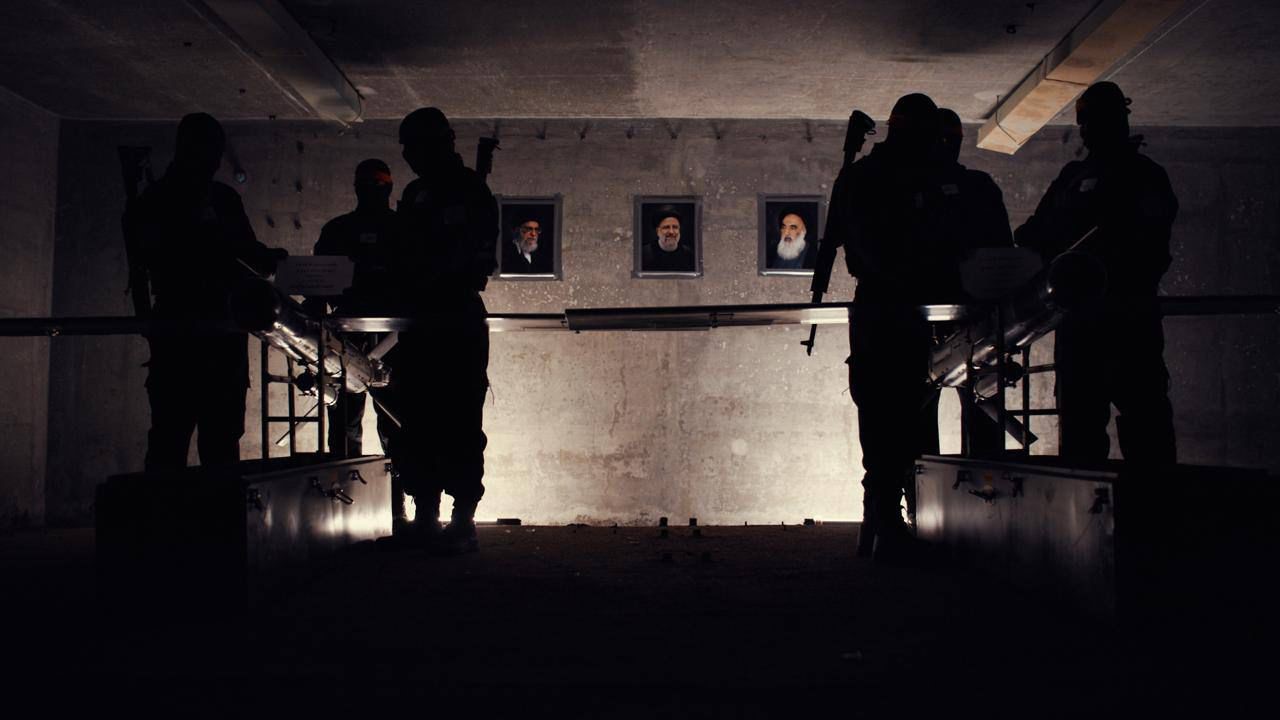
ERBIL, Kurdistan Region – A shadowy Iraqi armed group that has played an active role in backing the Iranian front during the six-week war – primarily by targeting alleged US assets in Iraq and the Kurdistan Region – has rejected handing over its arms to the Iraqi state, the group’s spokesperson.
The statement comes days after several well-informed Iraqi politicians told Rudaw that the newly appointed government of Prime Minister Ali al-Zaidi had initiated talks with a number of Iran-aligned Iraqi armed factions aimed at addressing arms proliferation.
Abu Mahdi al-Jaafari, spokesperson for Saraya Awliya al-Dam (Guardians of the Blood Brigades), said in a statement, “There will be no surrender of weapons and no talk of reassurance before the injustice is lifted and the [American] occupation of Iraq comes to an end.”
“In times of war, they call us the sons of the noble; but in times of peace, they forget those who protected the land,” he added.
The US and Israel launched a large-scale aerial campaign against Iran in late February, striking thousands of targets across the country during six weeks of hostilities.
In response, Iran carried out thousands of drone and missile strikes across the Middle East, targeting alleged US assets – particularly in Gulf Arab states – as well as launching retaliatory attacks against Israel.
The Iranian response also included operations by factions aligned with the Iran-led ‘Axis of Resistance,’ involving armed groups in Iraq that claimed numerous attacks against alleged US targets in the country and across the wider region.
During that period, Saraya Awliya al-Dam claimed responsibility for a series of drone and rocket attacks, including a drone strike on Erbil International Airport in early March, followed by further claimed strikes on American installations in Erbil the next day.
The facade group also launched an automated fiber-optic reconnaissance drone over the US Embassy in Baghdad in mid-March.
Importantly, Saraya Awliya al-Dam’s attacks were carried out under the banner of the Islamic Resistance in Iraq (IRI), which emerged in the immediate aftermath of the outbreak of the Gaza war in October 2023. The umbrella entity is widely believed to include several powerful Iraqi armed factions, namely Asa’ib Ahl al-Haq, Kata’ib Hezbollah, Harakat Hezbollah al-Nujaba, and Kata’ib Sayyid al-Shuhada.
In early April, the IRI claimed that it had carried out more than 750 attacks against alleged US-linked assets in Iraq and the region since the beginning of the Iran war and up to that point. However, in recent weeks those attacks have seen a drastic decline.
The latest statement by Saraya Awliya al-Dam comes as the Zaidi-led Iraqi government moves toward bringing the weapons of Iran-aligned armed groups under state control, several officials from the ruling Shiite Coordination Framework – which backed Zaidi’s rise to office – told Rudaw on Tuesday.
Amer al-Fayez, head of the Tasmim Alliance, one of the 12 parties that make up the Coordination Framework, confirmed that “indirect discussions are underway” between the government and these armed groups.
The first phase of the proposed agreement involved the groups “halting their attacks on alleged American targets in the region, which has been implemented,” Fayez added, noting that “the second phase is to restrict weapons to the hands of the state.”
According to the Iraqi politician, the talks involve three to four armed groups, and there is currently an understanding to bring them under state authority, with a final agreement expected after the Eid al-Adha holiday, which was observed from Wednesday to Saturday.
He further stressed that the process is strictly an internal Iraqi matter and is not being pursued under foreign pressure.
Meanwhile, a senior commander from one of the armed factions said the push aims to address arms proliferation but not to “disarm” these groups.
RELATED: Iraqi government pushes to bring armed groups’ weapons under state control, officials say