Iraqi Kurdistan president’s office confirms Barzani’s US-Iran backchannel role
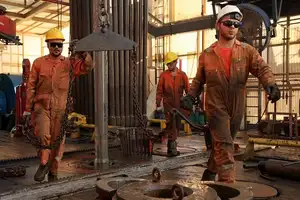
The major corruption network involved in the sale of Iranian oil has been operating within the Islamic Republic’s Intelligence Ministry, according to multiple sources familiar with the matter.
The network was built around trusted intermediaries, known in Iran as “trustees,” who were given oil to sell as part of efforts to circumvent sanctions and were expected to return the proceeds to the state.
Iran International’s investigation found that the nine included the relatives of senior current and former officials, including a son of Supreme National Security Council Secretary Mohsen Rezaei and the sons-in-law of two former intelligence ministers.
On August 9, the Iranian Labour News Agency (ILNA), quoting Hossein Samsami, a member of parliament’s Economic Committee, named one of the trustees who he said had failed to return Iran’s oil revenue: Hossein Aghayari.
A day later, ILNA provided further details, saying Aghayari was born in 1982 and operated in Tehran using Iranian and Afghan passports. It said he had purchased 40 Iranian oil tankers, taken delivery of 90 million barrels of oil, sold it on the market and failed to return the proceeds.
Aghayari has been based in the United Arab Emirates since before the start of the 40-day war. Two oil-industry sources told Iran International that five months ago, he stayed for several days at the Ritz hotel in London using a Dominican passport.
According to the sources, Aghayari’s name and details of his activities were deliberately provided to Iran’s domestic media as part of a security operation intended to conceal the identities of the principal figures in a much larger network of Intelligence Ministry trustees.
The sources identify the leader of the network as a senior Intelligence Ministry official known as Shayan, the ministry’s director-general for fuel and energy. He was dismissed 10 days ago and, according to three sources, is expected to be arrested.
The sources say the group, known as the Shayan Network, was responsible for about $11 billion in oil-sale proceeds not being returned to the state.
How the network operated
Since the administration of former President Ebrahim Raisi took office, Iran’s budget laws have allowed executive agencies and state, military and Social Security pension funds, in coordination with the Oil Ministry, to receive Iranian crude oil and gas condensate for sale as part of efforts to circumvent sanctions and return the proceeds to Iran.
The individuals and companies entrusted with selling the oil and transferring the revenue are commonly known in Iran’s political and economic terminology as “trustees.”
The administration of President Masoud Pezeshkian has continued to use similar mechanisms for oil sales.
According to Iran International’s sources, several large patronage networks emerged around the system, including one operating within the Intelligence Ministry through the cooperation of three figures.
One was Oil Minister Mohsen Paknejad, who previously headed the Oil Ministry’s Fuel Supply Oversight Headquarters.
The other two, according to the sources, were the principal organizers of the alleged network. One was Shayan, the Intelligence Ministry’s director-general for fuel, who had previously served as a senior ministry interrogator in major oil cases.
Sources say that Shayan used his influence over cases ranging from the missing oil rigs scandal to the Crescent case to accumulate considerable wealth.
The third figure was Meysam Darzinejad Rami, director-general of the Intelligence Ministry Pension Fund, through whom the sources say legal cover was provided for the oil sales. He previously headed security at the Execution of Imam Khomeini’s Order (EIKO), the vast economic conglomerate controlled by the office of Iran’s supreme leader.
According to Iran International’s sources, Shayan and Darzinejad built an extensive oil-sales operation around nine influential trustees, one of whom was Aghayari.
Mohsen Fallahian, son of an ex-intelligence minister
One of the best-known members of the alleged network is Mohsen Fallahian, the son of Ali Fallahian, who served as intelligence minister under President Akbar Hashemi Rafsanjani.
Ali Fallahian has been widely accused of being one of the architects of the Islamic Republic’s campaign of assassinations against opponents abroad, including during the period when Shapour Bakhtiar, the last prime minister under Mohammad Reza Shah Pahlavi, was killed in Paris.
Mohsen Fallahian runs a company in Iran called Sepehr Sanat Negin, whose stated business activities were changed to include oil and gas operations in October last year.
Iran International’s sources say Fallahian obtained authorization to establish an oil-storage facility at Shahid Rajaei Port in Bandar Abbas through his father’s influence and subsequently joined the Shayan Network’s oil-selling operation.
According to the sources, Mohsen Fallahian lives in the UAE and trades oil under another identity, “Mohsen A.,” using a Turkish passport. In one instance alone, the sources say, he converted 200 million dirhams in Iranian oil revenue into cryptocurrency and transferred it to a European country.
Ali Rezaei, son of Mohsen Rezaei
Ali Rezaei, son of Iran’s newly appointed security chief Mohsen Rezaei, is also identified by the sources as one of the Shayan Network’s trustees.
Rezaei is married to the daughter of Leili Boroujerdi, a granddaughter of Ruhollah Khomeini. For years, he served as deputy for communications at the Secretariat of the Expediency Discernment Council, effectively serving as his father’s deputy.
Iran International’s sources say Rezaei has for some time been living at the Address Mall hotel in Dubai, where he works as an oil trader. They allege that he is among the Shayan Network trustees who have failed to return hundreds of millions of dollars in oil-sale proceeds.
Ali Bayandorian, a trustee for several networks
Another member of the alleged network identified by Iran International’s sources is Ali Bayandorian, 52, who was born in Tehran and lives on Morvarid Street in Tehran’s Saadat Abad neighborhood, although he spends much of the year in the UAE.
The United States sanctioned Bayandorian in January 2020 over his links to Triliance Petrochemical, a Hong Kong-based broker that the US Treasury said facilitated sales of Iranian petroleum and petrochemical products on behalf of the National Iranian Oil Company.
Iran International’s sources say Bayandorian sells oil and petrochemical products through a network of companies registered in Iran and Southeast Asia. They also allege that he handles financial transactions related to sanctioned oil sales and pays kickbacks to Shayan through an account in the UAE belonging to one of his wife’s relatives, a woman named Neda.
Before joining the Shayan Network, according to the sources, Bayandorian was a trusted intermediary for a network associated with the Supreme National Security Council.
Because he worked with several parallel networks, the sources say, he sometimes failed to pay Shayan’s share on time or in full. Shayan therefore created a rival for him: Ahmad Maroufkhani, chairman of the board of the Oil Products Exporters’ Union, whom the sources describe as one of the Intelligence Ministry network’s second-tier trustees.
Ehsan Sakhaei, son-in-law of Rouhani’s intelligence minister
Ehsan Sakhaei is another person identified by the sources as a trustee in the Shayan Network. He is 51, a Swiss citizen and the son-in-law of Mahmoud Alavi, who served as intelligence minister under President Hassan Rouhani.
According to Iran International’s sources, Sakhaei lives in Dubai’s Vision Tower.
Six years ago, during a Bank Mellat corruption trial, Sakhaei was accused of acting as a fixer who used his father-in-law’s influence to secure multibillion-toman debt write-offs for major bank debtors.
Iran International’s sources say Sakhaei has failed to return several hundred million dollars in proceeds from Iranian oil sales.
Ehsan Tahayori, son of an IRGC brigadier general
Ehsan Tahayori is a well-known Iranian currency dealer who, according to Iran International’s sources, failed to hand over $700 million in Iranian oil revenue in one case alone.
Tahayori, owner of the Arz Iran currency exchange, is the son of IRGC Brigadier General Shams-Ali Tahayor, also known as General Tahayori.
Iran International’s sources identify Tahayori as the principal suspect in a one-billion-dirham fraud involving Iran’s NIMA foreign-exchange system. They also allege that he was released and helped to flee with the assistance of the Intelligence Ministry.
Two sources told Iran International that authorities in the UAE arrested Tahayori during the war and that he is now in prison.
Photographs published earlier and reported to show his luxury cars at his villa in Lavasan had caused controversy in Iran.
Rouhollah Razavi, son-in-law of a Paydari Front spokesman
Another figure identified by the sources is Rouhollah Razavi, the son-in-law of Majid Mottaghifar, spokesman for the hardline Paydari Front.
Iran International’s sources say it was through this political connection that Razavi became one of Shayan’s trusted intermediaries and describe his office in Tehran’s Kamranieh neighborhood as a hub for backroom oil deals.
The sources allege that Razavi has retained more than $1 billion in oil-sale proceeds and provided information about rival trustees in an effort to push them out of the market.
Mohammad-Hadi Momenin, major bank debtor and oil broker
Another trustee identified by the sources is Mohammad-Hadi Momenin, born in 1989.
Iran International’s sources allege that Momenin controls approximately $2 billion in Iranian oil revenue that has not been returned. His name has appeared on the boards of more than 40 companies in Iran.
Last year, when the names of major bank debtors were released, it emerged that Momenin owed Karafarin Bank 743 billion tomans.
The sources say he fled the UAE for Oman during the war and later traveled from there to China, where they say he is refusing to respond to his creditors.
Ehsan Dastgheyb, son of Iran’s ‘Bribery King’
The ninth individual identified by the sources is Ehsan Dastgheyb, son of Abdollah Dastgheyb, a nephew of a former Shiraz Friday prayer leader who is known as Iran’s “Bribery King.”
Ehsan Dastgheyb lives in Dubai and sells fuel oil for the Shayan Network, according to Iran International’s sources. They allege that he, too, has failed to return a large sum of money to Iran.
Network comes under pressure
Following Shayan’s dismissal, Iran International’s sources say both he and Meysam Darzinejad Rami are expected to be arrested and that the network has come under increasing pressure.
The sources say the Shayan Network is only one of several networks of trustees involved in Iranian oil sales and estimate that intermediaries across these networks have collectively failed to return as much as $110 billion in oil revenue.
They also say Oil Minister Paknejad could soon be dismissed, although he has mobilized his political connections in an effort to remain in office.
On July 24, Tehran prosecutor Ali Salehi said 59 cases had been opened against managers of trustee companies, with 43 reaching the indictment stage. He said 22 defendants had been sent to prison and that Interpol Red Notices were being pursued for 15 fugitives.
The prosecutor did not publicly identify the 15 fugitives, making it impossible from the announcement to determine whether any members of the Shayan Network were among them.
Iran International’s sources expressed doubt that the alleged network would be fully pursued, pointing to the powerful connections of those involved: they include sons and sons-in-law of former intelligence ministers, the son of the secretary of the Supreme National Security Council, and people connected to the Paydari Front and influential clerical families.
According to the sources, the Shayan Network alone was responsible for about $11 billion in Iranian oil-sale proceeds that were not returned to the state.