

Iraq PM al-Zaidi to Washington with energy deals front, “militia file” unresolved – Shafaq News
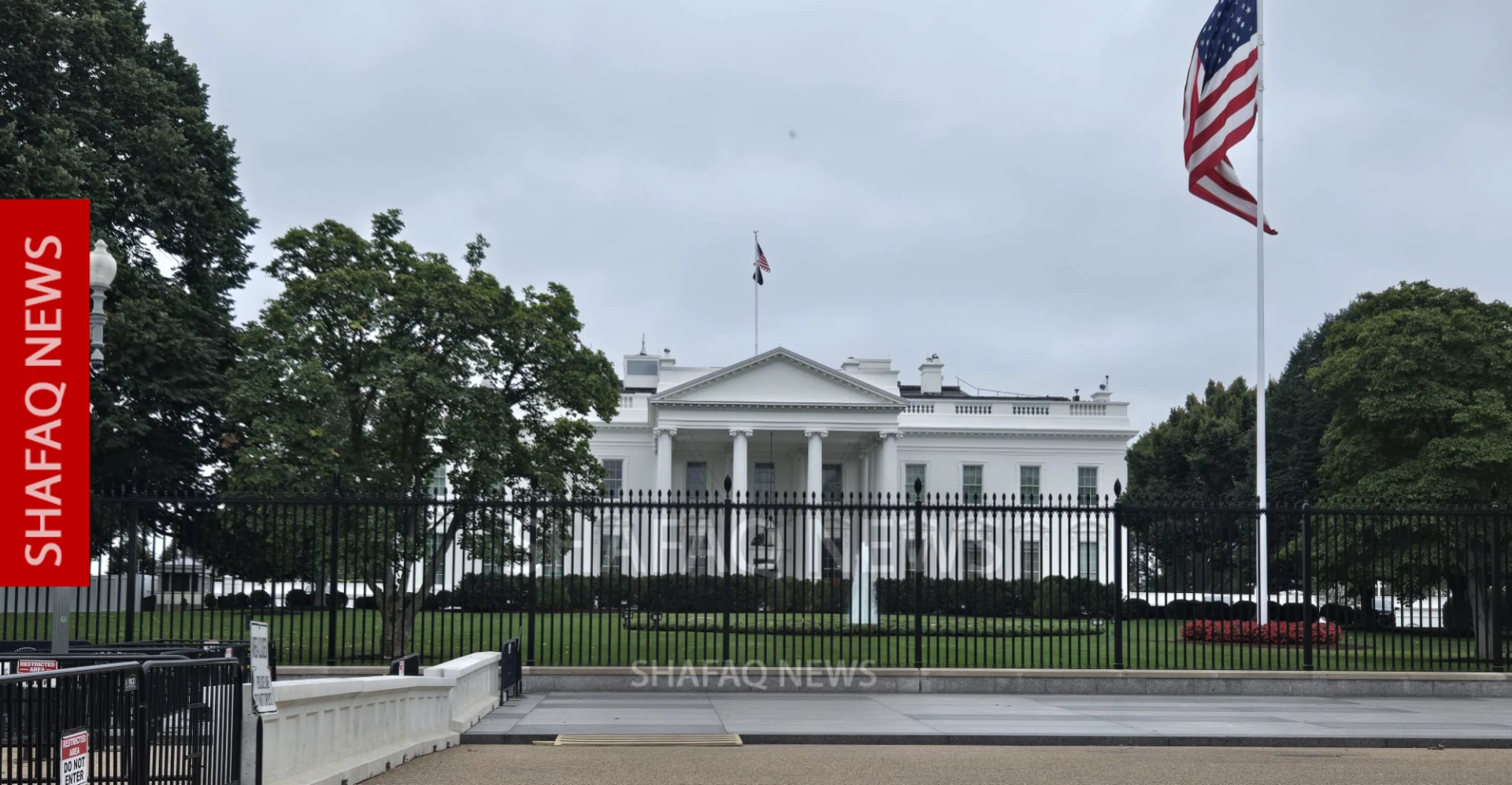
Shafaq News
Iraq’s new
prime minister, Ali Falih al-Zaidi, is preparing for an official visit to
Washington in mid-July, his first face-to-face engagement with the Trump
administration since taking office on May 14, with a bilateral agenda that
places energy investment and economic partnership at its center, while leaving
the harder issue of Iran-backed armed factions to negotiate in the margins.
In Washington
policy circles, the reception has been broadly positive, though calibrated.
Al-Zaidi is the youngest prime minister in Iraq’s modern history, a former
banker and businessman with no prior cabinet experience and no deep factional
patron inside the Coordination Framework that backed his nomination. That
profile, untested but untarnished, is precisely what makes him legible to an
administration that prizes transactional relationships over ideological
alignment.
William Lawrence,
senior fellow at the National Council on US-Arab Relations and a former US
diplomat, described Washington’s posture toward al-Zaidi as broadly positive,
driven in part by the novelty of his profile and his emergence as a consensus
figure acceptable to Iraq’s competing political blocs.
Lawrence noted
that despite the fundamental differences between al-Zaidi and Ahmad al-Sharaa,
Syria’s post-Assad leader, Washington is applying a similar playbook to both:
extend early engagement, set an informal probationary window, and measure the
relationship against outcomes rather than commitments. “It’s almost like
they’re going to wait and see,” he said.
The July visit
was organized by US Special Envoy Tom Barack and reflects an American interest
in anchoring Iraq’s new government to the bilateral relationship before
regional dynamics reassert themselves. Lawrence said that Washington had been
acutely worried during the recent Iran-Israel conflict, using Iraqi territory
to launch missiles and drones toward Saudi Arabia —an episode that exposed the
limits of Baghdad’s control over factions operating within its borders.
“That could have really caused problems in Iraq if the war had been
sustained and if Saudi Arabia had been hit more and more by projectiles coming from
Iraq, but now that the war looks like it’s ending, that’s going to help
al-Zaidi.”
What Washington
wants from the visit, in practical terms, is less a strategic declaration than
a commercial opening. Todd L. Belt, director of the Political Management
program at George Washington University’s Graduate School of Political
Management, detailed the US administration’s hierarchy of concerns: “It
seems to be a significant effort at providing stability in the area. Also,
Donald Trump is very concerned about energy and would like to have some new
deals. I think the militia groups and disarming them are also a secondary
concern, but Donald Trump’s concerns are always about business first.”
Al-Zaidi’s own
priorities align closely enough to make the visit viable, as he officially
announced he will travel to Washington, accompanied by Iraqi businesspeople,
framing the trip around investment and economic partnership. A $10 billion
Central Bank contribution to a private sector development fund is part of the
government’s program.
The prize
project on the bilateral agenda is an oil pipeline that would run from southern
Iraq to Jordan’s Aqaba Port, a route that would give Iraqi crude direct Red Sea
access and, for Washington, represents exactly the kind of infrastructure deal
the current administration finds compelling.
The energy
dimension carries an uncomfortable backstory. Since March 2025 and until now,
the Trump administration has declined to renew the sanctions waiver that had
previously exempted Baghdad from penalties for purchasing Iranian gas, a waiver
that had allowed Iran to deliver roughly 30 million cubic meters of gas daily
to Iraq, supporting nearly a third of the country’s power generation capacity.
After the waiver lapsed in March 2025, Iranian gas flows to Iraq dropped by
approximately 40 percent. Iraq now faces peak summer demand of around 40
gigawatts against production capacity of approximately 29 gigawatts, a gap that
domestic alternatives have not bridged. The new government’s program commits to
ending Iranian energy dependency through accelerated domestic gas capture, a
commitment made under structural pressure Washington helped create.
Read more: 40-GW electricity gap forces Iraq to back private generators
On that basis,
the factions file is the most politically sensitive and the most diplomatically
obscured item on the bilateral agenda. Al-Zaidi’s ministerial program commits
to consolidating all weapons under exclusive state authority but does not
dissolve the Popular Mobilization Forces (PMF-Al-Hashd al-Shaabi) —the umbrella
of predominantly Shiite armed factions with deep ties to Tehran. Political
sources told Shafaq News that Washington’s categorical rejection of any
candidate perceived as close to armed factions was the principal obstacle to
filling the Defense and Interior ministries after the May 14 confidence vote.
Those portfolios remain vacant.
Heba Abd
al-Wahhab, a Washington-based researcher specializing in Middle East affairs,
cautioned against reading American enthusiasm as confidence. The
administration, she told Shafaq News, views the al-Zaidi government with
considerable caution and is attempting a fundamental reset in the bilateral
relationship, one made urgent by what the Iran-Israel confrontation revealed
about Iraq’s inability to restrain Iran-aligned factions on its soil.
Read more: The end of a waiver: Iraq’s struggle for energy independence
“Washington
is seeking through this government to build a different foundation for the
relationship,” she said, “particularly given the complications that
emerged during the recent Iran-Israel confrontation and what it exposed about
the fragility of the Iraqi state’s capacity to restrain the Iran-backed armed
factions.”
She noted that
Washington is also fully aware that al-Zaidi emerged from a complex and
constrained political process, and that his room for maneuver is limited. The
American approach, she argued, is deliberately focused on practical results
rather than political statements.
Lawrence
described the factions file as Washington’s central preoccupation, distinct
from al-Zaidi’s own immediate priorities. “Washington’s biggest issue is
the Al-Hashd al-Shaabi…Whereas al-Zaidi’s biggest issue probably is getting the
economy flowing, this pipeline project to Jordan’s Aqaba Port and other things
to get the Iraqi economy humming with American assistance.”
Asked whether
reducing armed forces influence formed part of the broader US-Iran
understanding, Lawrence said, “It’s not explicitly included.”
“Al-Zaidi would
do well to try to calm things down within Iraq so that there’s no tit-for-tat
involving PMF. That’s sort of his job. And that will be one of the things that
he will be measured by as the Trump administration views his leadership in
Iraq, if he can get things under control vis-à-vis the militias.”
In this regard,
Abd al-Wahhab noted that the factional problem encompasses political networks,
economic interests, and institutional penetrations built inside the Iraqi state
over more than a decade. Dismantling or even constraining that architecture
cannot be accomplished by a single government in a single term, let alone in
the months between now and a White House meeting.
“The general impression [of the US] is that he
[al-Zaidi] is good, he’s a businessman, he’s transactional like Trump, and
hopefully, if things go well and he doesn’t get too close to Iran, things will
work out fine,” Lawrence concluded.
Read more: How the US pushed Iraq’s armed factions toward disarmament
Written and
edited by Shafaq News staff.