

Iran’s oil exports near zero as Persian Gulf flows recover
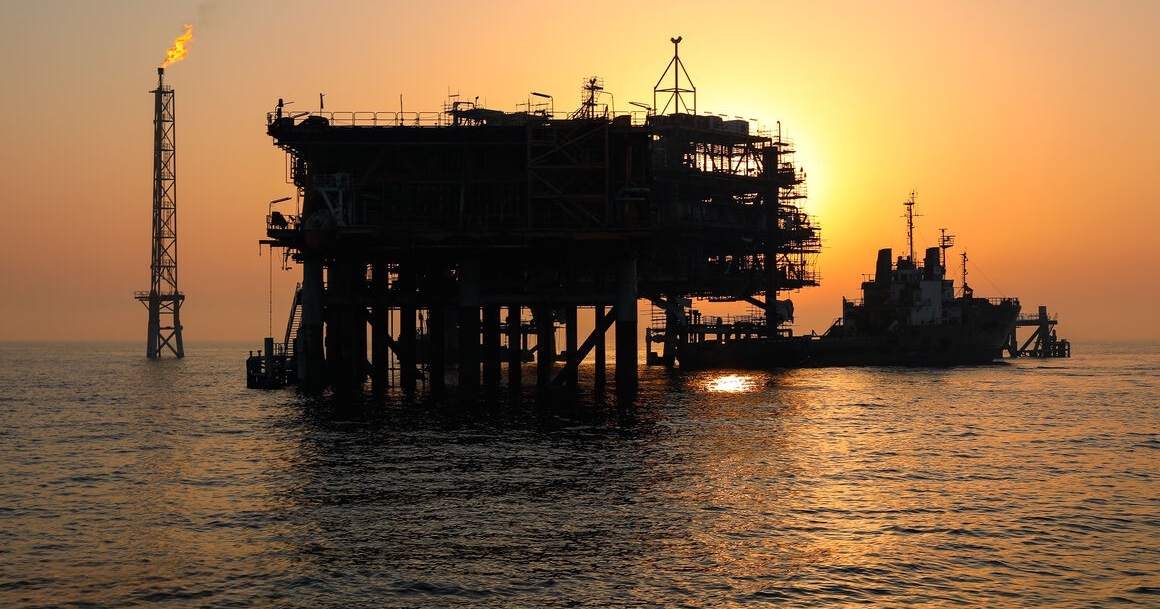
Crude and condensate flows from other Persian Gulf producers have recovered to around 70% of pre-war volumes, while Iran is struggling to move newly loaded crude, Homayoun Falakshahi, senior oil analyst at Kpler, told Iran International.
“It’s exactly the opposite scenario compared to the beginning of the war where Iran could export its oil but the neighbors couldn’t,” Falakshahi told Iran International’s English-language podcast Eye for Iran. . “And now it’s actually the contrary. Iran cannot export new oil.”
Goldman Sachs said Friday that oil flows through the Strait of Hormuz had recovered to around two-thirds of pre-war levels, according to Bloomberg, helping contain the impact of the conflict on global crude prices.
The figures point to a striking reversal in the oil war: the Strait is increasingly functioning again for Iran’s neighbors while Tehran itself struggles to get fresh crude to market.
Oil already on the water
The full impact on Iranian revenues, however, will take time to emerge because millions of barrels loaded before restrictions tightened are already outside the blockade zone.
Kpler estimates that roughly 40 million to 50 million barrels of Iranian oil remain on the water in Asia, substantially below an earlier estimate of around 80 million barrels.
Falakshahi said the revision reflects stronger-than-previously-understood discharges in China, now running at close to one million barrels per day.
At that rate, the remaining oil could take roughly 50 days to unload. Chinese buyers generally have another one to two months to pay Iranian sellers, creating a lag between the collapse in fresh exports and the loss of revenue.
If the blockade remains in place, Falakshahi estimated that within roughly three to four months Iran’s revenues from oil exports could effectively fall to zero.
China is central to that calculation. Falakshahi said it buys effectively all of Iran’s crude and condensate exports. When petroleum products and petrochemicals are included, he estimated China’s share of Iranian petroleum exports at roughly 90% to 95%.
From tankers to banks
Even as the blockade squeezes Iran’s ability to get new barrels to market, Washington is beginning to target the other end of the transaction: the foreign financial infrastructure Tehran uses to move the proceeds.
On Friday, the US Treasury Department’s Financial Crimes Enforcement Network proposed using Section 311 of the USA Patriot Act to cut Banque Misr’s UAE branches off from US correspondent banking, the first such action under Operation Economic Outcast.
Treasury said the branches processed approximately $1.8 billion between January 2024 and June 2026 for 103 companies potentially connected to Iranian shadow-banking networks.
According to Treasury, their customers included apparent front companies used by Iran’s Ministry of Defense and the Revolutionary Guards to evade US sanctions, as well as entities used to launder money on behalf of Supreme Leader Mojtaba Khamenei.
Max Meizlish, a former official with the US Treasury Department’s Office of Foreign Assets Control, said the significance of the move lies in Washington beginning to target foreign banks that make Iran’s sanctions-evasion networks possible, rather than focusing primarily on Iranian entities and front companies.
Section 311 allows Treasury to threaten a foreign bank’s access to the US financial system without immediately freezing its assets, while giving the institution and its regulators an opportunity to address the activity before restrictions take effect, he said.
“The real test now is whether this becomes a sustained campaign and whether Treasury is willing to bring the same pressure to bear on Iran’s financial enablers in Hong Kong and China,” Meizlish told Iran International.
That question is particularly important given China’s dominant role in Iran’s remaining oil trade.
Meizlish has identified China’s Bank of Kunlun as one potential target for further US action. The bank has previously faced US restrictions over dealings involving Iran, but he argued Washington could go further by imposing full blocking sanctions.
Treasury Secretary Scott Bessent had signaled that a major action against a financial institution was coming under Operation Economic Outcast.
Friday’s move suggests Washington is beginning to extend its campaign beyond Iran’s physical oil exports to the foreign financial infrastructure that allows Tehran to receive and move its money.
For global markets, the recovery in other Persian Gulf exports is helping blunt the energy shock. For Tehran, the trajectory is moving in the opposite direction: fewer opportunities to export fresh oil, a diminishing stockpile already outside the blockade and growing pressure on the financial networks through which it gets paid.
The blockade is squeezing Iran’s ability to sell its next barrel. Operation Economic Outcast is increasingly aimed at making it harder to collect the money for the barrels that got out.