
Iran, Oman agree on Hormuz Strait’s new entry, exit routes
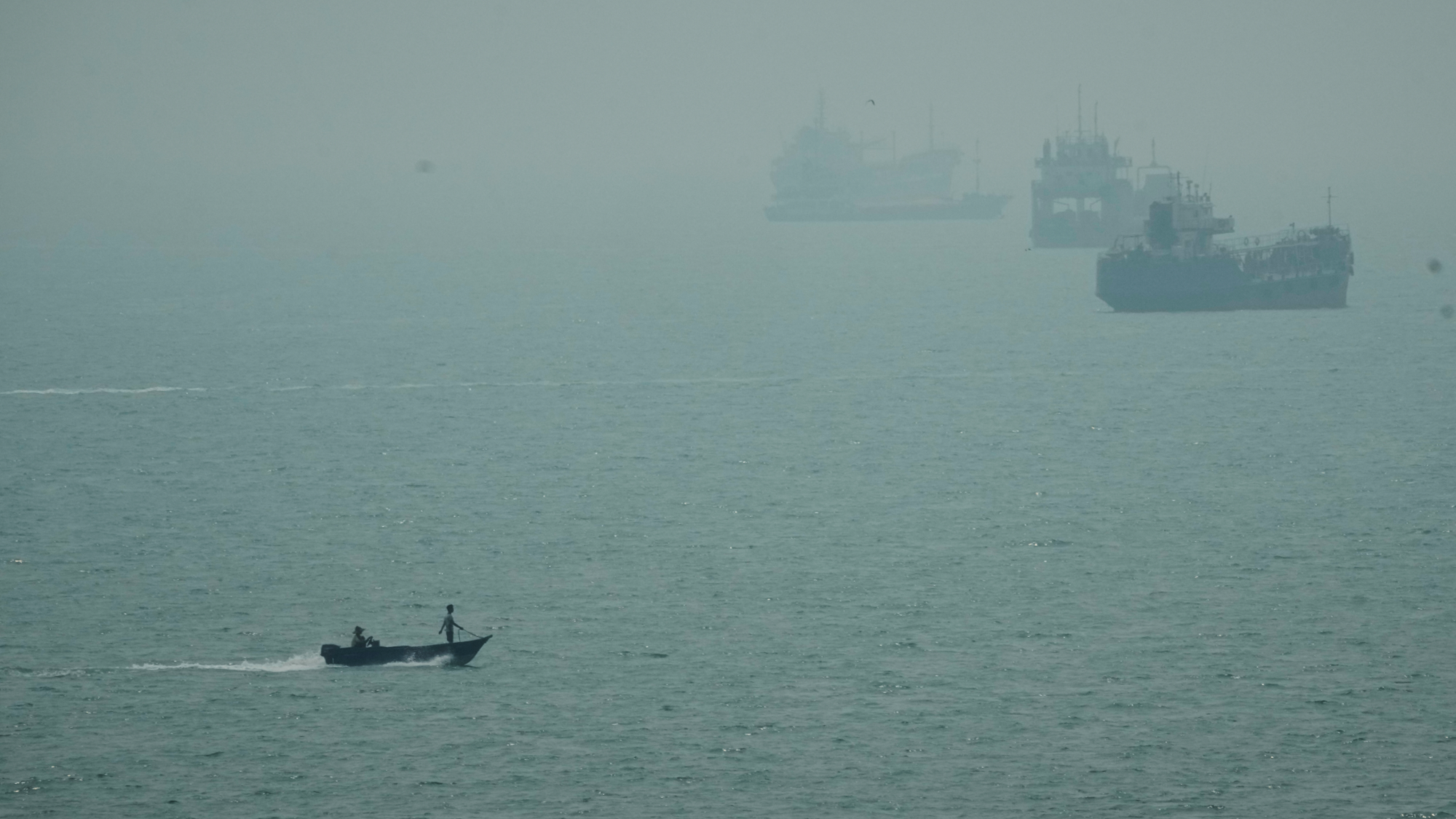
TEHRAN/DOHA/MANAMA/BAGHDAD – Iran and Oman have agreed on the details of new entry and exit routes for the Strait of Hormuz and will brief Gulf countries on the outcome of their consultations at a regional meeting in Muscat on Monday, Iranian officials said on Saturday.
Citing a source close to Iran’s negotiating team, the semi-official Tasnim news agency said that the understanding was reached after “intensive technical and diplomatic talks between Iran and Oman, which culminated in a final agreement in late August.”
Under the understanding, the Gulf’s entry route “lies entirely within Iran’s territorial waters,” and a portion of the exit route also falls “within Iranian territorial waters,” the source said.
The source stressed that the route would operate under Iranian arrangements and the waterway’s southern route will be closed once the new system becomes operational, noting that the United States had insisted that the southern route must be opened.
ALSO READ: Pezeshkian: Iranians won’t surrender to US economic pressure
“The understanding in no way means that the Strait of Hormuz will be opened,” the source said, adding that Iran has seven conditions for reopening the waterway and has conveyed them to the United States.
The source underlined that the waterway will remain closed unless those conditions are implemented, with reopening depending entirely on the US behavior.
Iran’s Foreign Ministry spokesman Esmaeil Baghaei announced on Friday that Gulf littoral states’ foreign ministers are scheduled to meet in Oman on Monday to exchange views on regional issues, including the Iran-Oman talks on designating safe routes in the Strait of Hormuz.
Speaking to Al Jazeera on Saturday, Baghaei said the gathering would “hopefully” be attended by foreign ministers from Gulf states as well as Iran and Iraq.
“As part of the agenda, we are going to brief the delegations about the results of the Iran and Oman consultations regarding the safe passage of ships through the Strait of Hormuz,” he said, adding that the two countries had conducted the consultations as “the two coastal states of the Strait of Hormuz.”
ALSO READ: UN Security Council divided over reimposing sanctions on Iran
Late last month, Iran and Oman said in a joint statement that they had exchanged views on a proposed phased framework that includes establishing a temporary joint shipping corridor in the strait.
Following US-Israeli strikes on Iran on Feb 28, Tehran restricted passage through the strategic waterway, while US forces imposed a naval blockade targeting vessels traveling to or from Iranian ports.
The Strait of Hormuz, linking the Gulf with the Arabian Sea, is one of the world’s most important routes for oil and gas shipments. Oman and Iran sit on opposite sides of the strait and have maintained consultations over maritime security and navigation in the strategic waterway.
Iran’s president says to sign Hormuz agreement in Muscat
Also on Saturday, Iran’s President Masoud Pezeshkian has said his country and Oman will sign an agreement on the designation of a joint shipping route in the Strait of Hormuz in Muscat on Monday, while Bahrain said on Saturday that it will not attend the meeting.
The Iranian Students’ News Agency reported Saturday that Pezeshkian made the remarks in an interview with the Indian television channel India Today during his visit to New Delhi for the 18th BRICS Summit.

He said the foreign ministers of regional Arab states and Iran will meet in Muscat on Monday, and the agreement on the joint route will be signed in their presence and announced to the International Maritime Organization.
Meanwhile, Bahrain’s Foreign Ministry said on Saturday that the kingdom would not participate in the proposed ministerial meeting on the situation in the Strait of Hormuz.
According to the Bahrain News Agency, the ministry affirmed that Bahrain would not participate in any collective meeting involving Iran until diplomatic relations between the two countries are restored.
Bahrain cut off relations with Iran in January 2016.
ALSO READ: Iran to sanction ships entering ‘restricted zone’ without coordination
It said it had already conveyed the position to Oman through official channels, adding that it did not diminish Bahrain’s appreciation of Omani efforts or its commitment to dialogue as a means of settling disputes.
The ministry said dialogue could not be based on overlooking facts, noting that Bahrain had been subjected to attacks targeting its infrastructure and civilian sites. It also said the targeting of Saudi Arabia’s East-West oil pipeline showed that attacks on civilian and economic facilities remained a present threat.
Late last month, Iran and Oman said in a joint statement that they had exchanged views on a proposed phased framework that includes establishing a temporary joint shipping corridor in the Strait of Hormuz.
Following US-Israeli strikes on Iran on Feb 28, Tehran restricted passage through the strategic waterway, while US forces imposed a naval blockade targeting vessels traveling to or from Iranian ports.
Iraq okays Iran’s request for joint probe into drone launch sites
In Baghdad, Ali al-Zaidi, Iraqi prime minister and commander-in-chief of the armed forces, approved Iran’s request to conduct a joint investigation into finding drone launch platforms near the Iraq-Iran border, Sabah al-Numan, spokesman for the commander-in-chief of the Iraqi forces, said Saturday.
The decision came as Iraqi authorities intensified security measures following confirmation that recent drone attacks targeting Saudi Arabia were launched from a site within Iraq’s southern province of Maysan.
Earlier on Saturday, al-Zaidi dismissed the Maysan Operations Commander and Maysan Police Commander, and ordered the formation of a special investigative council to probe the issue, according to separate statements by al-Numan.

Meanwhile, Iraqi security forces have also initiated administrative and security reorganization operations at several border crossings that necessitate their closure to investigate security breaches, said the Security Media Cell, affiliated with the Iraqi Joint Operations Command, in a statement.
The Saudi Foreign Ministry said Friday that its East-West Pipeline was attacked by several drones launched from Iraq, causing injuries and damage.
The ministry noted that at the request of the Iraqi prime minister, the kingdom had refrained from responding at this stage.
Saudi Arabia has invested heavily in the East-West Pipeline, which carries crude oil from its eastern fields to the Red Sea port of Yanbu, bypassing the Strait of Hormuz.