

Iran and Oman hold first Hormuz talks as US-Iran deal stays on edge
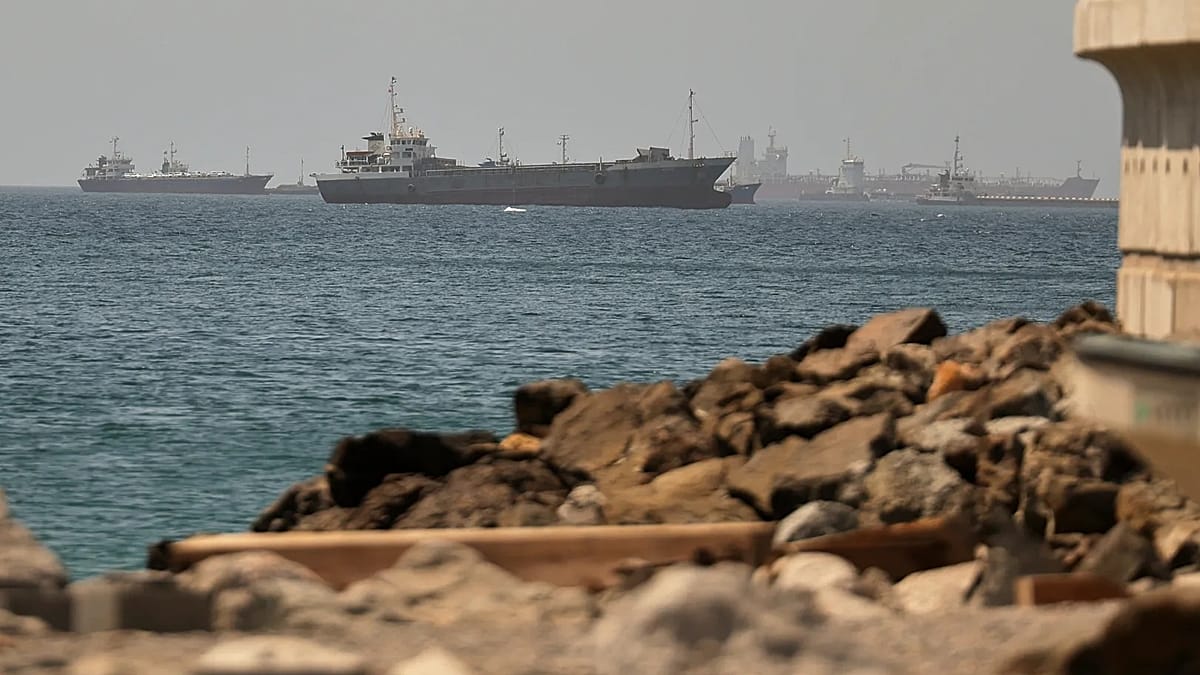
Iran said Monday it had held its first meeting with Oman on managing the Strait of Hormuz since it signed a framework deal with the US earlier this month.
ADVERTISEMENT

ADVERTISEMENT
The announcement followed multiple US media reports that Washington had agreed with Tehran to halt attacks after an exchange of strikes strained the deal, and that the two sides planned to renew talks in Qatar on Tuesday.
Iran reacted by shooting down down the claim, sparking US President Donald Trump to say the meeting will go ahead, contradicting Tehran’s words.
Deputy Foreign Minister Kazem Gharibabadi first said on Monday that while Iran’s separate consultations with Qatar “are ongoing as usual,” reports “by some media outlets” on technical talks in Doha “are not confirmed.”
The first round of technical talks will take place only when all conditions are met, and the date and venue is agreed upon by all sides, Gharibabadi added.
“Consultations on this matter are continuing through intermediary countries,” he concluded.
Trump responded within hours on his Truth Social platform, stating that “Iran has requested a meeting” and that “it will take place tomorrow in Doha” in all capital letters.
Deal under stress test
A series of exchanges of fire brought into question the framework agreement signed on 17 June by US President Donald Trump while dining with French President Emmanuel Macron at the Palace of Versailles, and by Iranian President Masoud Pezeshkian in Tehran.
The deal was supposed to open the door to a final settlement between the two to end the war that has caused chaos across the Middle East and snarled the flow of oil and gas shipments through the vital waterway.
Under the 60-day framework, the two sides committed to negotiate a final agreement covering Iran’s nuclear programme, the lifting of sanctions, and the long-term status of the Strait of Hormuz.
Yet the Strait of Hormuz remains the decisive leverage in Iran’s hands, while both sides continue to offer different interpretations of the framework deal, exploiting its vague language and apparent loopholes.
Tehran effectively blockaded Hormuz on 28 February, the day the US and Israel launched their airstrikes across Iran in the opening salvo of the war.
The closure sent energy prices sharply higher and disrupted global supply chains for more than four months, and the blockade remains a key sticking point in negotiations with the US.
“During a trip to Muscat, the first meeting of the Joint Hormuz Committee was held,” said Iranian Deputy Foreign Minister Kazem Gharibabadi on X. “While reviewing the current issues related to the strait, we exchanged views on the future management.”
Tehran issued further warnings on Sunday that any attempt by ships to bypass its preferred route through the Strait of Hormuz would “increase tensions” in the Middle East.
The strait through which a fifth of the world’s oil and liquefied natural gas passed prior to the war comprises Omani and Iranian territorial waters, but under customary international law neither can generally block passage or levy tolls.
Tehran’s continued exercise of control over the strait has sparked repeated flare-ups, the latest of which came early Sunday, when US Central Command (CENTCOM) said it had attacked 10 Iranian military targets over “continued Iranian aggression against commercial shipping”.
The immediate trigger was an Iranian drone attack on Saturday on the M/T Kiku, a Panama-flagged crude oil tanker that was heading to Fujairah in the UAE.
Iran said it retaliated with strikes against US bases in Kuwait and Bahrain, targeting the US Fifth Fleet headquarters at Salman Port in Bahrain and the Ali Al Salem Air Base in Kuwait. Both Kuwait and Bahrain denounced the Iranian attacks.
Tehran unwilling to budge
Tehran insists ships transiting the strait pass through a corridor near its own shores, although this week dozens of vessels have travelled along the opposite side of the waterway close to the Omani coast.
On Saturday, the US Navy’s Joint Maritime Information Center announced a formal widened shipping route near the Omani coast, in a direct challenge to Iran’s assertion of sole authority over navigation.
“Any attempt to adopt new or separate arrangements compared to what is under way by the Islamic Republic of Iran, will only lead to more complicated situations and delays in the reopening of the Strait of Hormuz, and will increase the tensions,” Iranian Foreign Minister Abbas Araghchi said.
The published text of the memorandum of understanding says Iran will define the future administration of the strait in dialogue with Oman and the other Gulf States, but “in line” with international law.
Iran’s IRGC said it was taking measures to control traffic in the strait and that vessels violating them would be dealt with more firmly than before.
Mohammad Mokhber, adviser to Iran’s Ayatollah Mojtaba Khamenei, wrote on X that as long as Tehran managed the strait, Washington’s “hegemonic dreams in the region will not be realised”.
US President Donald Trump repeated his warnings of total military action if Iranian attacks on shipping resume, stating that Iran would “no longer exist” if the US is “forced” to restart the war.
Trump’s warning was issued on Truth Social on Saturday, on the same day CENTCOM struck Iranian military targets in response to the Kiku attack.