

Inside ARWA’s rapid United States expansion
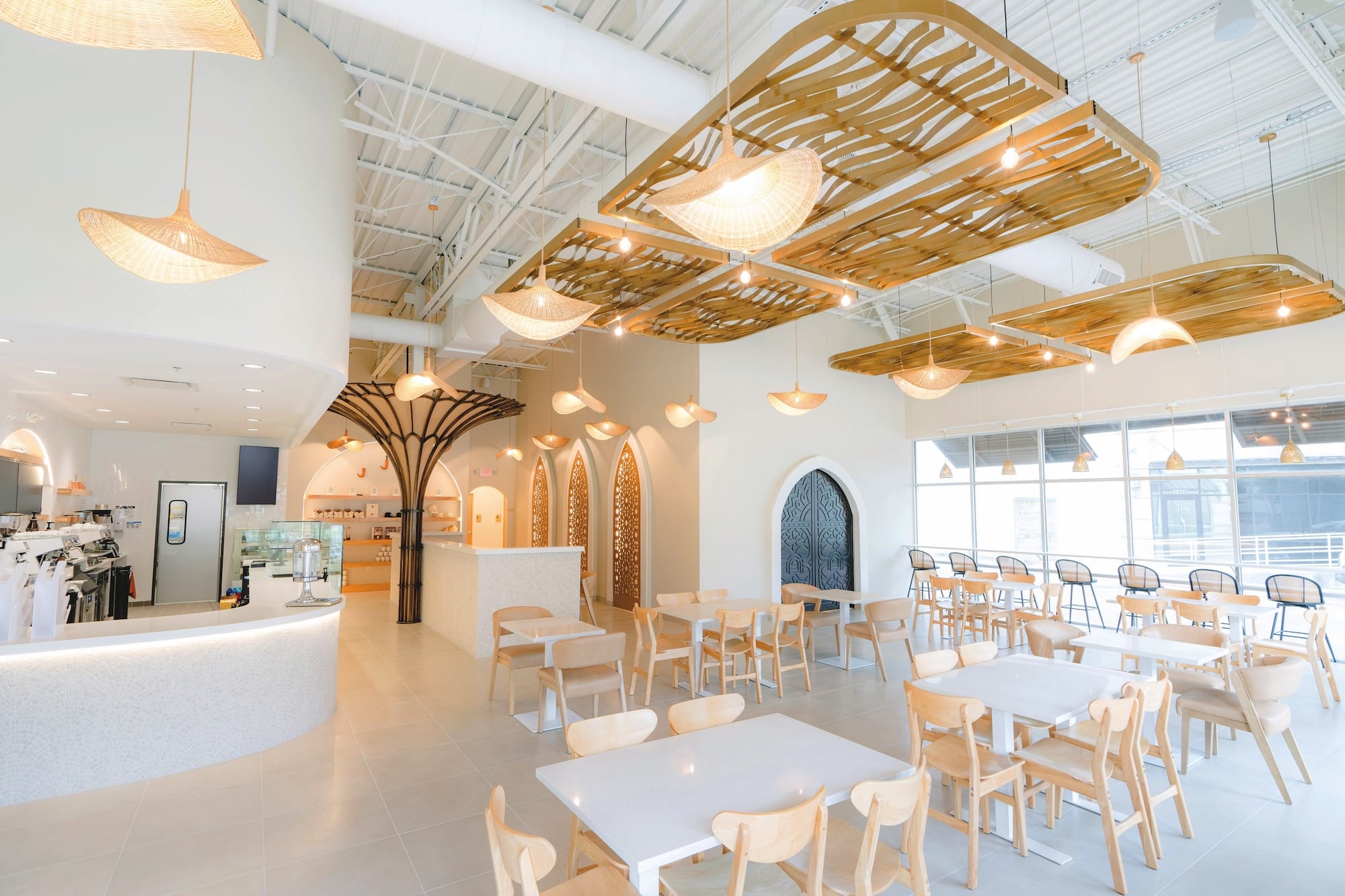
How ARWA transformed from a single café in Texas into one of the fastest-growing coffeehouses in the United States.
There’s no clearer sign that a business is onto a winning idea than a line out of the door and around the block on its first day of operation.
That’s the exact situation ARWA Co-Founder Yazan Soofi was met with on a Wednesday morning in December 2022, when the Yemeni café brand’s first location opened in Richardson, Texas.
Now, almost half a decade later, there are 17 ARWA locations across the United States (US), and that number is only set to climb.
“We have another 17 locations set to open in the next few months, and we expect to be at more than 30 by December,” says Soofi.
“If growth continues at this rate, we’ll probably double again by summer. It’s been quite a journey and a blessing.”
A taste of Yemen
The popularity of Yemeni coffee in the US is booming. With customers continuing to seek new experiences, whether through new drinks, different environments, or opportunities to engage with cultures and traditions outside their own, it’s a trend being seen around the world.
Soofi believes this desire for discovery has helped fuel interest in Yemeni coffee and culture.
“The specialty coffee culture in the US has changed dramatically over the past few years. It used to be enough to lean on roast levels and sourcing great beans, but now it’s about the overall experience. That’s what people are seeking,” he says.
“Our customer base is extremely diverse and we’re seeing everyone wants to try something new. You still need to roast consistently and have good equipment, but it’s about more than that now.”
ARWA is a project co-created by Soofi alongside his wife Susan, sister Nora, and brother-in-law Faris. While none of them had a significant background in hospitality coming into the project – Soofi, for example, was an engineer – the business started with a goal of sharing a piece of their culture with everyone.
“When we first opened, we were only planning to have one coffee shop. We wanted a space to share with our friends, our neighbours, and our community,” he says.
“I’d have friends ask where Yemen was, others would only know it from an episode of Friends, in which Chandler flies to Yemen. For us, the thing that brings people closer together is sharing our differences, and that’s what we wanted: to share a little bit of Yemen.”
Situated at the southwestern edge of the Arabian Peninsula, bordering Saudi Arabia and Oman, Yemen is known as one of the birthplaces of coffee.
While Ethiopia, which is just across the Red Sea, is heralded as the birthplace of Arabica, Yemeni culture was likely the first to actually cultivate the plant.
Some evidence of cultivation in the region is estimated to date back to the 12th century, with the earliest verifiable documentation of coffee being consumed as a drink coming from Sufi monasteries in the 15th century.
While the scale of coffee production in regions such as South America and Southeast Asia, along with conflicts in the Middle East, has restricted the volume at which Yemeni coffee is produced, its influence on global coffee culture remains undeniable.
Soofi says celebrating and sharing that history is at the heart of ARWA.
“Yemen’s rich coffee heritage is the foundation of everything we do. We’re known for the first cultivation of coffee, for coffee being traded to the rest of the world, and for some of the first cups of coffee ever brewed,” he says.
“There’s always that debate between Ethiopia and Yemen, but we really wanted to lean into this rich history of coffee. It’s our responsibility to honour that history.”
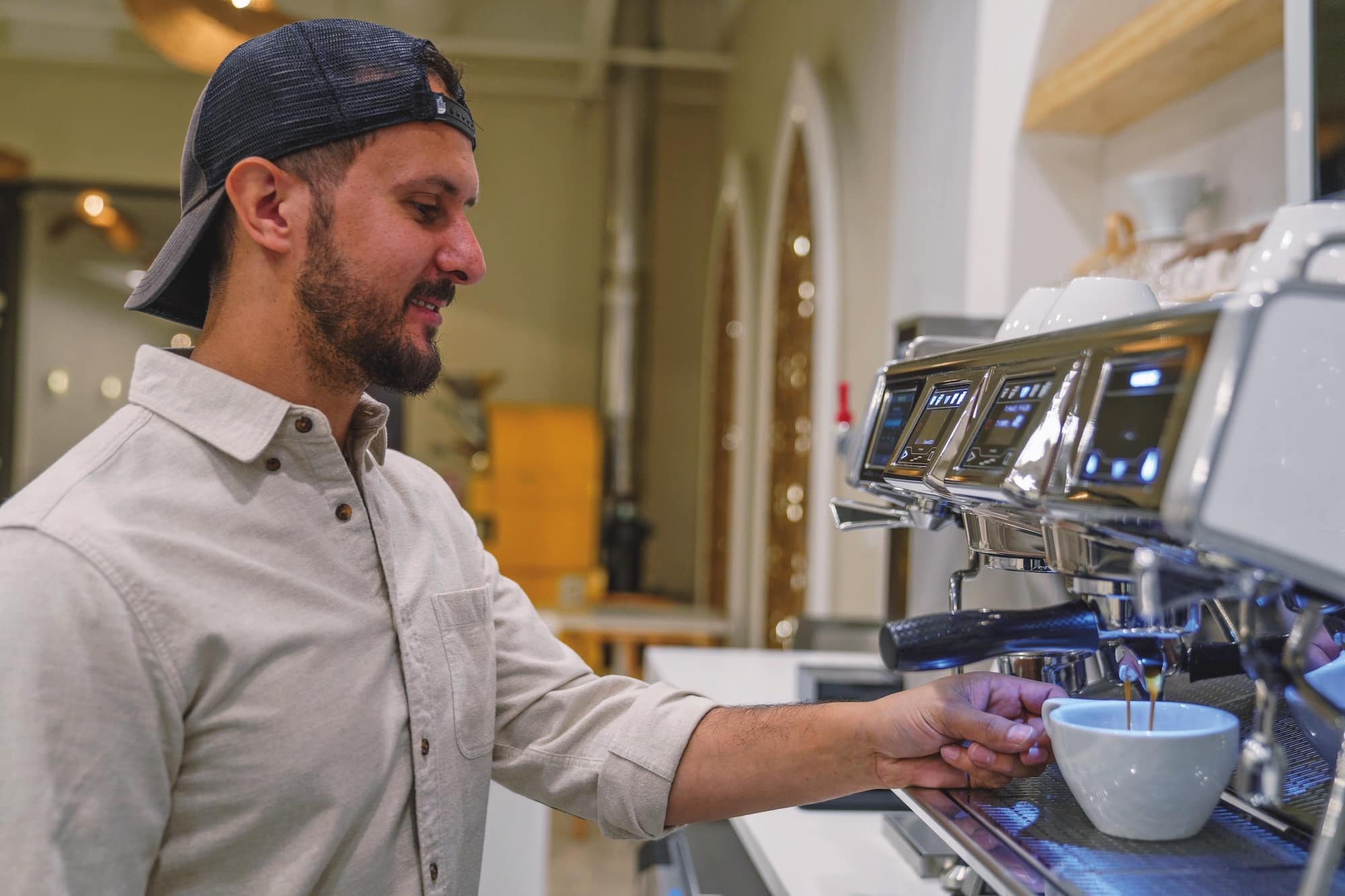
Image: UNIC.
Building for scale
When Soofi reflects on the journey he and his family have been on with ARWA, and the journey they still have ahead of them, he credits consistency as a key factor behind the rapid rise.
“On our first day, there were four of us working behind the bar. We opened on a Wednesday, and the line was wrapping around the door. There were no Yemeni or Middle Eastern coffee shops in the Dallas area at that time,” he reflects.
“We quickly realised we had a good problem. We started hiring rapidly, our hours changed from what we’d originally planned, and we understood we needed to open much later, until 1am or 2am at some locations.”
From the opening day, ARWA has used UNIC Stella Epic machines – from that first location in Richardson, through to California, Illinois, Maine, and everywhere in between.
Today, the brand’s venues typically operate either a single three-group Stella Epic or two two-group machines, depending on demand, while the original machine remains in service in Richardson.
“From day one, we’ve worked with UNIC. We cared deeply about quality, so we did a lot of research – not just on espresso machines, but on our reverse osmosis systems and batch brewers,” says Soofi. “UNIC stood out for consistency and reliability. I wanted a company that prioritised precision, reliability, and a commitment to craftsmanship.
“I wanted to set a dose and know it would be the same every single time. The volumetric options and control let us dial in each coffee. Every bean is different; our beans are very dense and require a level of precision in how you pull the shot and how much volume you extract.
“UNIC enabled us to play with that until we got the taste exactly where we wanted it.”
Maintaining that consistency across a rapidly expanding footprint is one of the reasons ARWA has continued to rely on the same espresso machine platform as it grows.
“It’s extremely important that a customer has essentially the same coffee experience, whether they walk into our original location or a brand new one that’s been open for just a few weeks,” Soofi continues.
“Great coffee starts with the beans but delivering that quality over and over again comes down to the reliability of the equipment.”
The Stella Epic is well suited to ARWA’s demands, with the pursuit of consistency also influencing the decision to use the machine.
Its multi-boiler architecture and volumetric control have been designed to help staff maintain that consistency, even while the business expands.
“You can train your staff very well, but at the end of the day, it’s the machine that’s pulling the shot every time. We wanted to make sure no matter which location a customer visits, they can taste the same cup of coffee,” Soofi continues.
“If someone goes to one location and the coffee tastes different at another, they lose trust in you and in your brand.”
ARWA’s reality is different now than it was on day one. Over these past few years, it’s grown from an unproven family passion project to a scalable and rapidly growing franchise.
Soofi says having collaborators such as UNIC on the journey with them since the beginning has been critical to this growth.
“Growth at this scale is all about having the right partners. We’re opening three to four locations every month, and it takes time for equipment to arrive,” he says. “Working with UNIC gives us confidence. We usually share our plans and timelines early: which locations we’re opening and when. They connect us with the right technicians in each area, and we make sure equipment is in place so there are no hiccups as we grow.
“We bring UNIC into the planning as soon as a new project is onboarded. We’re talking about which equipment, which region, how many machines. That direct communication is crucial. It gives us confidence that we can continue to expand while maintaining our standards.”
That relationship with UNIC has grown so much over the journey that Soofi is hesitant to even call the French machine manufacturer a partner, and would rather refer to it as part of the wider ARWA family.
“If you’re looking to grow, you need great partners. That’s been extremely important to us, from sourcing, to consistency, to equipment, to construction. All these relationships, from our first coffee shop to wherever our scale eventually ends up, have become like family,” he says.
“Everyone who has been part of our process is a phone call or text away. Whenever they’re in town, or I’m in their city, we meet. We feel like we’re growing our family, and that’s how we see all our partnerships.
“The family is growing significantly, and we’re excited to keep building it.”
Finding the balance
In the highly competitive US market, success often depends on balancing familiarity with a point of difference. For ARWA, that balance comes from introducing customers to traditional Yemeni beverages and culture without alienating those seeking a more mainstream experience.
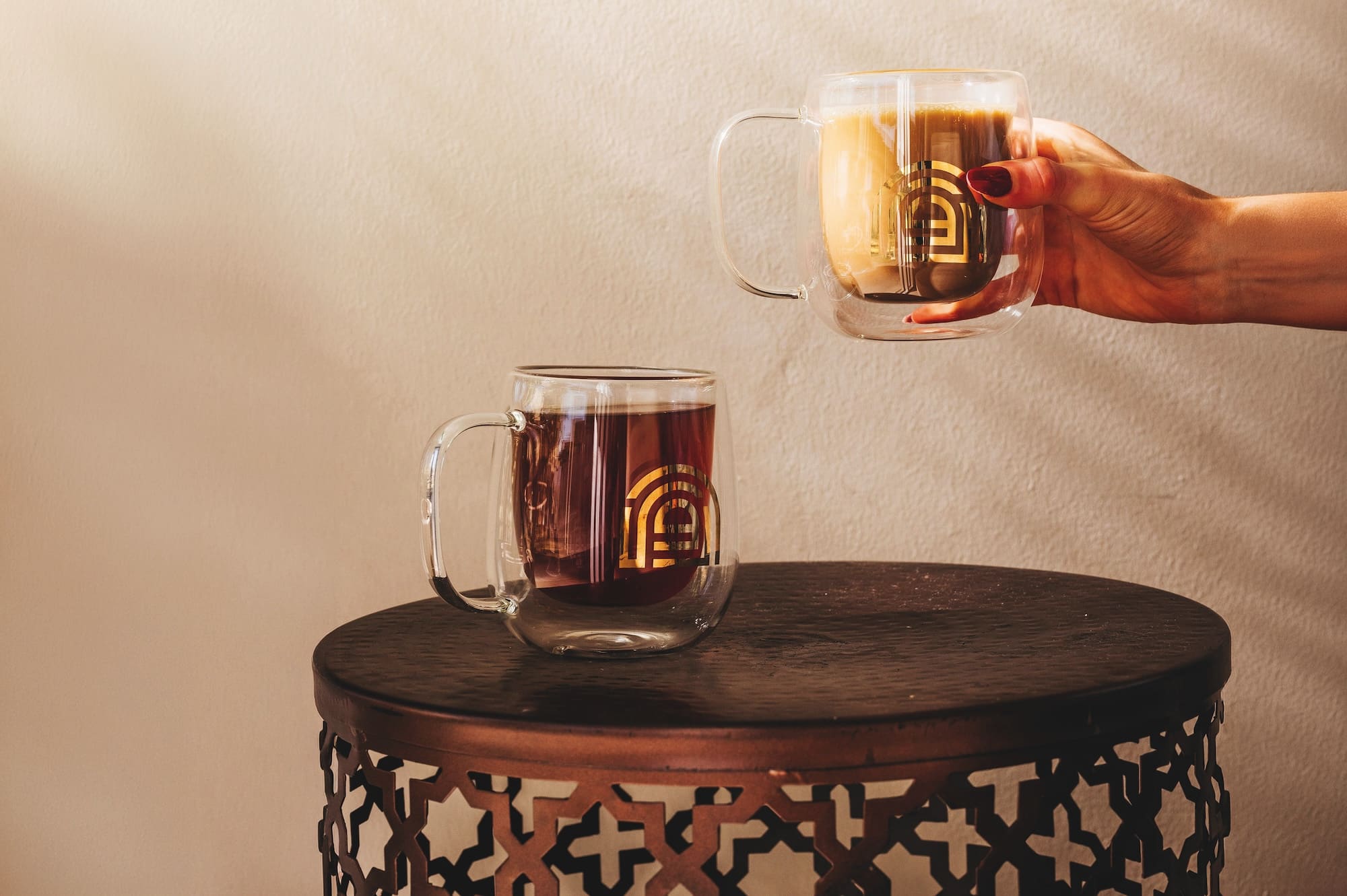
“We have items on our menu that you would only find in Yemen: drinks that use the coffee husks themselves, spices that are infused, and the traditional processing methods we still use in Yemen,” he says.
“From traditional brewing to modern service, we try to highlight every single part through our menu. You can get anything you’d expect in a specialty coffee shop, but you can also experience a whole different world.”
The menu features everything from more typical modern café fare such as americanos and matcha, but also offers traditional Yemeni beverages.
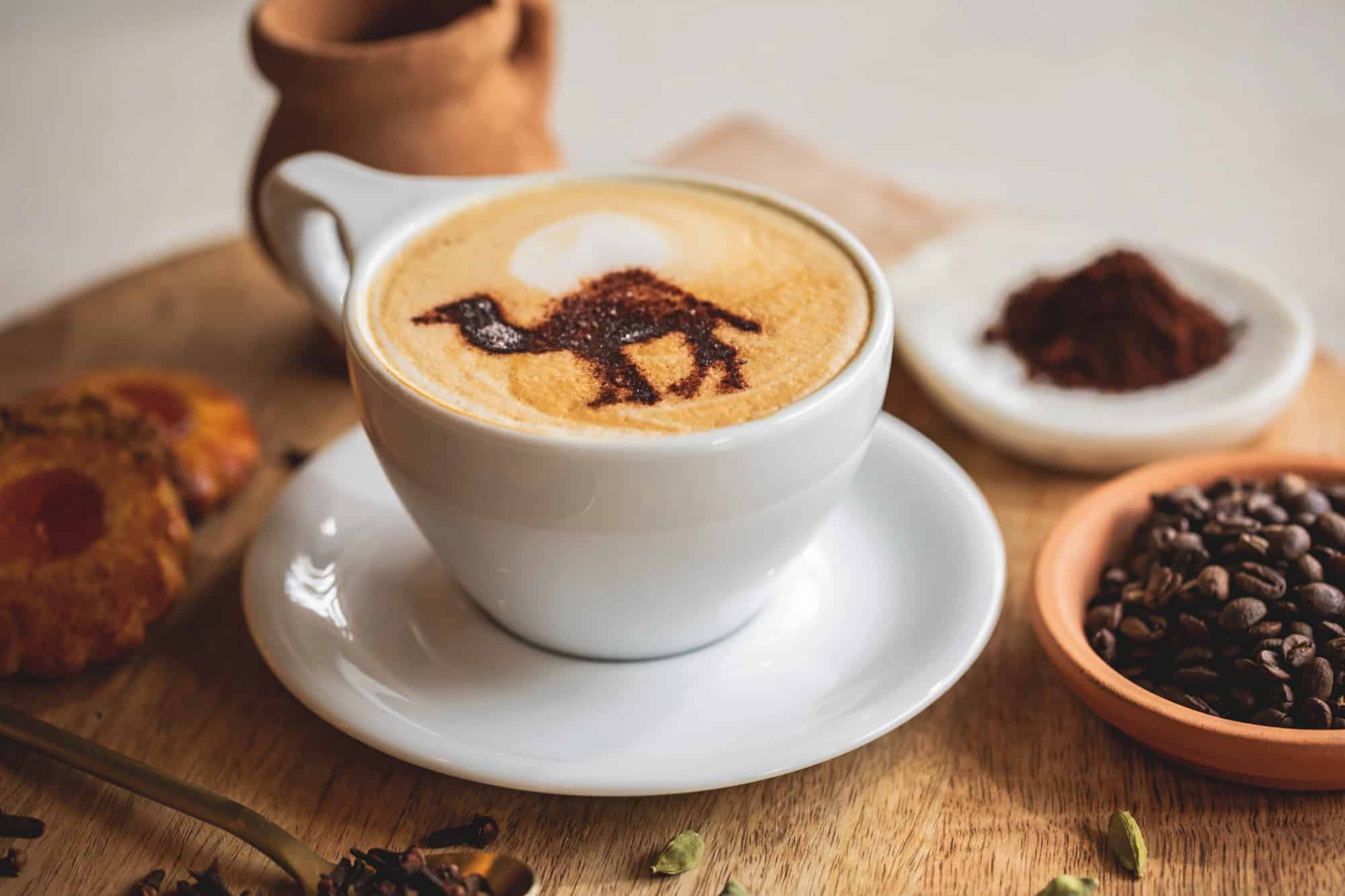
Among these are two favourites, according to Soofi. Qishr, which is made using spiced coffee husks and ginger – much like a cascara – and mufawar, which is made with coffee, milk, cardamom, cloves, and other ground spices.
“When you come into our space, we’ll often offer samples of our traditional items,” says Soofi. “Our customers come from right across the coffee spectrum: some are experts, some are just coming in for matcha.
“We want to provide an experience for everyone. Those who are into coffee will usually come in for a pourover or an espresso.
“For me, the pourover is what highlights Yemeni coffee in the way most coffee shops can relate to. It really showcases the flavour of the beans. You can taste dried fruit notes, chocolate, and spicy flavours.”
From there, ARWA introduces them to drinks such as the qishr or mufawar.
“We have people who are just coming for drip coffee or an americano, and we want to provide consistent quality for everything you’d find in a traditional specialty coffee shop,” Soofi continues.
“Then we use those classics as a gateway. There are times when people will come in for their typical everyday coffee, and by the third or fourth visit, they’re ready to try something different. That’s when we step in with samples of our traditional items so they can experience something new.”
For more information, visit unic-espresso.com
This article was first published in the September/October 2026 edition of Global Coffee Report. Read more here.