

Indonesia hails Gambia as gateway to West African market
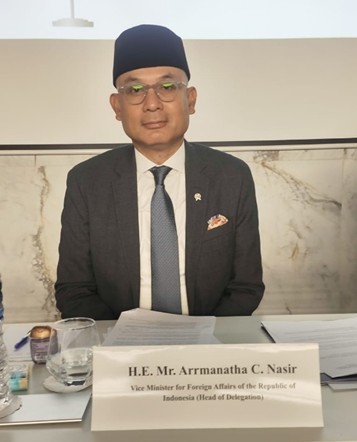
He made the remarks on Wednesday, 1 July 2026, during day two of the second Indonesia–Gambia Joint Commission for Bilateral Cooperation (JCBC), held at the African Princess Hotel in Banjul.
The ministerial session featured the presentation of the day‑one senior officials’ report, adoption of the agreed minutes, a video showcase of The Gambia’s development transformation, and the official relaunch of the Agricultural Rural Farmers Training Centre (ARFTC) project. The event also included the handing over of a commemorative plaque from the Indonesian Vice Minister to The Gambia’s Minister for Foreign Affairs, culminating in the signing of a Joint Communiqué and a Memorandum of Understanding on the General Framework Agreement (GFA).
Speaking at the meeting, Mr Nasir said: “While our bilateral trade remains modest in volume, we view The Gambia not only as a valued bilateral partner, but also as an important gateway to the wider West African market through ECOWAS.”
He emphasised that Indonesia counts on The Gambia’s support for the Indonesia–ECOWAS Preferential Trade Agreement (PTA), which would enable both countries to harness opportunities beyond bilateral trade.
Highlighting agriculture, Mr Nasir noted that the ARFTC in Jenoi, established in 1998, has trained farmers from The Gambia, Senegal, Guinea, and Guinea‑Bissau. Following its revitalisation, he confirmed that the centre has resumed full operations.
“At a time when food security, climate change, and supply chain disruptions have become global challenges, strengthening agricultural resilience is no longer simply a national priority, it is a regional imperative,” he said.
He added that ARFTC’s new phase presents considerable potential to strengthen its role as a regional centre of excellence for agricultural capacity‑building. Indonesia, he stressed, is optimistic that a stronger ARFTC will not only deepen bilateral agricultural cooperation but also contribute to regional food security and sustainable development across West Africa.
Mr Nasir further underlined Indonesia’s commitment to investing in people as the most sustainable form of bilateral cooperation. He invited The Gambia to strengthen collaboration between their Ministries of Foreign Affairs, including closer cooperation in diplomatic training, institutional capacity‑building, and regular exchanges.
Recalling past achievements, he noted that between 2022 and 2025, 28 Gambian scholars studied in Indonesia through the KNB Scholarship, Darmasiswa Programme, and the Indonesian Arts and Culture Scholarship (BSBI).
Credit: Source link