

In Morocco, 1,000 mothers and sisters join forces to speak about their loved ones’ disappearances
For nearly a decade, Moroccan mothers and sisters of missing persons have been running an association to make their voices heard in a country where migration is often criminalized. Over the years, their group has brought together nearly a thousand relatives of those who went missing while attempting to reach Europe across various border zones — from the Balkans to the Atlantic and the Mediterranean. InfoMigrants met five women in Rabat who refuse to give up the fight.
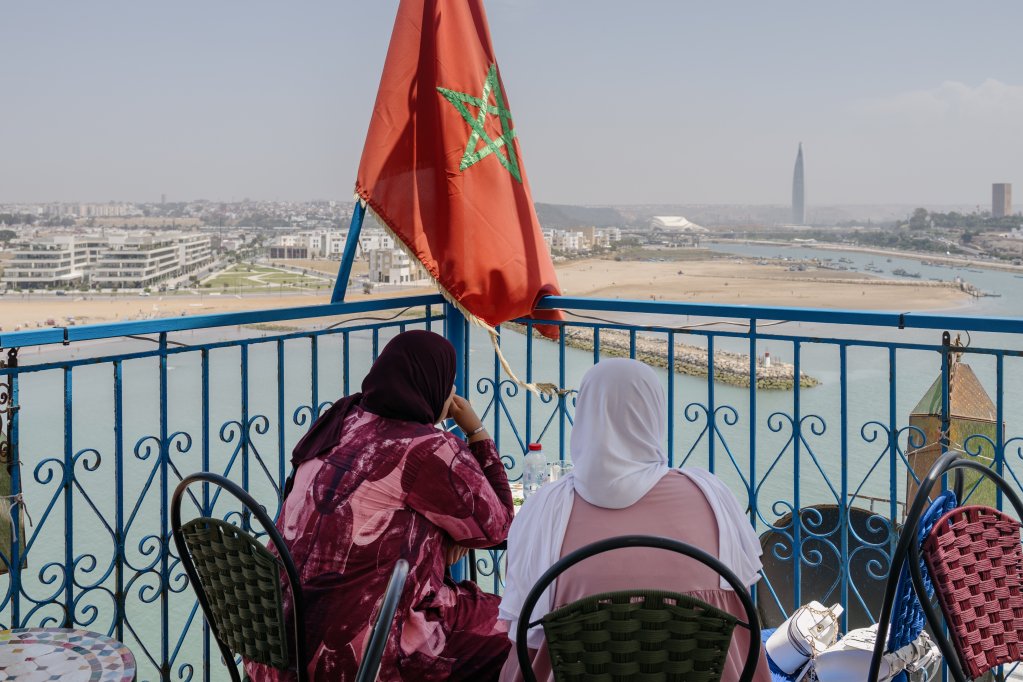
Under the gaze of locals and foreign tourists sitting at café terraces, fishing boats drift slowly through the port of Rabat. Two fine-sand beaches where teenagers run toward the water flank the river mouth, which is overlooked by the Kasbah of the Udayas, the resting place of the Moroccan capital. A little girl wearing pink butterfly wings on her back hops from rock to rock. A couple stands tall and motionless, gazing toward the horizon. At the very end of their line of sight, at the far end of the Bouregreg River estuary, lies the Atlantic.
“It was from here — starting from this river — that my brother left the country, heading out toward the ocean,” Hafida Labiad whispers, dark circles shadowing her eyes. Her calm face holds a hope — or a torment — that cannot be silenced: “There are rumors that he and his fellow travelers might have been picked up by Spanish and Portuguese rescue teams.” That was five years ago. Seventeen other people disappeared on the same boat.
Makeshift boats sometimes attempt to set sail from the coastal areas around Rabat, despite surveillance and regular interceptions by Moroccan authorities. Seventy thousand attempts were intercepted across Morocco in 2025, according to the authorities.
After her brother’s disappearance, Hafida Labiad co-founded the collective of Moroccan families of the missing alongside Hassan Ammari. He chairs the Moroccan Association for Aid to Migrants in Vulnerable Situations (AMSV) — established in 2017 and based in Oujda — which now brings together the families of the missing whom Hafida has gathered over the years.
986 families brought together by the association
“To avoid facing the situation alone, the association brought us together so we could talk about the disappearance of our loved ones,” Fatima Al-Kazar, who is wearing a blue floral top, explains. Her son, Ashraf Charabi, disappeared five years ago in Algeria along with three other people.
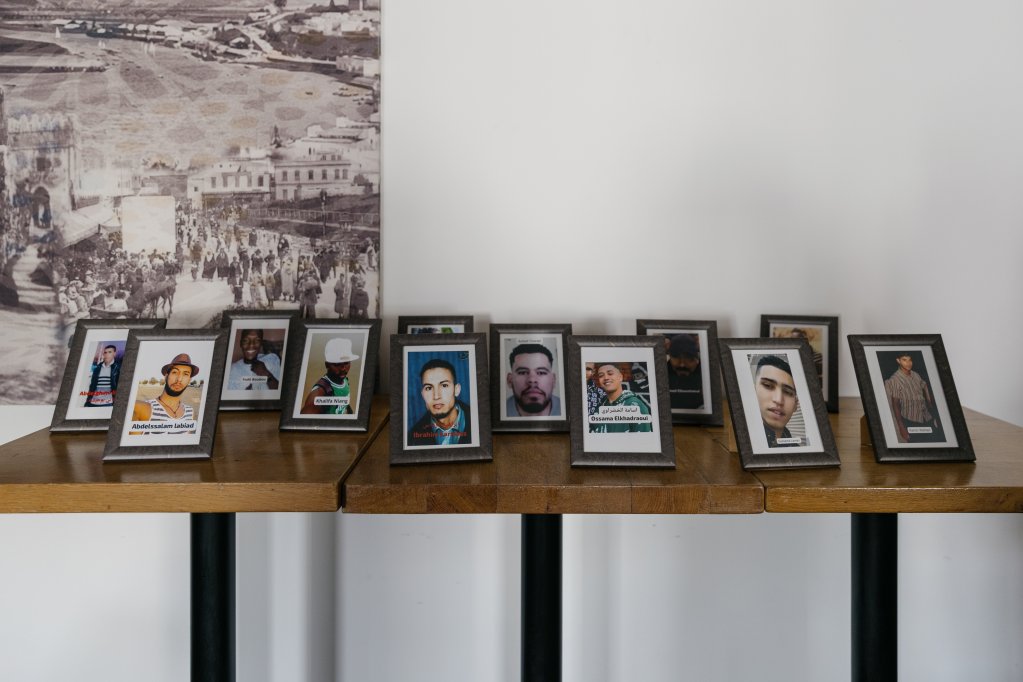
WhatsApp groups have been created to connect and organize the families. There are 13 of them, organized by the location where the disappearances occurred: “Those who went missing in Turkey, Algeria, the Mediterranean, the Atlantic, Morocco, along the Balkan route, in Libya…” Hassan Ammari lists out. “In total, we are dealing with 986 families.”
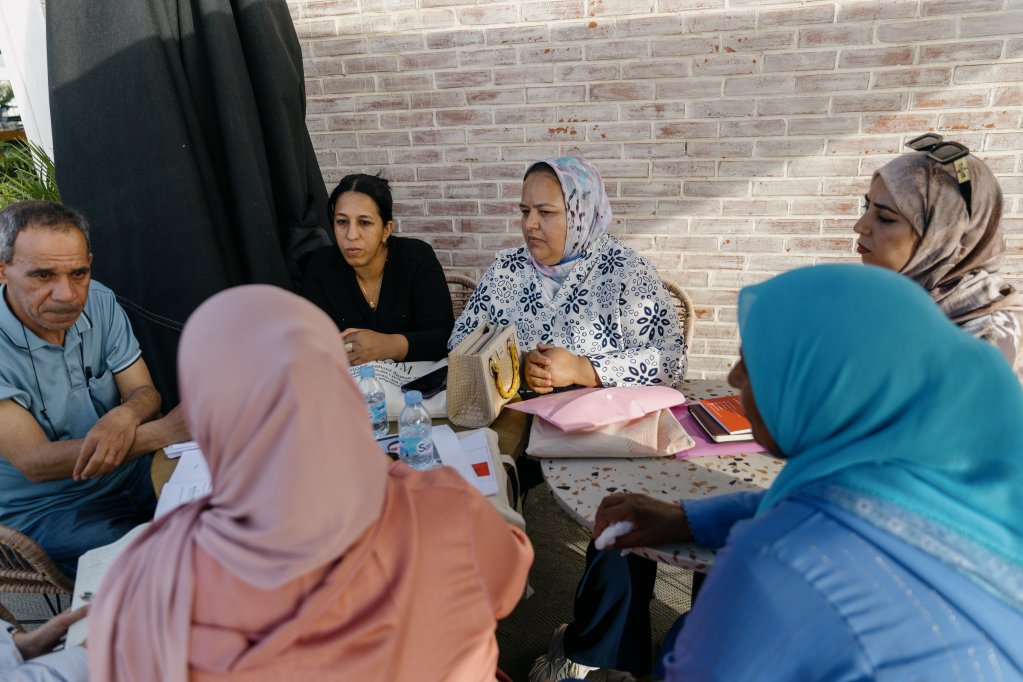
Hafida Labiad — who participates in all the groups given her role as a facilitator — has been particularly invested in the group focused on the Atlantic routes ever since her brother went missing. Regarding the collective, she sums it up this way: “It’s not just about my own suffering; we share the pain among families, but we also share information.”
Read Also
Looking for a missing loved one: How do I even begin to search and who can help?
An illustrated guide, a book ‘against oblivion’
In 2024, the collective published an “Illustrated Guide: Searching for a Missing Person or Detainee at the Borders.” It outlines how to contact the police, the Ministry of Foreign Affairs, the Red Crescent, or the Red Cross, depending on the country. This previously non-existent tool helps combat the sense of helplessness that arises when a disappearance occurs: “We don’t know where to turn or what to do… The information we receive is sometimes false or part of a scam,” Fatima Al-Kazar explains. Thanks to this guide — intended for any affected family — “people can find their way more easily.”
The association is diversifying its means of outreach. Imane El Bouastaoui — a soft-spoken, unassuming young woman wearing rectangular sunglasses pushed up onto her lilac-colored headscarf — is the author of a book titled “Entre les vagues et l’absence” (“Between the Waves and Absence”). The work recounts her quest to find her brother, who went missing during a crossing to the Canary Islands. The book features a foreword by the association, which also helped publish it. “It is a book against oblivion,” Imane says. “So many of these disappearances are forgotten. I don’t want my brother and his friends to be forgotten. I wanted this book to serve as a mirror — and a record — for other families.”
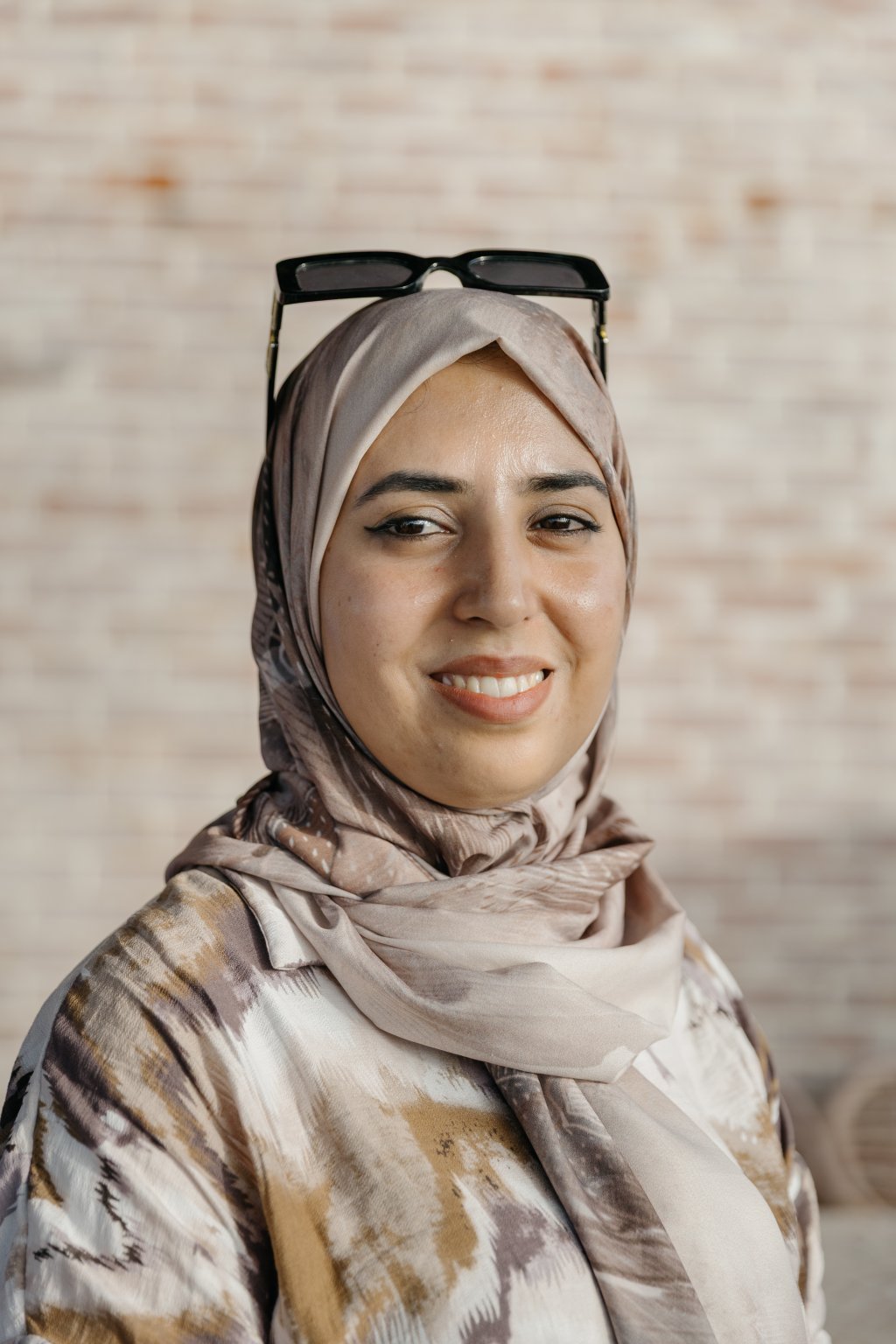
She connected with the association a year after her brother went missing in the Atlantic. He had set out from Algeria as part of a group of 42 people. “A missing person often remains just a statistic. I don’t want him to be a statistic; I want him to be a name.” His name was Mohammed El Boustaoui. “My novel reveals a name, a family, a human being.” Writing is also a way to “respond to the silence of official structures,” the young woman adds.
Read Also
‘Those who remain’: Families of migrants mourn their disappearance in Senegal
Protests outside Parliament and the Ministry of Foreign Affairs
In Morocco, families of the missing describe the taboo surrounding these disappearances, given the stigma attached to immigrating. Hafida recalls that when she tried to file a collective declaration of disappearances with the Moroccan police on behalf of the association in 2022, “they told us: ‘Your loved one is the one who fled the country. He isn’t a missing person.’ We were being criminalized.” “That made me angry.”
In response, the association mobilized against the authorities’ refusal to address the issue. Families traveled from Beni Mellal, Oujda, Marrakech, and Berkane — all the way to Rabat. “About 80 families were represented,” Hafida recounts. Together, they staged a sit-in in front of the red-fronted Parliament building, located on a major avenue in the capital. Running down the center of this avenue is a slender esplanade — gleaming in the sunlight and lined with tall palm trees and a few benches — which serves as a gathering point for protests. “Unfortunately, that day, the families were beaten by law enforcement,” Hafida says.
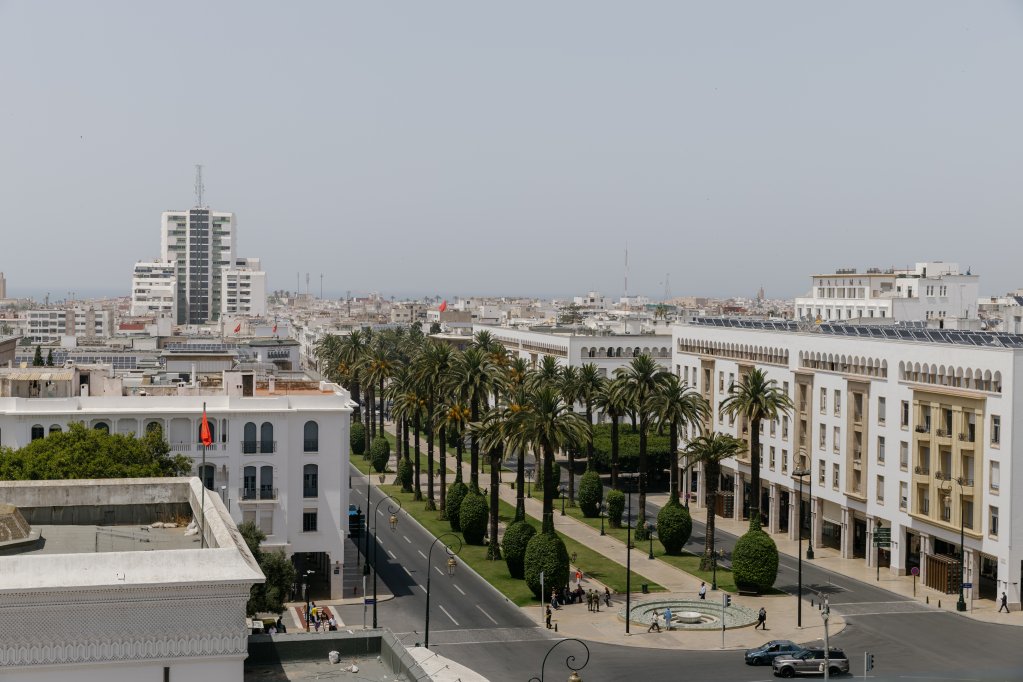
Yet, this did not deter them. “Afterward, we headed as a group to the Ministry of Foreign Affairs to submit our statement.” “Next, the association took charge of the follow-up with the ministry,” Hafida Labiad explains. A year later, in 2023, there was another gathering in Rabat — this time, a sit-in outside the headquarters of the European Union (EU) delegation. A representative came out to meet them, and the families were able to hand her a letter outlining their demands for EU assistance regarding the search for their missing loved ones and the identification process. The families also visited the headquarters of the ICRC (International Committee of the Red Cross) in Morocco.
Despite these mobilization efforts, “we see little change in our relations with the authorities and the police.” There was, however, a victory involving the Moroccan Ministry of Foreign Affairs: “They now acknowledge that these are cases of disappearance.” Thanks to the channel opened with the ministry, in 2025, the Moroccan consulate in Spain (based in Almeria) proactively requested information on the missing persons documented by the association, in order to potentially identify bodies found in Spain. Since then, the families have been waiting for news.
Read Also
Organizations working to identify those who die at Europe’s borders
Body identification: when the collective opens doors
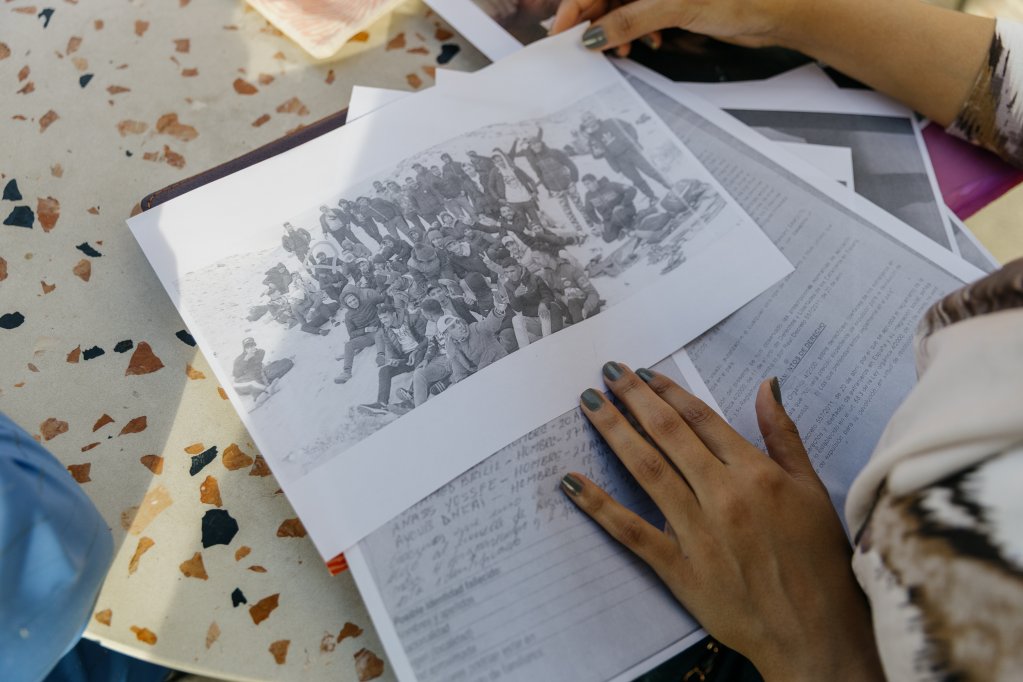
Navigating identification procedures remains an uphill battle; the association helps give families the leverage needed to secure coverage for their DNA tests. The case of Fatema Mesdar illustrates this well. Her son, Oussama Lamari, disappeared along with 33 others aboard a boat that had set off from the Tunisian coast. Reportedly, only two bodies were recovered.
However, the Moroccan families did not learn this until three months after the shipwreck. “This lack of information was partly because smugglers were involved. By the time we found out, it was too late; the bodies were about to be buried [in the town of] Menzel Bourguiba…” Fatema, dressed entirely in pale pink, says. “We are still waiting to learn their identities: the first body has been identified, but the second hasn’t, even though two passports were found.”
For weeks, before discovering the association, Fatema had conducted her search alone. “I flew from Casablanca to Tunis by myself. I stayed there for 45 days. I was searching in isolation, in the dark.” Eventually, several families urged her not to remain alone, and a woman directed her to the association; Fatema Mesdar then entrusted them with all the documents and videos she had gathered during her investigation into the shipwreck in Tunisia. She began participating in workshops that brought families together. “I was given a voice. For the first time, I felt relieved and heard. They were emotionally powerful moments.”
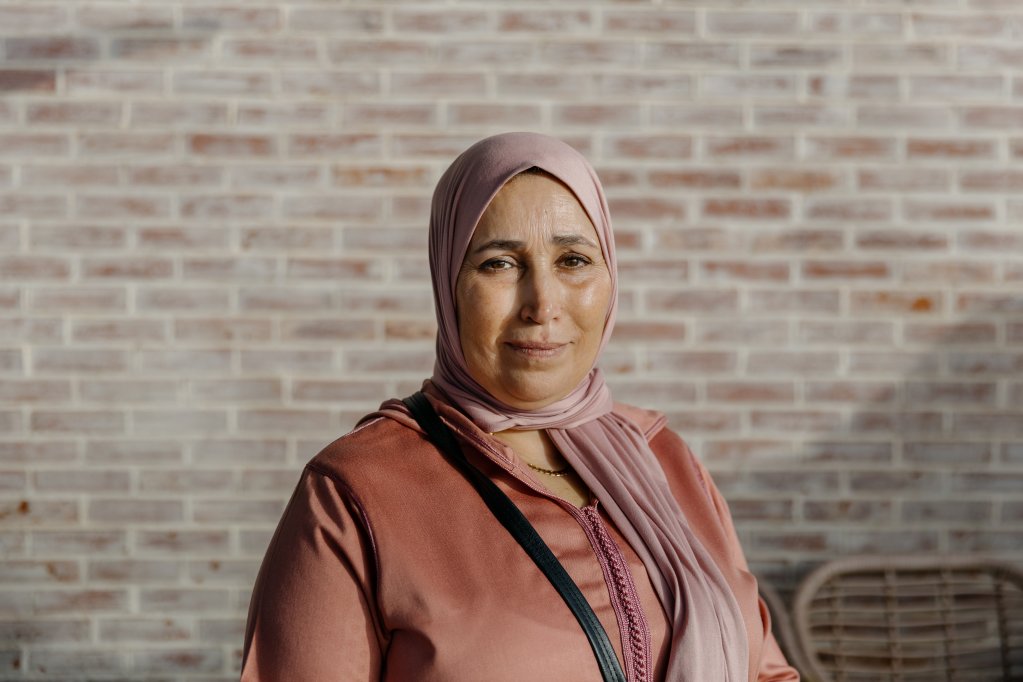
This support gave her the energy to resume her search with other institutions, now with the help of the association. Fatema returned to Tunisia, but this time, she was speaking on behalf of an entire group. “No door was closed to me, because I was representing a whole collective. Every agency received and listened to me. I went to Djerba and Sfax, and met with the gendarmerie, the police, the Ministry of the Interior, and the Tunisian coast guard… I was welcomed everywhere. I was even able to get a DNA test done for free.”
Beyond her own case, Fatema Mesdar is now fighting to improve identification procedures for all families of the missing, as well as encouraging them to submit their data and DNA samples. “At first, the families of those who had been on the same boat as my son were afraid—afraid of the smugglers; one was in Tunisia and the other, a Moroccan man, was in Italy,” she recounts. Fear also plays a role in their relationship with the authorities: “We need to raise awareness,” Fatema insists.
Read Also
Identifying the dead: Why it is so difficult and what you can do
Deaths and detainees: when citizen-led investigations succeed
Despite all these administrative and legal procedures, “I feel like I haven’t done anything for my son. I feel stuck,” Fatema says. She is still waiting for answers. Tunisia informed her that her DNA sample did not match any of the bodies recovered. She is still waiting to hear from the Moroccan side. Like other families, she would like to be able to send her data to Spain or Portugal—across the sea. “I just want a single hair from my son, whether he is alive or dead. I just want to go and weep at my son’s grave.”
The problem is that there is “no real coordination among the various authorities regarding identification. We need a centralized database,” Hassan Ammari, the association’s president, says. His team has personally identified 56 people since 2017 — initially working outside official channels and using whatever limited resources were available — until finally securing official validation from a judge, thereby authorizing the family to reclaim the body. This painstaking grassroots effort, which ultimately leads to cases being closed, is synonymous with “suffering, because it is an extremely arduous process.”
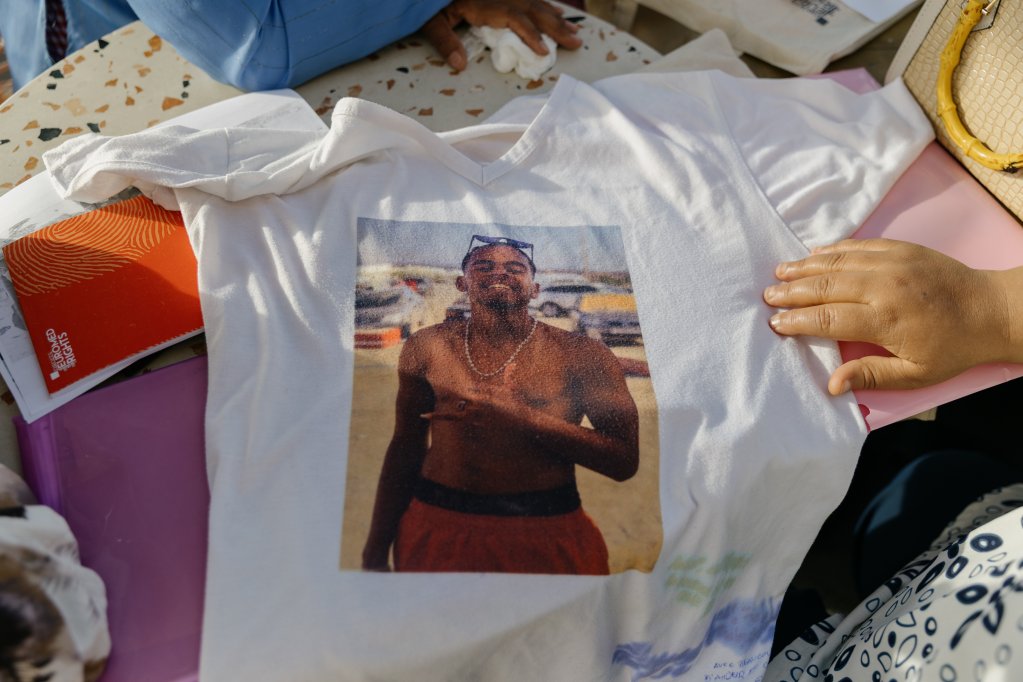
Other cases end with loved ones being found in prison. Bouaïcha, a member of the association for just over a year, had lost track of her son in Algeria seven years ago. “At first, I was told he was dead. But I had a feeling he was alive. I traveled alone from Casablanca to Oran to bring my son back—dead or alive; that was the challenge I set for myself.” Yet, on her own, “I didn’t know where to go, which organizations to approach, or what to say,” the woman says, dressed entirely in blue, donning a melancholy smile and laugh lines at the corners of her eyes. “For a month, from 7 am to 7 pm, I knocked on every door, but to no avail. I also wasted a huge amount of money on travel.”
Since connecting with the association, she has been able to resume her search with the help of a lawyer. Within two weeks, the lawyer had identified the prison in Algeria where her son was actually being held — detained under Law 08-11, which makes irregular immigration a criminal offense punishable by several years in prison. “She went from being the mother of a missing person to the mother of a prisoner,” Hassan summed up. Seven years later, “I was finally able to visit my son in prison,” Bouaïcha recounts, visibly moved. “For just 15 minutes.” Since then, her son has also managed to send her letters and speak to her once by phone, thanks to the leniency of a guard. Meeting other families “is what gave me the strength to speak about my son,” despite the conviction that casts a heavy pall over his story. “The association was a turning point in my life,” Bouaïcha concludes. “Today, I have found a family. A big family.”
Read Also
Families of lost migrants: Waiting for answers that may never come
Credit: Source link